Opening a jar, carrying shopping, holding a handrail or turning a key can feel harder than it used to. Grip strength is part of everyday life, yet it is easy to overlook until simple tasks take more effort. The good news is that hands and forearms often respond well to gentle, regular practice. This guide looks at what the evidence suggests, with practical home-friendly ideas and sensible cautions. What grip strength benefits really mean Researchers often use grip strength as a simple marker of overall muscle function because it is easy to measure and reflects how well the hands and forearms work together. In studies of adults, stronger grip tends to sit alongside better mobility and an easier time with daily activities. That does not mean a hand exerciser can guarantee any particular health outcome. It does suggest that keeping the hands active is a worthwhile part of a balanced routine , alongside walking, leg strength and balance practice. Many people find the most noticeable ch...
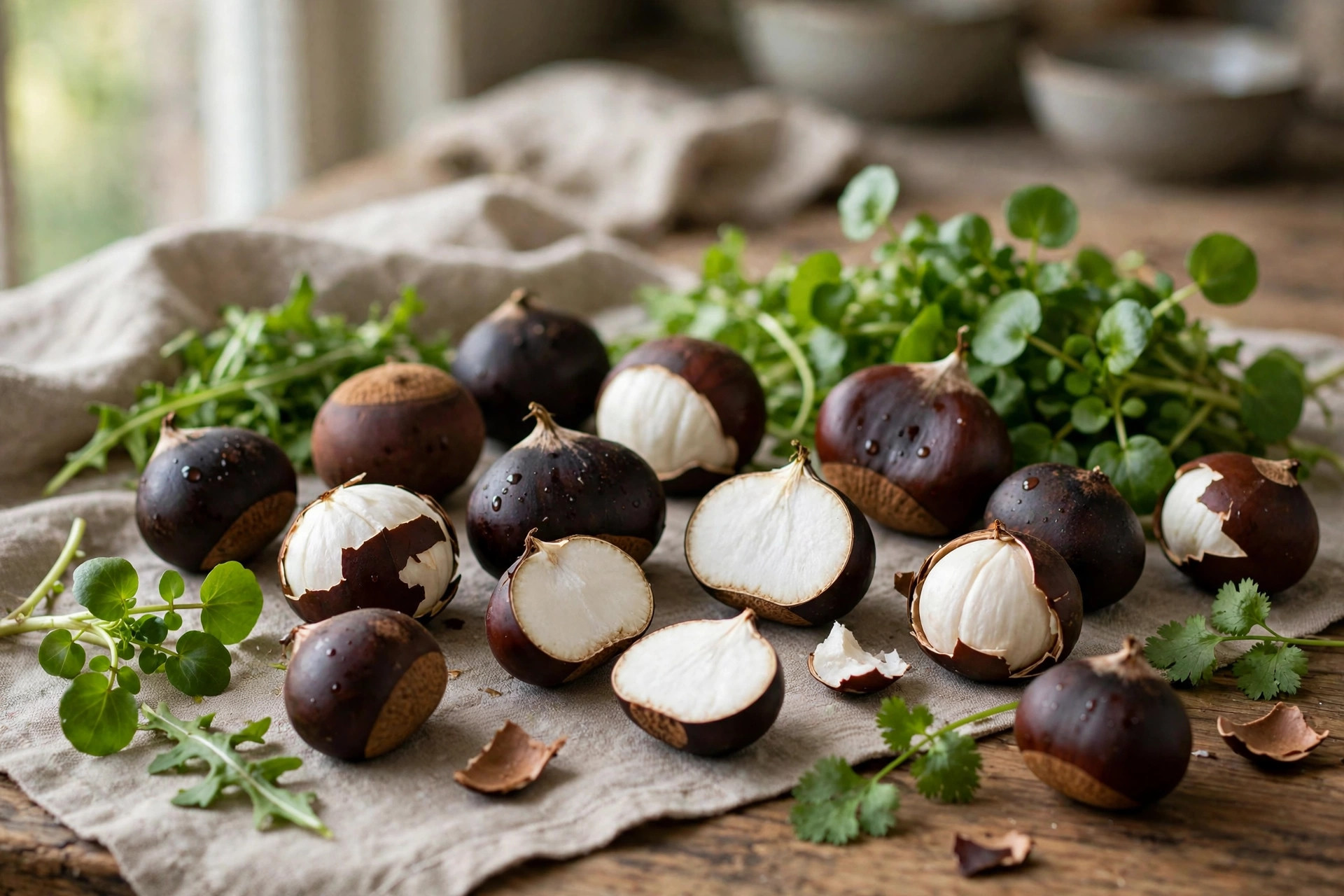
Water chestnuts are the crunchy surprise in many stir-fries, yet they are often treated as a garnish rather than a vegetable in their own right. That is a pity, because this mild, juicy corm brings fibre, potassium and a satisfying bite for relatively few calories. So what does the evidence really say about water chestnut benefits, and where should the claims stay modest? This guide looks at the nutrition, the research and simple ways to enjoy them at home.
What Are Water Chestnuts?
Despite the name, a water chestnut is not a nut at all. It is the starchy corm of Eleocharis dulcis, an aquatic plant grown in marshes and shallow ponds across parts of Asia, Africa and Australia. Fresh corms have dark brown skins and crisp white flesh. Their crunch is unusual because it survives cooking, thanks largely to ferulic acid in the cell walls. Water chestnuts should not be confused with water caltrops, a different plant sometimes sold under a similar name.
Water Chestnut Benefits: Fibre, Potassium and Antioxidants
A 100-gram serving of raw water chestnuts provides about 97 calories, 3 grams of fibre, 24 grams of carbohydrate and around 584 milligrams of potassium, along with vitamin B6, riboflavin, manganese and copper. They are also about 74 per cent water, which helps explain why they feel filling without being heavy. Many people find that high-fibre, high-volume vegetables like this make meals more satisfying.
Diets rich in potassium and fibre are associated in research with healthier blood pressure patterns and steadier digestion, although that does not make any single food a treatment. Water chestnuts also contain antioxidants such as ferulic acid and catechin compounds. Much of the antioxidant research is laboratory-based, so it is best read as promising rather than proven. Traditionally, water chestnuts have been used in Chinese and Ayurvedic practice, but scientific support for medicinal uses remains limited.
How to Enjoy Water Chestnuts at Home
Fresh water chestnuts are sold in Asian grocers and some larger supermarkets; canned slices are widely available and keep well in the cupboard. Rinse canned slices to reduce brine, then add them near the end of cooking so the crunch stays. They work in stir-fries, noodle soups, salads, lettuce cups and grain bowls. Try them with leafy greens, sesame, ginger and a squeeze of lime for a simple side. Because their flavour is mild, they carry sauces well without overwhelming a dish.
Sensible Cautions
Water chestnuts suit most people as an ordinary food, but a few sensible points apply. Wash and peel fresh corms well, and cook them if you prefer, as with other fresh produce. Their carbohydrate content is worth noting if you count carbohydrates as part of your routine. Canned versions vary, so check labels for added salt. As with any food, stop eating them if you notice an allergic reaction, and seek professional advice for personal medical questions.
Used as part of varied meals, water chestnuts are an easy way to add crunch, fibre and potassium. The evidence supports them as a nutritious vegetable, not a miracle food, and that is reason enough to keep a tin handy.
Related reading on Organic Health Fix
- Lettuce Benefits: What the Evidence Really Says
- Fonio Benefits: What the Evidence Really Says
- Dandelion Greens Benefits: What the Evidence Really Says
Tags: #WaterChestnut #NaturalRemedies #GutHealth #Nutrition #WellnessTips #HealthyEating
Comments
Post a Comment