Opening a jar, carrying shopping, holding a handrail or turning a key can feel harder than it used to. Grip strength is part of everyday life, yet it is easy to overlook until simple tasks take more effort. The good news is that hands and forearms often respond well to gentle, regular practice. This guide looks at what the evidence suggests, with practical home-friendly ideas and sensible cautions. What grip strength benefits really mean Researchers often use grip strength as a simple marker of overall muscle function because it is easy to measure and reflects how well the hands and forearms work together. In studies of adults, stronger grip tends to sit alongside better mobility and an easier time with daily activities. That does not mean a hand exerciser can guarantee any particular health outcome. It does suggest that keeping the hands active is a worthwhile part of a balanced routine , alongside walking, leg strength and balance practice. Many people find the most noticeable ch...
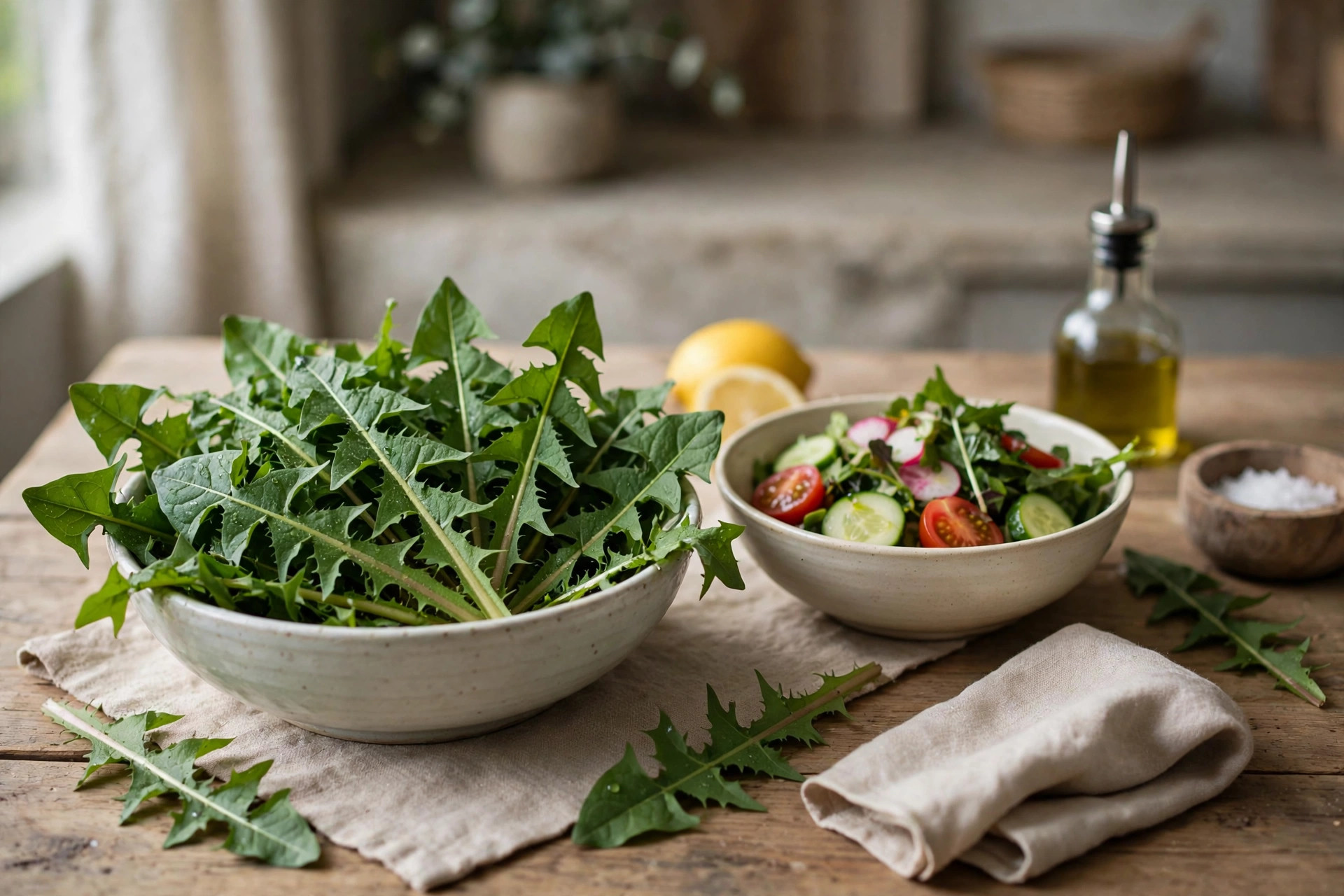
Most people meet dandelion as a lawn weed, yet its young leaves have long been eaten as a bitter spring green. The leaves are closer to chicory or rocket than to a supplement: peppery, slightly bitter, and suited to salads, soups and quick sautés. This guide looks at what they provide, where the evidence is solid, and where claims run ahead of the research. It is general wellness information only, not medical advice.
Dandelion greens benefits: what is in the leaves?
The strongest case for dandelion greens is simple nutrition. Raw leaves provide about 45 calories per 100 grams, with roughly 3.5 grams of fibre, and they are notably rich in vitamin K — around 778 micrograms per 100 grams in standard food tables. They also supply beta-carotene, which the body can convert to vitamin A, plus vitamin C, calcium, iron and potassium in useful amounts for a leafy green.
Many people find the bitterness softens when the leaves are mixed with milder greens, dressed with olive oil and lemon, or wilted briefly with garlic. A little healthy fat in the meal also helps the body absorb fat-soluble vitamins such as vitamin K and beta-carotene.
What the evidence supports — and what it does not
It is worth separating food value from remedy claims. The US National Center for Complementary and Integrative Health notes that dandelion in food amounts is generally considered likely safe, but that there is no compelling scientific evidence that it helps with any specific health condition. Laboratory and animal studies have explored antioxidant and anti-inflammatory compounds in dandelion, yet human trials remain small and inconclusive.
Traditional uses, honestly framed
Dandelion has traditionally been used in herbal practice, and the root — a different part of the plant — contains inulin, a prebiotic fibre. That history explains its reputation, but it is not proof of benefit. Claims that the greens “detox” the liver or guarantee weight loss go beyond what human evidence shows.
How to use dandelion greens at home
Choose fresh, bright leaves from a food shop or market rather than foraging, unless you are certain of identification and the picking site is free from sprays and pollution. Wash the leaves well, trim tough stems, and try one of these gentle routines:
Simple salad: toss young leaves with sliced apple, walnuts and a lemon-olive oil dressing. Quick sauté: wilt the leaves for two to three minutes with garlic and a pinch of chilli, then finish with lemon juice. Soup addition: stir chopped leaves into lentil or bean soup in the last few minutes of cooking for colour and a pleasant bitter edge.
Cautions to keep in mind
Because dandelion greens are very high in vitamin K, people who take warfarin or similar medicines are usually advised to keep vitamin K intake consistent rather than suddenly increasing it; anyone in that position should check with their clinician or pharmacist first. People sensitive to daisy-family plants such as ragweed may also react. Start with a small portion, as with any new bitter green.
Kept in perspective, dandelion greens are a nutritious, flavourful leaf. The evidence supports enjoying them as food; it does not support treating them as a cure.
Related reading on Organic Health Fix
- Komatsuna Benefits: What the Evidence Really Says
- Tatsoi Benefits: What the Evidence Really Says
- Lettuce Benefits: What the Evidence Really Says
Tags: #DandelionGreens #NaturalRemedies #WellnessTips #LeafyGreens #Nutrition #GutHealth
Comments
Post a Comment