Opening a jar, carrying shopping, holding a handrail or turning a key can feel harder than it used to. Grip strength is part of everyday life, yet it is easy to overlook until simple tasks take more effort. The good news is that hands and forearms often respond well to gentle, regular practice. This guide looks at what the evidence suggests, with practical home-friendly ideas and sensible cautions. What grip strength benefits really mean Researchers often use grip strength as a simple marker of overall muscle function because it is easy to measure and reflects how well the hands and forearms work together. In studies of adults, stronger grip tends to sit alongside better mobility and an easier time with daily activities. That does not mean a hand exerciser can guarantee any particular health outcome. It does suggest that keeping the hands active is a worthwhile part of a balanced routine , alongside walking, leg strength and balance practice. Many people find the most noticeable ch...
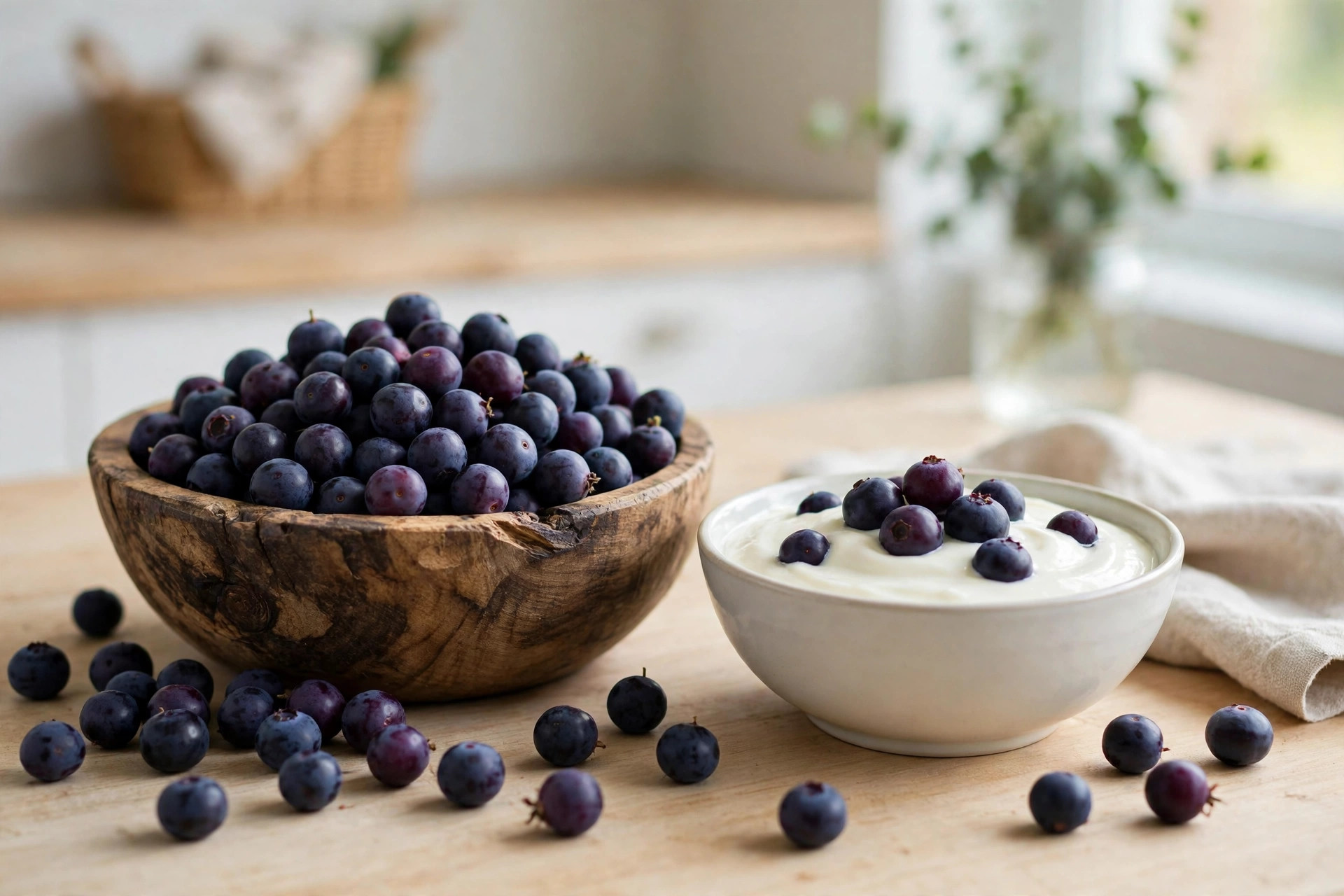
Small, deep purple and sweet with a faint almond note, the saskatoon berry is one of North America's quiet treasures. Also known as the serviceberry or juneberry, it grows on shrubs across western Canada and the northern United States, where it has been gathered for generations. It looks much like a blueberry, yet its nutrition profile holds a few pleasant surprises.
What Is in a Saskatoon Berry?
A 100-gram portion of saskatoon berries provides roughly 85 calories and 8 grams of dietary fibre, along with about 11 grams of natural sugars. They also supply vitamin C, vitamin A, B vitamins and minerals including iron, calcium and potassium. They are often said to contain around twice the vitamin C and seven times the calcium of blueberries, which is a generous showing for such a small fruit. Their vivid purple colour comes from anthocyanins, the same family of plant compounds that gives blueberries and blackcurrants their hue.
Saskatoon Berry Benefits: What the Evidence Really Says
Most of the excitement around saskatoon berries centres on their anthocyanins and other polyphenols, including cyanidin-3-glucoside and delphinidin-3-glucoside. In laboratory and animal studies these compounds have shown antioxidant and anti-inflammatory activity. Human evidence is still early but encouraging: a small 2026 open-label trial asked 20 healthy adults to eat 40 grams of freeze-dried saskatoon berries a day for ten weeks, and it reported lower fasting blood sugar, lower total and LDL cholesterol, lower systolic blood pressure and lower levels of an inflammation marker. With no control group and only twenty participants, it points to promise rather than proof, and larger controlled trials are still needed.
Antioxidants in Everyday Terms
Antioxidants help the body deal with everyday oxidative stress. Eating a varied mix of colourful fruits is a simple way to keep that intake up, and saskatoon berries are a strong contributor when they are in season or available dried or frozen.
Saskatoon Berries and Gut Health
With 8 grams of fibre per 100 grams, saskatoon berries are a genuinely useful food for gut health. Fibre feeds the friendly bacteria in the gut and helps keep digestion regular. Early animal research also suggests saskatoon berry powder may support a healthier gut bacterial balance and the production of short-chain fatty acids, the compounds gut bacteria make when they ferment fibre. These findings come from mice, so they are a reason for interest rather than a guarantee, but they sit neatly alongside the fibre story.
Simple Ways to Enjoy Saskatoon Berries
If you can find them fresh, eat them straight from the punnet like blueberries, or scatter them over porridge, yoghurt or a smoothie bowl. They bake well too — try them in muffins, crumbles and pancakes in place of blueberries, or simmer them gently into a compote for toast or ice cream. Dried saskatoon berries work in trail mix, granola and muesli, and frozen berries blend smoothly and keep for months. A small handful a day is an easy, pleasant way to add them to a balanced diet.
A Few Sensible Cautions
As with any berry, wash saskatoon berries well before eating, especially foraged ones. Because early research hints at effects on blood sugar and blood pressure, anyone taking medication for either should mention a new daily habit to their clinician. People with allergies to other fruits in the rose family, such as apples or pears, should try a small amount first. No single food carries the day — saskatoon berries work best as one colourful part of a varied diet.
Related reading on Organic Health Fix
- Strawberry Benefits: What the Evidence Really Says
- Goldenberry Benefits: What the Evidence Really Says
- Black Currant Benefits: What the Evidence Really Says
Tags: #SaskatoonBerry #BerryBenefits #NaturalRemedies #GutHealth #Antioxidants #Nutrition #WellnessTips #HealthyEating
Comments
Post a Comment