Opening a jar, carrying shopping, holding a handrail or turning a key can feel harder than it used to. Grip strength is part of everyday life, yet it is easy to overlook until simple tasks take more effort. The good news is that hands and forearms often respond well to gentle, regular practice. This guide looks at what the evidence suggests, with practical home-friendly ideas and sensible cautions. What grip strength benefits really mean Researchers often use grip strength as a simple marker of overall muscle function because it is easy to measure and reflects how well the hands and forearms work together. In studies of adults, stronger grip tends to sit alongside better mobility and an easier time with daily activities. That does not mean a hand exerciser can guarantee any particular health outcome. It does suggest that keeping the hands active is a worthwhile part of a balanced routine , alongside walking, leg strength and balance practice. Many people find the most noticeable ch...
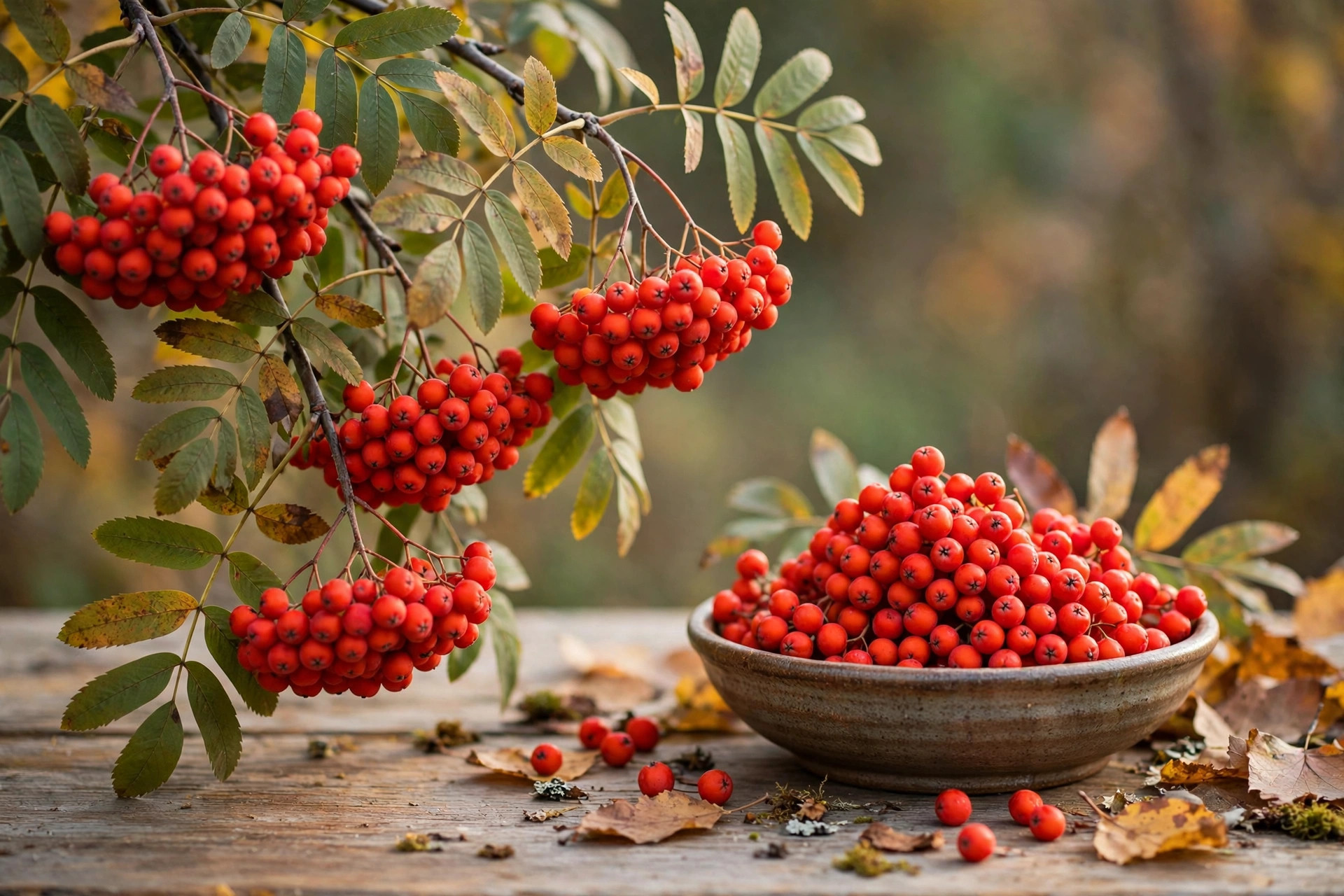
Rowanberries — the bright scarlet fruit of the European rowan tree (Sorbus aucuparia, also called mountain ash) — have been gathered across northern Europe for centuries. Traditionally they were picked after the first frost and cooked into jams, jellies, syrups and teas, valued as a seasonal source of vitamin C. But what does the evidence actually say?
Rowanberry Nutrition: Vitamin C, Fibre and Polyphenols
Per 100 g, fresh rowanberries provide roughly 50 calories, 8.9 g of carbohydrate, 5.4 g of fibre and 1.4 g of protein, with very little fat. Their headline nutrient is vitamin C, at around 70 mg per 100 g — though the amount varies by cultivar, with some sweet varieties measured as high as 141 mg per 100 g. They also supply potassium, calcium and iron.
Lab analyses show chlorogenic acids make up 56–80% of their phenolics, at levels close to those found in coffee, alongside flavonoids such as quercetin and rutin. Some cultivars are also high in anthocyanins — up to 260 mg per 100 g in the Titan variety — and the berries contain sorbitol (5–8 g per 100 g), a sugar alcohol that adds sweetness.
What the Evidence Really Says About Rowanberry Benefits
It is worth being straight about the evidence: there are no large human trials of rowanberries. What exists is traditional use, compositional analysis, laboratory studies and a handful of small trials — so every benefit below is promising rather than proven.
Antioxidant support
In test-tube studies, rowanberry phenolics slowed lipid oxidation and protected human plasma proteins and lipids from oxidative damage. A 2021 double-blind trial in Phytotherapy Research looked at a rowanberry extract and markers of endothelial inflammation. These are early signals, not proof of effects in the body.
Immune and respiratory support
In folk medicine across Norse, Baltic and monastic traditions, rowan was used for scurvy, coughs and bronchial irritation — uses that make sense given its vitamin C content. A small Polish study found children taking rowan syrup cleared chest congestion about 40% faster than placebo. These studies were small and short, so treat them as interesting, not settled.
Gut health and digestion
With 5.4 g of fibre per 100 g, rowanberries can contribute to a fibre-rich diet, and their astringent tannins were traditionally used for mild diarrhoea — a small 2018 Estonian trial reported symptom relief within 48 hours in 72% of participants taking 300 mg capsules daily. Lab tests also show the extracts slow starch-digesting enzymes, but no human study has tested blood-sugar effects.
How to Enjoy Rowanberries Safely
The most important thing to know is that rowanberries should not be eaten raw in quantity. Raw berries contain parasorbic acid, which can irritate the stomach in large amounts. Heating or frost converts it to sorbic acid, which is described as non-toxic — the reason traditional practice is to pick the berries after the first frost and cook them.
Simple, safe ways to enjoy them: simmer the berries with a little water and sugar, strain, and set as a jelly — the classic accompaniment to game and cheese. Or steep a spoonful of dried berries in hot water for 10 minutes, strain, and sweeten with honey for a warming tea.
Start with small amounts. Sorbitol can upset sensitive stomachs in large quantities, and there is no safety data for pregnancy, breastfeeding or young children, so it is sensible to ask a clinician first in those cases.
Rowanberries in a Balanced Diet
Think of rowanberries as a seasonal, traditional food rather than a supplement: a spoonful of jelly with a meal, a cup of tea on a cold evening, or a few cooked berries folded into porridge. Their tartness works nicely alongside apples, pears and honey. Enjoy them cooked, in modest amounts, and as part of a varied diet.
Related reading on Organic Health Fix
- Kiwiberry Benefits: What the Evidence Really Says
- Saskatoon Berry Benefits: What the Evidence Really Says
- Black Currant Benefits: What the Evidence Really Says
Tags: #Rowanberry #VitaminC #NaturalRemedies #GutHealth #WellnessTips #Antioxidants #WinterWellness #BerryBenefits
Comments
Post a Comment