Opening a jar, carrying shopping, holding a handrail or turning a key can feel harder than it used to. Grip strength is part of everyday life, yet it is easy to overlook until simple tasks take more effort. The good news is that hands and forearms often respond well to gentle, regular practice. This guide looks at what the evidence suggests, with practical home-friendly ideas and sensible cautions. What grip strength benefits really mean Researchers often use grip strength as a simple marker of overall muscle function because it is easy to measure and reflects how well the hands and forearms work together. In studies of adults, stronger grip tends to sit alongside better mobility and an easier time with daily activities. That does not mean a hand exerciser can guarantee any particular health outcome. It does suggest that keeping the hands active is a worthwhile part of a balanced routine , alongside walking, leg strength and balance practice. Many people find the most noticeable ch...
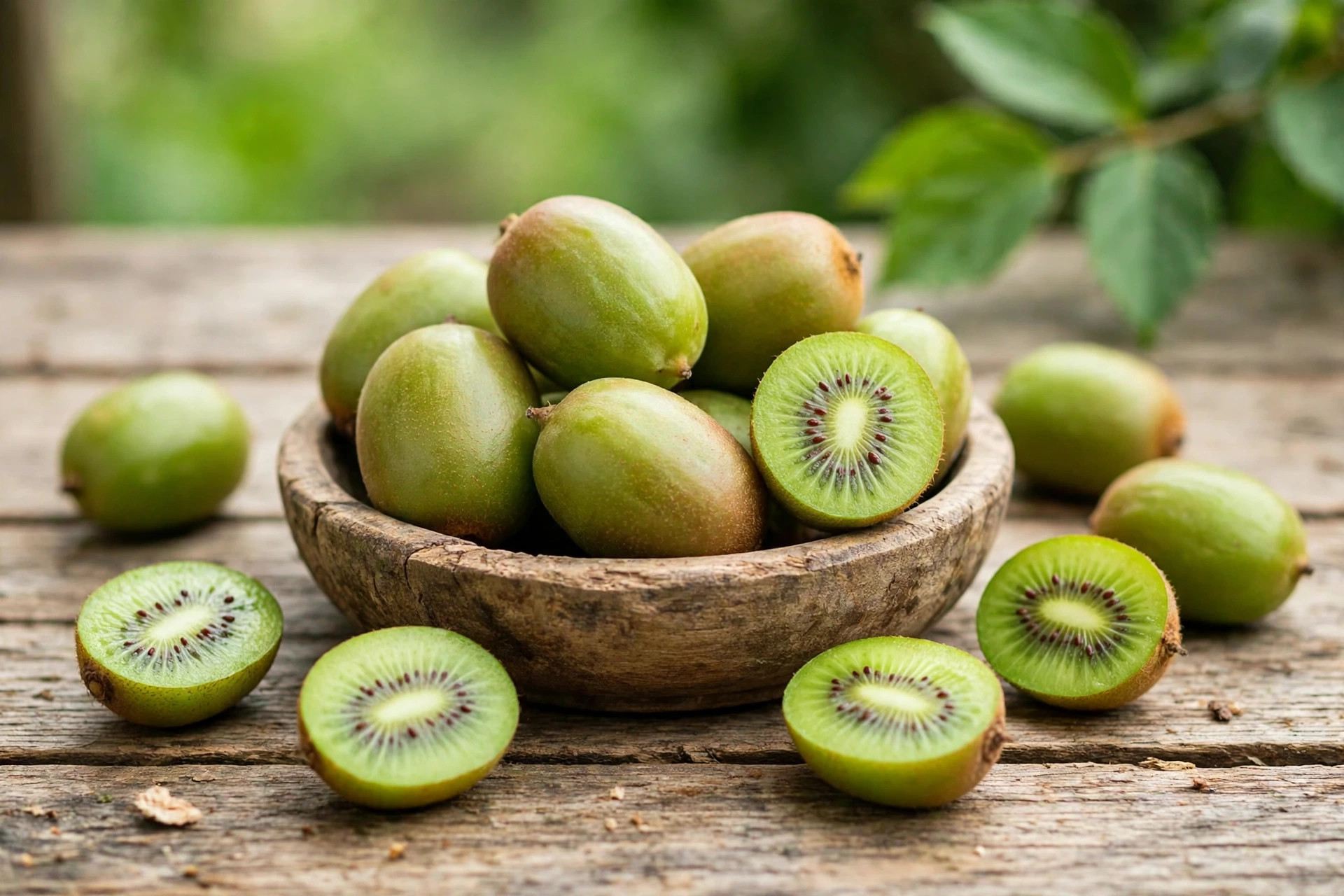
Kiwiberries look like kiwis shrunk to the size of a grape — and that is more or less what they are. These smooth-skinned baby kiwis can be popped whole into your mouth, skin and all, with no peeling and no spoon. They taste sweet and gently tart. Here is what the evidence really says about them.
What exactly is a kiwiberry?
The kiwiberry (Actinidia arguta) is a close relative of the familiar fuzzy kiwifruit, also known as hardy kiwi, baby kiwi or mini kiwi. Each berry weighs around 10 grams, and a small handful of five or six — roughly 125 grams — contains about 96 calories, 4 grams of fibre and around 360 milligrams of potassium. Commercial production began only in the 1980s and 1990s, so they are still new on most shelves.
The big practical difference from a kiwifruit is the skin. Kiwiberries have a thin, smooth, edible skin, so you eat the whole fruit — and that matters, because the skin holds up to 15 times more antioxidants than the pulp inside.
Kiwiberry benefits: what the evidence really says
A 2017 review in Plant Foods for Human Nutrition described the kiwiberry as containing over 20 essential nutrients, and a fresh review published in November 2026 confirms its rich mix of vitamin C, polyphenols and carotenoids. Much of the research so far is laboratory-based or drawn from comparisons with kiwifruit, so these benefits are promising rather than proven.
Vitamin C and everyday immune support
Vitamin C is the kiwiberry's standout nutrient. The 2017 review reports levels of up to 430 milligrams per 100 grams of fresh fruit, while typical varieties average around 150 milligrams — still well above green kiwifruit at roughly 103 milligrams. Vitamin C supports normal immune function, helps the body make collagen, and acts as an antioxidant that helps protect cells from everyday damage. A small handful can cover most adults' daily needs.
Lutein, myo-inositol and eye health
Kiwiberries are also one of the richest fruit sources of lutein, at up to 0.93 milligrams per 100 grams. Lutein is a carotenoid associated with eye health, working alongside beta-carotene and chlorophylls in the fruit. The same review notes they are considered the richest dietary source of myo-inositol, a vitamin-like compound, at up to 982 milligrams per 100 grams, while total phenolic compounds reach up to 1,301 milligrams per 100 grams.
Gut health and gentle digestion
Many people find kiwiberries kind to the digestion. The fibre in the whole fruit, skin included, supports regular digestion and helps you feel fuller after eating. They also contain actinidin, an enzyme that helps break down protein, and early research suggests they may positively influence the balance of bacteria in the gut. Most direct human research on digestion has been done on ordinary kiwifruit, where studies found improvements in some symptoms of constipation, so the kiwiberry's gut-friendly reputation is well-grounded but still developing.
How to eat kiwiberries
Kiwiberries need almost no preparation. Rinse them and eat them whole, like grapes, or toss them into a fruit salad, scatter them over porridge or yoghurt, or blend them into a smoothie. Their season is brief — usually a short autumn run — so enjoy them while they last. Choose berries that yield slightly to gentle pressure; firm ones soften in a day or two at room temperature.
Gentle cautions to keep in mind
Anyone with a kiwi allergy should avoid kiwiberries, and if ordinary kiwi, pineapple or papaya makes your mouth itch, you may find kiwiberries do the same. They are slightly higher in oxalic acid than kiwifruit, so people prone to kidney stones may want to enjoy them in modest amounts. Their FODMAP rating has not been tested, so if you follow a low-FODMAP plan, try a small portion first and see how you feel.
Related reading on Organic Health Fix
- Saskatoon Berry Benefits: What the Evidence Really Says
- Strawberry Benefits: What the Evidence Really Says
- Goldenberry Benefits: What the Evidence Really Says
Tags: #Kiwiberry #KiwiberryBenefits #VitaminC #GutHealth #EyeHealth #NaturalRemedies #WellnessTips #HealthyEating
Comments
Post a Comment