Opening a jar, carrying shopping, holding a handrail or turning a key can feel harder than it used to. Grip strength is part of everyday life, yet it is easy to overlook until simple tasks take more effort. The good news is that hands and forearms often respond well to gentle, regular practice. This guide looks at what the evidence suggests, with practical home-friendly ideas and sensible cautions. What grip strength benefits really mean Researchers often use grip strength as a simple marker of overall muscle function because it is easy to measure and reflects how well the hands and forearms work together. In studies of adults, stronger grip tends to sit alongside better mobility and an easier time with daily activities. That does not mean a hand exerciser can guarantee any particular health outcome. It does suggest that keeping the hands active is a worthwhile part of a balanced routine , alongside walking, leg strength and balance practice. Many people find the most noticeable ch...
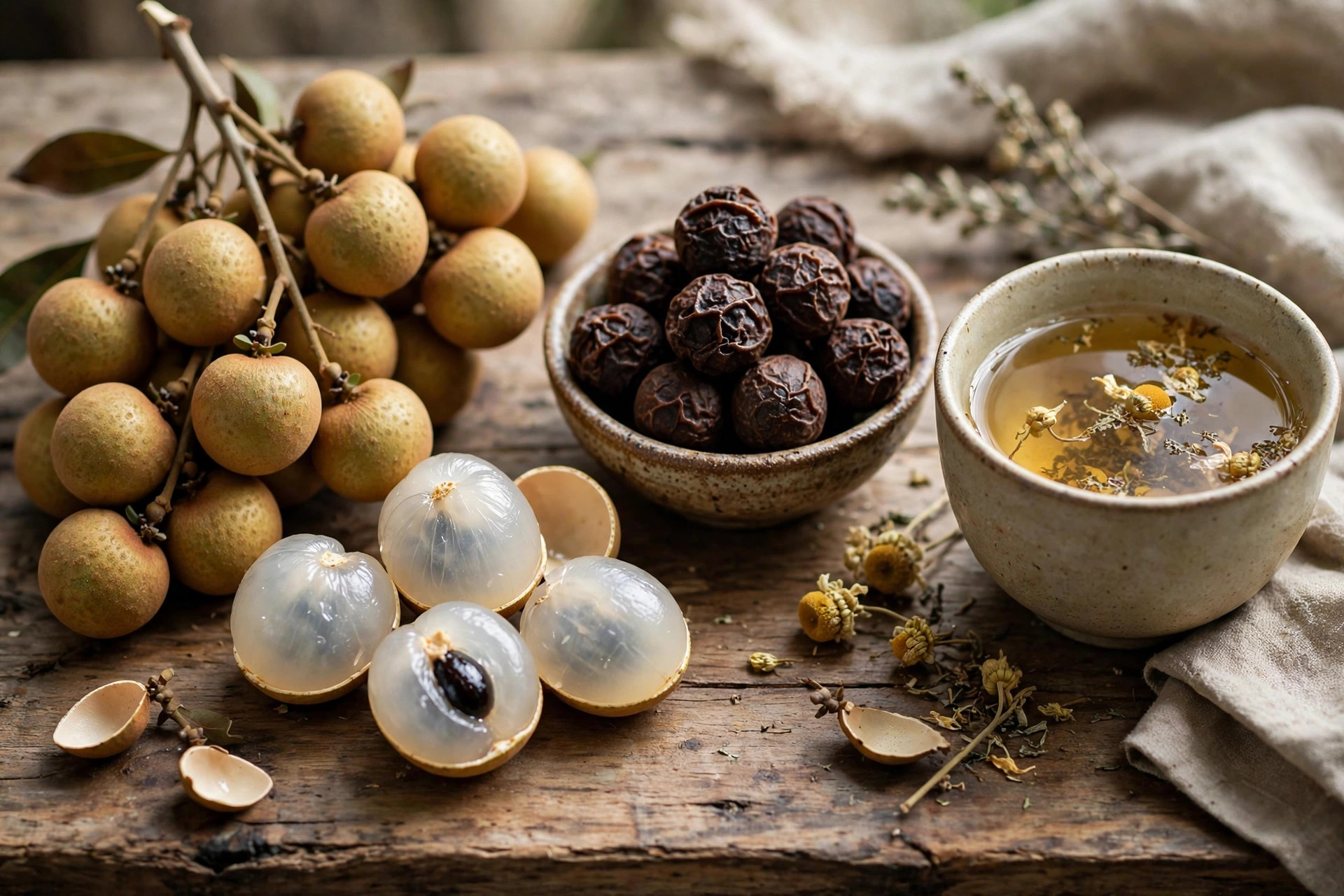
Longan is a small, honey-sweet tropical fruit that many people outside Asia are only just discovering. A close cousin of lychee and rambutan, it grows in drooping clusters, each fruit about the size of a grape, with a thin tan shell, translucent white flesh and a single dark seed. In China, where it has been grown for more than two thousand years, longan is as much a pantry staple as a fresh snack, and the dried fruit has a long history in traditional food therapy.
So what does the evidence actually say? The honest answer is a mix of solid nutrition, plausible tradition and early-stage research. Here is a balanced look.
Longan nutrition: small fruit, big vitamin C
Vitamin C is longan's standout nutrient. Around 100 grams of fresh longan — roughly 30 small fruits — provides about 84 milligrams of vitamin C, close to a full day's worth, for only about 60 calories. Vitamin C supports normal immune function, helps the body absorb iron from plant foods and plays a role in keeping skin healthy. A small handful of ten fresh longans covers roughly a third of the daily need.
The same serving also brings about 1.1 grams of fibre, 266 milligrams of potassium and useful amounts of copper and magnesium. Longan is naturally low in fat and sodium, so a modest portion fits comfortably into a varied diet.
Longan benefits for sleep: tradition meets early evidence
Longan's classic use in Chinese medicine is calming a restless mind for sleep. Dried longan, known as gui yuan, has traditionally been used for poor sleep, tiredness and forgetfulness, and it appears in Gui Pi Tang, a classic herbal formula for insomnia. A 2019 review of trials of that formula found better sleep scores, though the effect cannot be credited to longan alone.
There is a plausible mechanism behind the tradition: longan contains adenosine and GABA-related compounds, both involved in relaxation and sleep regulation, and animal studies have linked longan extracts with longer sleep. Human evidence for the fruit on its own, however, remains thin. Many people find a warm drink made with dried longan a soothing part of a wind-down routine.
Fresh or dried longan?
Fresh longan is lighter, juicier and richer in vitamin C. Dried longan is sweeter and more concentrated — an ounce carries about 81 calories — so enjoy it in small amounts, a tablespoon or two steeped in hot water or stirred into porridge. If you watch your blood sugar, the dried form deserves a smaller portion than the fresh.
Longan and gut health: early but interesting
Longan contains polysaccharides that have been shown in laboratory and animal studies to feed friendly gut bacteria — an encouraging early signal, but not yet proof of a benefit in people eating the whole fruit. The fibre in fresh longan is the more reliable contribution: it adds bulk, supports regularity and helps you feel full. Try a few peeled fresh longans in yoghurt or porridge, or simmer dried longan with red dates and a little ginger for a warming winter drink.
How to buy, store and enjoy longan
Choose fruits with intact, dry shells and no cracks. Fresh longan keeps for several days in the fridge; peel it just before eating and discard the seed. Dried longan keeps for months in an airtight jar in a cool, dark cupboard. Start with a small portion — ten or so fresh fruits — and see how you like the flavour, often described as musky-sweet, milder than lychee.
A few sensible cautions
Longan is a food, not a medicine, and it suits most people in ordinary amounts. The dried form is concentrated in sugars, so keep portions small if you manage blood sugar. If you take regular medication, are pregnant, or have a health condition, check with your clinician before adding any new food in large amounts — as with any unfamiliar fruit, try a little first.
Related reading on Organic Health Fix
- Mangosteen Benefits: What the Evidence Really Says
- Rambutan Benefits: What the Evidence Really Says
- Kiwano Benefits: What the Evidence Really Says
Tags: #Longan #LonganBenefits #VitaminC #SleepTips #GutHealth #NaturalRemedies #WellnessTips #ExoticFruit
Comments
Post a Comment