Opening a jar, carrying shopping, holding a handrail or turning a key can feel harder than it used to. Grip strength is part of everyday life, yet it is easy to overlook until simple tasks take more effort. The good news is that hands and forearms often respond well to gentle, regular practice. This guide looks at what the evidence suggests, with practical home-friendly ideas and sensible cautions. What grip strength benefits really mean Researchers often use grip strength as a simple marker of overall muscle function because it is easy to measure and reflects how well the hands and forearms work together. In studies of adults, stronger grip tends to sit alongside better mobility and an easier time with daily activities. That does not mean a hand exerciser can guarantee any particular health outcome. It does suggest that keeping the hands active is a worthwhile part of a balanced routine , alongside walking, leg strength and balance practice. Many people find the most noticeable ch...
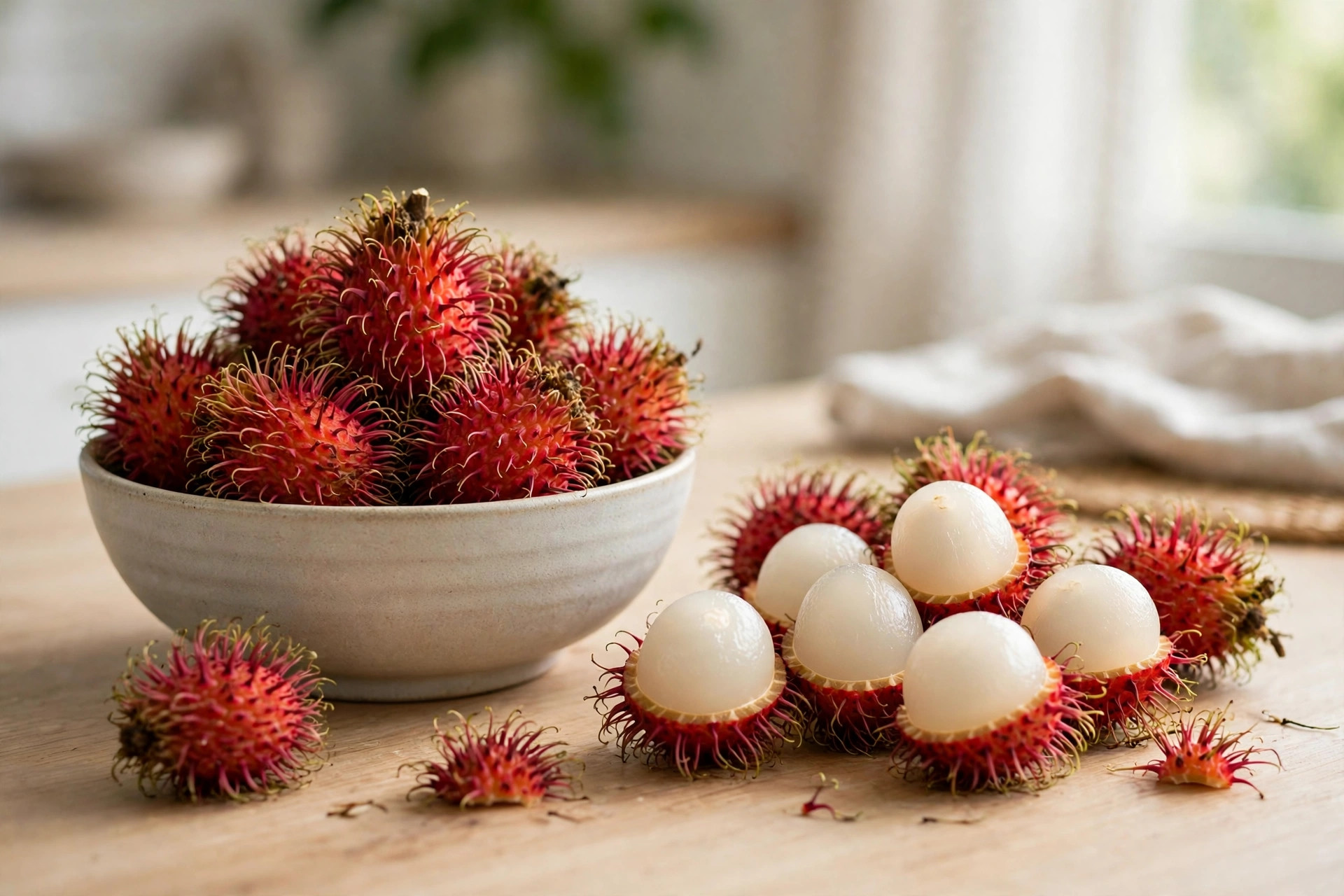
Rambutan looks like something from another planet — a bright red, spiky-skinned fruit with soft, creamy flesh inside — yet it is an everyday fruit across Southeast Asia. If you have spotted it in a supermarket or an Asian grocer, you may have wondered whether it is worth trying. The short answer is yes: rambutan is a gentle, nutrient-rich fruit, and the evidence for its benefits is modest but encouraging.
Rambutan Benefits: What the Fruit Offers
A 100-gram serving of fresh rambutan pulp provides roughly 75 calories and around 1.3 to 2 grams of fibre, along with vitamin C, copper, manganese and small amounts of potassium, magnesium, iron and zinc. Vitamin C is the standout nutrient: depending on where the fruit is grown, 100 grams can supply anywhere from about a quarter to three-quarters of the daily recommended amount. Vitamin C supports normal immune function and helps the body absorb iron from plant foods, and it acts as an antioxidant, protecting cells from everyday damage.
Rambutan is also a useful source of copper, a mineral the body needs to make energy and to maintain connective tissue, blood vessels and the nervous system. Eating around four fruits (100 grams) can meet about a fifth of the daily copper requirement.
Rambutan and Gut Health
Many people find that eating fibre-rich fruit regularly helps with occasional constipation, and rambutan fits easily into that pattern. A small handful after a meal is a pleasant way to add fibre without overhauling your diet.
How to Eat Rambutan
Choose fruits that feel heavy for their size, with bright red husks and soft, flexible spikes — dull or blackened spikes suggest the fruit is past its best. To open one, score the skin lightly with a knife or squeeze it gently until it splits, then peel it back. Inside is a translucent white flesh around a single seed. Only eat the flesh: the peel and the seed contain compounds that may be harmful, and they are not considered edible.
Fresh rambutan is delicious on its own, and it also works well in fruit salads, smoothies, yoghurt bowls and light desserts. Canned rambutan in syrup is widely available, but it is much higher in added sugar, so fresh is the better everyday choice.
Rambutan for Weight and Everyday Energy
At around 75 calories per 100 grams, rambutan is a light snack that still feels satisfying, thanks to its fibre and high water content. Many people find that fibre-rich snacks help them feel fuller for longer, which can make it easier to avoid overeating between meals. It is a friendlier choice than biscuits or crisps when the afternoon slump arrives.
What the Evidence Does Not Yet Show
It is worth being honest about the limits. Most of the stronger-sounding claims about rambutan — for example, that it fights infections or protects against certain illnesses — come from laboratory studies of extracts from the peel or seed, not from people eating the fruit. Human trials are small and few. So while rambutan is a genuinely nutritious fruit, it is best enjoyed as part of a varied diet rather than treated as a remedy for any particular condition. One caution: a small number of people are allergic to rambutan, especially those allergic to lychee or cashew — try one fruit first.
Related reading on Organic Health Fix
Tags: #Rambutan #RambutanBenefits #VitaminC #GutHealth #ExoticFruit #NaturalRemedies #WellnessTips #HealthyEating
Comments
Post a Comment