Opening a jar, carrying shopping, holding a handrail or turning a key can feel harder than it used to. Grip strength is part of everyday life, yet it is easy to overlook until simple tasks take more effort. The good news is that hands and forearms often respond well to gentle, regular practice. This guide looks at what the evidence suggests, with practical home-friendly ideas and sensible cautions. What grip strength benefits really mean Researchers often use grip strength as a simple marker of overall muscle function because it is easy to measure and reflects how well the hands and forearms work together. In studies of adults, stronger grip tends to sit alongside better mobility and an easier time with daily activities. That does not mean a hand exerciser can guarantee any particular health outcome. It does suggest that keeping the hands active is a worthwhile part of a balanced routine , alongside walking, leg strength and balance practice. Many people find the most noticeable ch...
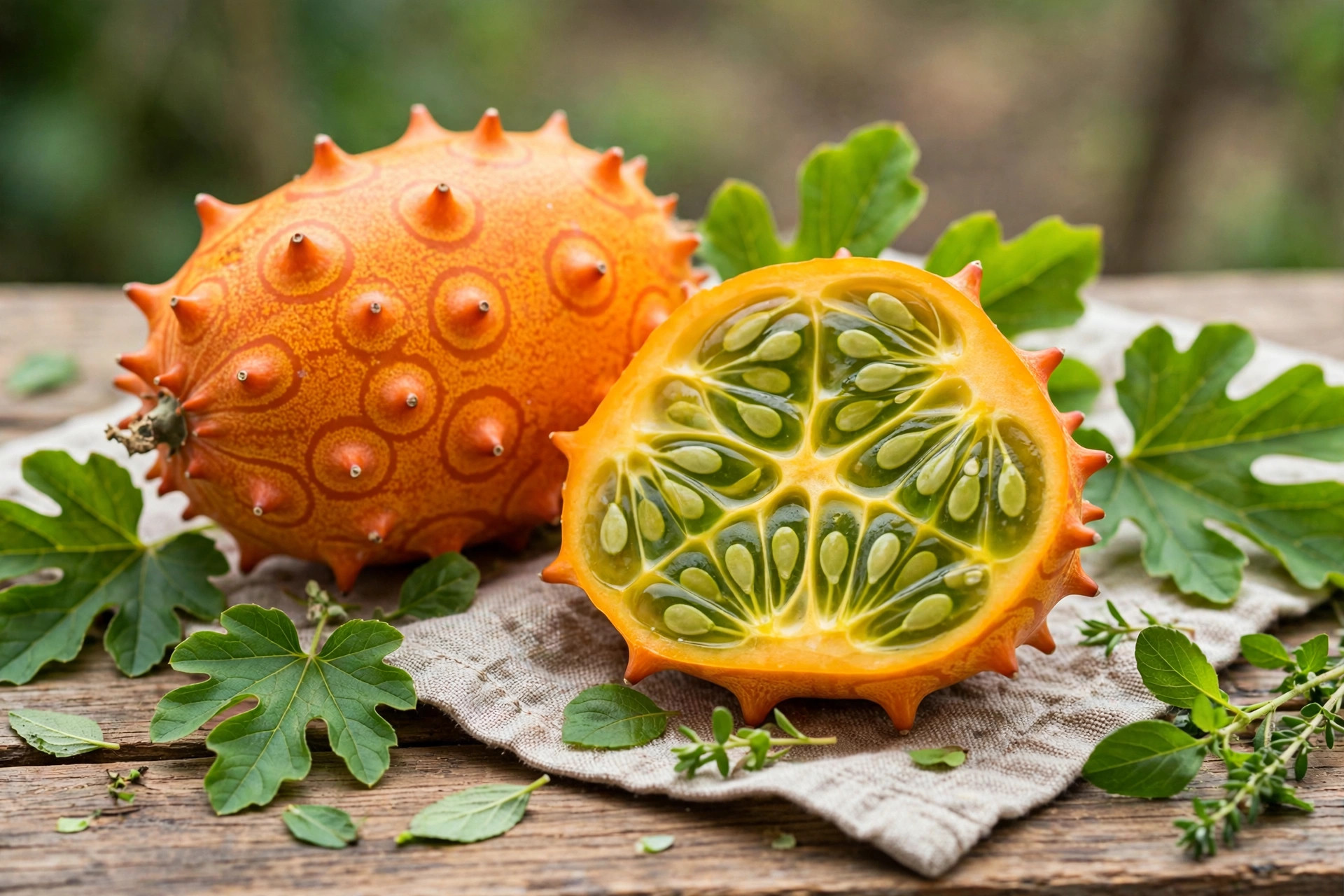
With its spiky orange skin and bright green, jelly-like flesh, kiwano looks like something from another planet. Also known as horned melon, African horned cucumber or jelly melon, this exotic fruit (Cucumis metuliferus) is native to central and southern Africa. But what does the evidence actually say about kiwano benefits? Here is an honest look.
What is kiwano?
Kiwano belongs to the same family as cucumber and melon, which explains its mild, refreshing flavour — many people describe it as a cross between cucumber, banana and lime. Inside the spiky shell sits a soft green pulp studded with edible seeds, which you scoop out with a spoon. One fruit (around 209 g) provides roughly 92 calories, 16 g of carbohydrate and 3.7 g of protein, along with vitamin C, vitamin A, vitamin B6, magnesium, iron, zinc, potassium and calcium.
Kiwano benefits: what the evidence really says
Direct research on kiwano itself is limited, so most of what we know comes from its nutrient profile rather than large human trials. That matters: the fruit is best seen as a nourishing food, not a remedy.
Antioxidants for everyday protection
Kiwano contains vitamin C, vitamin A, zinc and lutein — nutrients that act as antioxidants and help protect cells from oxidative stress. Its seeds also supply alpha- and beta-tocopherol, forms of vitamin E.
Iron and vitamin C, together
Kiwano is a useful plant source of iron, providing around 2.36 mg per fruit, and it also supplies vitamin C. That combination is helpful because vitamin C is known to improve the absorption of non-haem iron from plant foods.
Gentle on blood sugar
Kiwano has a low glycaemic index, meaning it is unlikely to cause a sharp rise in blood sugar after eating. Its magnesium content may also play a role, as magnesium is involved in blood-sugar regulation. A small 2010 animal study found kiwano extract lowered blood sugar in diabetic rats, but human evidence is lacking — so this remains a promising, not proven, benefit.
Hydration and electrolytes
Because kiwano is mostly water and contains electrolytes such as magnesium, potassium and sodium, it can be a refreshing way to support hydration, especially in warm weather or after exercise. It will not replace water, but as part of a balanced diet it contributes both fluid and minerals.
How to eat kiwano at home
Choose a fruit that feels heavy for its size with bright orange, evenly coloured skin — a little give when gently squeezed means it is ripe. Slice it in half lengthways and scoop out the pulp with a spoon, seeds and all.
Spooned straight from the shell as a light snack, perhaps with a squeeze of lime. Stirred into yoghurt or porridge for colour and a gentle tang. Blended into smoothies with banana and berries. Spooned over salads or grilled fish as a fresh, zesty topping.
Start with half a fruit if you are trying it for the first time, and enjoy it as part of a varied diet rather than expecting a single food to transform your health.
A note of caution
Kiwano is a food, not a medicine, and there is no good evidence that it prevents or treats any condition. People with a known allergy to melon or cucumber family fruits should be cautious, and anyone managing a health condition should speak with a clinician before making big dietary changes.
Related reading on Organic Health Fix
- Starfruit Benefits: What the Evidence Really Says
- Pistachios Benefits: What the Evidence Really Says
- Pear Benefits: What the Evidence Really Says
Tags: #Kiwano #HornedMelon #ExoticFruit #VitaminC #GutHealth #Nutrition #WellnessTips #NaturalRemedies
Comments
Post a Comment