Opening a jar, carrying shopping, holding a handrail or turning a key can feel harder than it used to. Grip strength is part of everyday life, yet it is easy to overlook until simple tasks take more effort. The good news is that hands and forearms often respond well to gentle, regular practice. This guide looks at what the evidence suggests, with practical home-friendly ideas and sensible cautions. What grip strength benefits really mean Researchers often use grip strength as a simple marker of overall muscle function because it is easy to measure and reflects how well the hands and forearms work together. In studies of adults, stronger grip tends to sit alongside better mobility and an easier time with daily activities. That does not mean a hand exerciser can guarantee any particular health outcome. It does suggest that keeping the hands active is a worthwhile part of a balanced routine , alongside walking, leg strength and balance practice. Many people find the most noticeable ch...
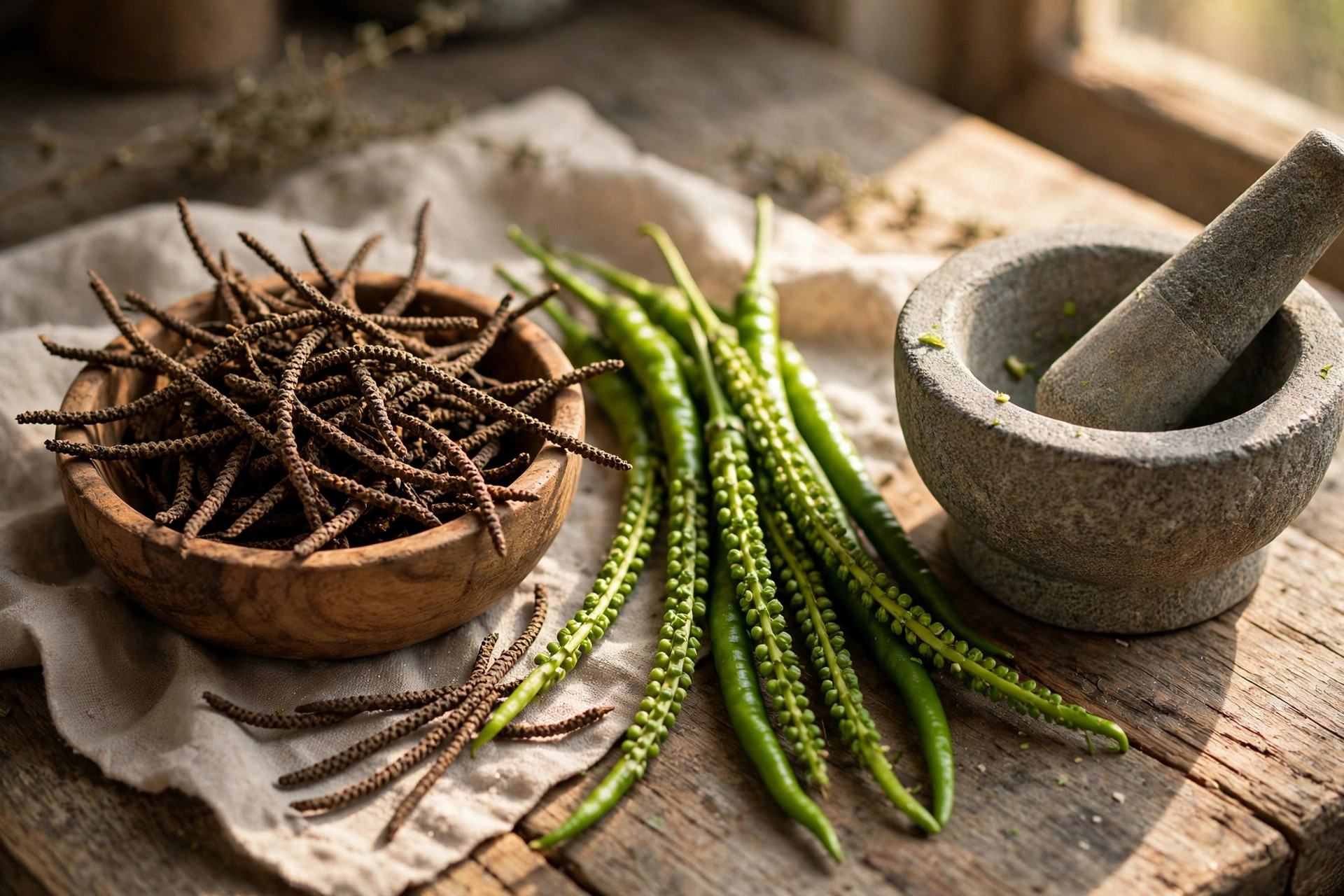
Long pepper, known as pippali in Ayurveda and Piper longum in botany, is one of the oldest spices in the world. It looks like a small, dark catkin rather than the round peppercorns most kitchens know, and it carries a warm, sweet heat that is gentler than chilli but more complex than black pepper. For centuries it has been valued in South Asian households as a warming spice for digestion and breathing.
What Is Long Pepper?
Long pepper is the fruiting spike of a slender climbing vine native to the foothills of the Himalayas and the forests of north-east India. The spikes are picked green, then dried until they turn dark brown and almost black. Ground long pepper tastes hot and slightly sweet, with hints of cinnamon and nutmeg, and it was once so prized in Europe that it rivalled black pepper in price. Its key compounds are piperine, the alkaloid also found in black pepper, and piperlongumine, a compound studied in laboratories for its effects on inflammation.
Long Pepper Benefits for Digestion
In Ayurveda, long pepper is classed as a deepana-pachana herb, meaning it is traditionally used to kindle the digestive fire and help the body break down food. It is one of the three spices in trikatu, the classic blend for sluggish digestion, flatulence and a heavy feeling after meals. Laboratory and small clinical studies offer some support: in a 2018 trial, people who took 500 mg of pippali powder before lunch reported relief from indigestion, with faster gastric emptying and a better appetite, an effect researchers link to increased digestive enzyme secretions. Piperine may also help the body absorb nutrients from food more efficiently. Many people find a pinch of ground long pepper in soups, lentil dishes or warm milk a pleasant way to enjoy it.
A gentle way to start
Begin with a small amount, perhaps an eighth of a teaspoon in a cooked dish, and see how your stomach responds. Long pepper is a spice, not a supplement, and it works best as part of a varied, fibre-rich diet rather than on its own.
Long Pepper and Breathing
Long pepper has a long traditional reputation as a remedy for coughs, colds and a stuffy chest. Ayurvedic texts describe it as shwasahara (helpful for breathing) and kasahara (helpful for cough), and its warming, pungent quality is said to thin and move stuck mucus. Modern evidence is still early: a 2019 animal study published in the Journal of Ethnopharmacology found that pippali extract reduced airway inflammation and mucus in allergic asthma models, and small human pilot trials have reported less coughing and better lung function.
Long Pepper, Inflammation and Everyday Wellness
Piperine and piperlongumine have shown anti-inflammatory activity in laboratory studies — in one test, pippali fruit extract cut inflammation-related nitric oxide production in immune cells by around 81 percent at a concentration of 50 micrograms per millilitre. That is a laboratory result, not a clinical outcome, so it is best read as a reason for interest rather than a promise.
What to Keep in Mind
Long pepper is generally used in small culinary amounts, and that is the safest way to enjoy it. Because piperine can increase the absorption of some medicines, anyone taking prescription drugs should check with a clinician before using long pepper in supplement-sized doses. Its safety in pregnancy has not been well studied, so pregnant women are best avoiding concentrated forms. As with any strong spice, large amounts may irritate the stomach, so moderation is the rule.
Related reading on Organic Health Fix
- Walking After Meals Benefits: What the Evidence Really Says
- Lemon Verbena Benefits: What the Evidence Really Says
- Galangal Benefits: What the Evidence Really Says
Tags: #LongPepper #Pippali #NaturalRemedies #Digestion #GutHealth #Spices #WellnessTips #Piperine
Comments
Post a Comment