Opening a jar, carrying shopping, holding a handrail or turning a key can feel harder than it used to. Grip strength is part of everyday life, yet it is easy to overlook until simple tasks take more effort. The good news is that hands and forearms often respond well to gentle, regular practice. This guide looks at what the evidence suggests, with practical home-friendly ideas and sensible cautions. What grip strength benefits really mean Researchers often use grip strength as a simple marker of overall muscle function because it is easy to measure and reflects how well the hands and forearms work together. In studies of adults, stronger grip tends to sit alongside better mobility and an easier time with daily activities. That does not mean a hand exerciser can guarantee any particular health outcome. It does suggest that keeping the hands active is a worthwhile part of a balanced routine , alongside walking, leg strength and balance practice. Many people find the most noticeable ch...
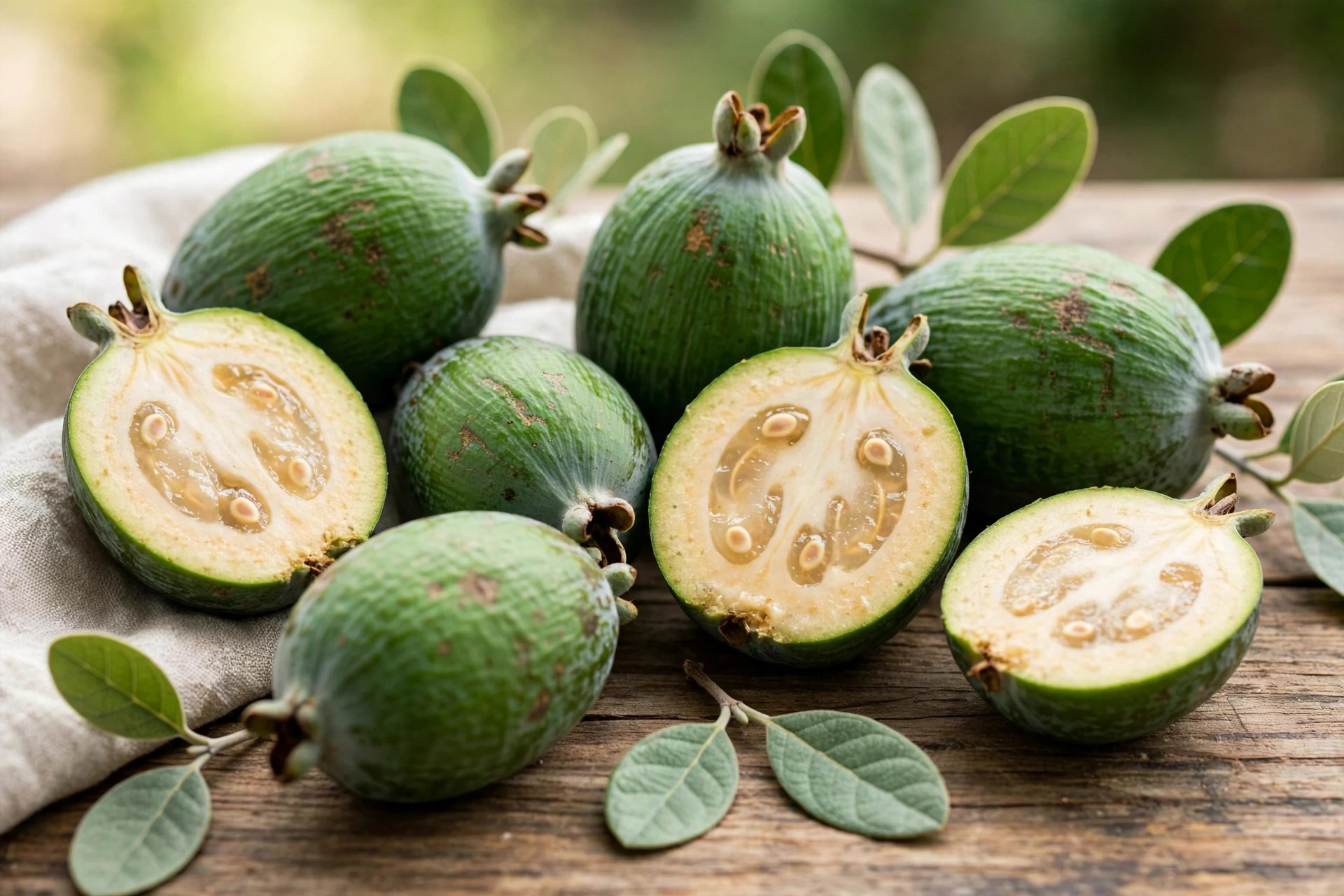
Feijoa, also known as pineapple guava, is a small green fruit with a fragrant, sweet-tart flavour that many people describe as a cross between pineapple, guava and mint. Native to South America and now grown in New Zealand, Australia and parts of Europe, it is still a newcomer on many supermarket shelves — yet its nutrition profile gives it plenty to recommend it. Here is what the evidence really says about feijoa benefits.
Feijoa Nutrition: Fibre and Vitamin C Lead the Way
A cup of feijoa chunks (about 205 grams) provides roughly 125 calories, 13 grams of dietary fibre and 67 milligrams of vitamin C — around three quarters of an adult's daily vitamin C needs. Per 100 grams, feijoa offers about 6 to 7 grams of fibre, which is high for a fruit, alongside modest amounts of potassium, folate and magnesium.
That fibre content is feijoa's strongest suit. Dietary fibre adds bulk and softness to stools and supports regular digestion, and fibre-rich foods generally help people feel full for longer. Vitamin C, meanwhile, is needed to build collagen, works as an antioxidant, and supports normal immune function. Feijoa also supplies folate, which helps the body make healthy red blood cells.
An Unusual Bonus: Iodine
Feijoa is one of the few fruits that can contain meaningful iodine — Australian-grown fruit has measured around 80 micrograms per 100 grams. Iodine supports normal thyroid function, but levels vary greatly with the soil the fruit grew in, so feijoa should be seen as a helpful contributor rather than a reliable iodine source.
Feijoa Benefits for Gut Health
The combination of soluble and insoluble fibre in feijoa makes it a gentle ally for everyday digestion. Many people find that eating fibre-rich fruit regularly helps keep things moving comfortably, and feijoa's fibre feeds the friendly gut bacteria that thrive on plant fibre. Its polyphenols — plant compounds with antioxidant activity — have shown anti-inflammatory effects in laboratory studies, and researchers have noted that the peel carries higher antioxidant levels than the flesh.
It is worth remembering that most of the bolder claims about feijoa, such as effects on specific cells in lab dishes, come from early laboratory research rather than human trials. The honest picture is a nutritious, high-fibre fruit that fits well into a varied diet.
How to Choose and Eat Feijoa
Ripe feijoa gives slightly when gently squeezed and smells sweet and floral. The fruit is usually eaten by scooping the soft, jelly-like centre from the skin with a spoon, though the whole fruit, including the peel, is edible and the peel holds extra antioxidants. If the flavour is new to you, start with one or two fruits.
Try feijoa:
• Scooped fresh as a snack, or stirred into yoghurt and porridge.
• Blended into smoothies with banana and a handful of greens.
• Sliced into fruit salads, where its perfume lifts milder fruits.
• Poached gently with a little honey for a simple winter dessert.
A Few Sensible Cautions
Feijoa is a wholesome food for most people, but a few points are worth noting. Its natural sugars mean portions still matter if you are watching blood sugar — a small serving alongside protein or yoghurt is a sensible approach. Anyone with a known allergy to fruits in the myrtle family should take care, and as with any high-fibre food, increasing your intake suddenly can cause temporary bloating, so build up gradually and drink enough water.
Feijoa will not transform your health on its own, but as part of a varied, plant-rich diet it offers genuine, evidence-backed strengths: impressive fibre, solid vitamin C and a flavour that makes healthy eating feel like a treat rather than a chore.
Related reading on Organic Health Fix
- Longan Benefits: What the Evidence Really Says
- Loquat Benefits: What the Evidence Really Says
- Cherimoya Benefits: What the Evidence Really Says
Tags: #Feijoa #PineappleGuava #NaturalRemedies #GutHealth #VitaminC #WellnessTips #HealthyEating #FruitBenefits
Comments
Post a Comment