Opening a jar, carrying shopping, holding a handrail or turning a key can feel harder than it used to. Grip strength is part of everyday life, yet it is easy to overlook until simple tasks take more effort. The good news is that hands and forearms often respond well to gentle, regular practice. This guide looks at what the evidence suggests, with practical home-friendly ideas and sensible cautions. What grip strength benefits really mean Researchers often use grip strength as a simple marker of overall muscle function because it is easy to measure and reflects how well the hands and forearms work together. In studies of adults, stronger grip tends to sit alongside better mobility and an easier time with daily activities. That does not mean a hand exerciser can guarantee any particular health outcome. It does suggest that keeping the hands active is a worthwhile part of a balanced routine , alongside walking, leg strength and balance practice. Many people find the most noticeable ch...
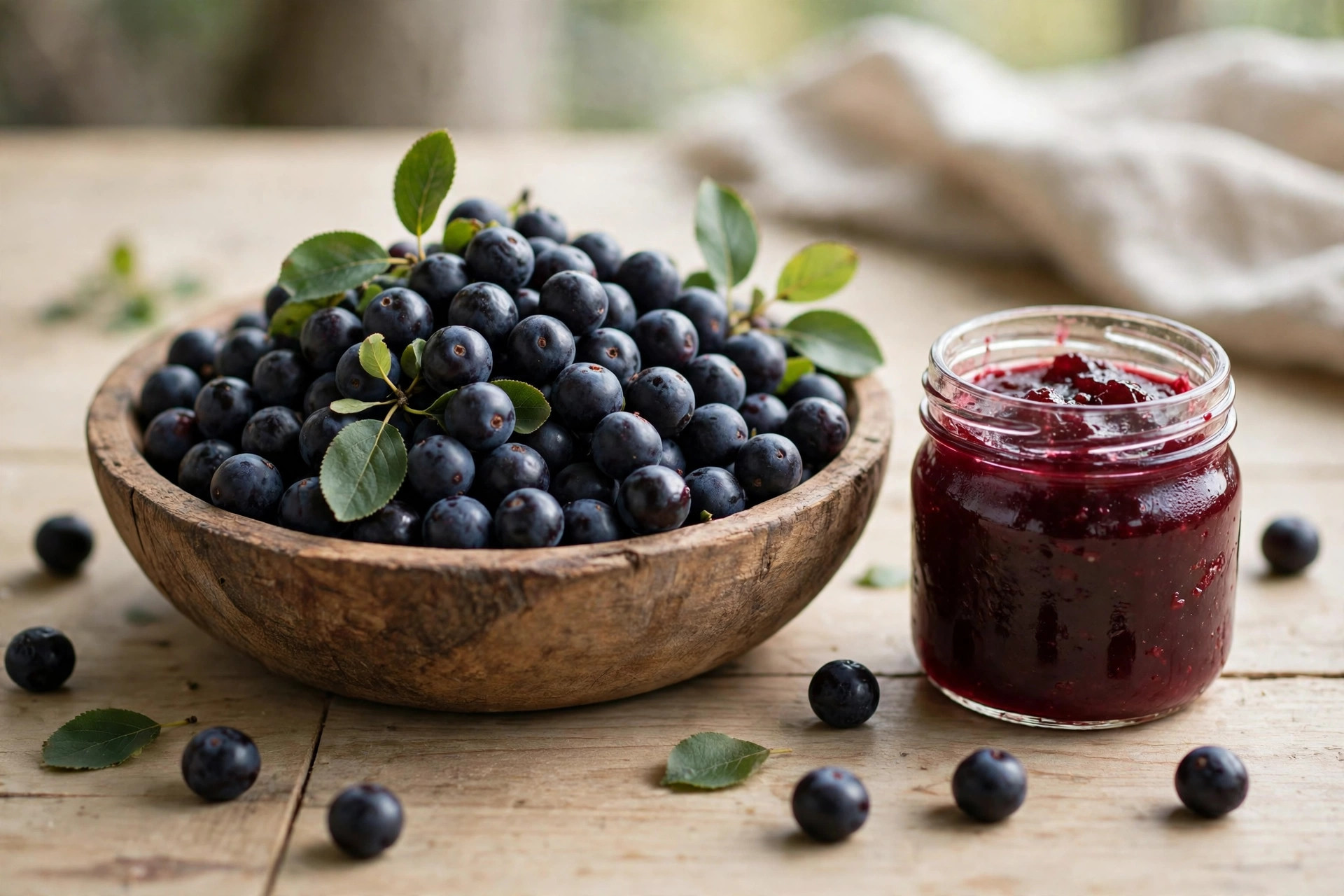
Chokecherries are small, dark, sharply tart berries that grow wild across North America, and they have quietly earned a reputation as one of the continent's most antioxidant-rich wild fruits. Here is what they contain, how they have traditionally been used, and what the evidence really says.
What Are Chokecherries?
The chokecherry (Prunus virginiana) is a hardy shrub or small tree native to woodlands, riverbanks and prairie edges across Canada and the United States. Its clusters of deep purple-black fruit ripen in late summer, and the berries are famously astringent raw — hence the name. For generations, foragers have turned them into jellies, jams, syrups, juices and wine, where cooking and a little sweetness tame the sharpness.
Chokecherry Nutrition: What Is Inside the Berry
The deep, dark colour of a ripe chokecherry is a clue to its nutritional profile. The berries are a concentrated source of anthocyanins, the purple pigments behind many dark fruits, with one study noting around 237 milligrams per 100 grams of fresh fruit. They also provide vitamin C and vitamin A, along with manganese, potassium, iron and calcium, plus useful dietary fibre. They are low in fat and naturally low in sugar, and also contain proanthocyanidins and quinic acid.
Antioxidants and the Evidence So Far
Antioxidants are the headline story for chokecherries. Laboratory tests have recorded very high antioxidant capacity, with ORAC values reported around 15,000 to 25,000 micromol TE per 100 grams, driven largely by the anthocyanins cyanidin-3-glucoside and delphinidin-3-glucoside.
What the lab studies show
In test-tube and animal studies, chokecherry extracts have shown antioxidant and anti-inflammatory activity, and animal work has reported improvements in blood pressure and blood lipid markers. Promising, but these results come from concentrated extracts in a laboratory, not from people eating a spoonful of jelly.
What is still unproven
Here is the honest part: there are no large human clinical trials of chokecherry itself. Most evidence comes from laboratory studies, animal studies, or research on related Prunus species. Chokecherries are undoubtedly a nutrient-dense fruit, but claims that they treat or prevent disease go well beyond what the science has shown. Enjoy them as a wholesome food, not as a medicine.
Traditional Uses of Chokecherry
Chokecherry has a long history of use in Indigenous North American communities, where preparations from the berries, bark and roots were used for everyday complaints. Teas and syrups were traditionally taken for coughs and sore throats, while the fruit's astringent qualities were valued for soothing digestive upsets. The bark was also used as an expectorant, and modern analysis confirms it contains phenolic compounds such as catechin and epicatechin — though traditional use is not the same as proven effect in people.
How to Enjoy Chokecherries Safely
The flesh of the ripe fruit is the part to eat, and it is at its best cooked.
Always remove the pits
The pits, leaves, stems and bark contain cyanogenic glycosides, including amygdalin, which can release hydrogen cyanide when crushed or digested. Never eat the pits, and never chew or swallow them. When you make jelly or syrup, the fruit is strained and the pits are discarded, which is the traditional safe way to enjoy them.
Cook them first
Cooking is the traditional preparation for a reason. Heat helps to neutralise the small amounts of these compounds that may be present in the fruit, and it softens the astringent bite. Jellies, jams, syrups and sauces are the classic routes, and they keep well for months. Only gather chokecherries if you can identify them with confidence, and if you are pregnant, breastfeeding or taking medication, check with a healthcare professional before trying concentrated chokecherry products.
A Simple Way to Try Chokecherry
If you can find chokecherry jelly or syrup at a farmers' market, try a spoonful stirred into plain yoghurt or porridge, or diluted with sparkling water as a tart, refreshing drink.
Related reading on Organic Health Fix
- Black Currant Benefits: What the Evidence Really Says
- Rowanberry Benefits: What the Evidence Really Says
- Kiwiberry Benefits: What the Evidence Really Says
Tags: #Chokecherry #ChokecherryBenefits #WildBerries #NaturalRemedies #Antioxidants #GutHealth #WellnessTips
Comments
Post a Comment