Opening a jar, carrying shopping, holding a handrail or turning a key can feel harder than it used to. Grip strength is part of everyday life, yet it is easy to overlook until simple tasks take more effort. The good news is that hands and forearms often respond well to gentle, regular practice. This guide looks at what the evidence suggests, with practical home-friendly ideas and sensible cautions. What grip strength benefits really mean Researchers often use grip strength as a simple marker of overall muscle function because it is easy to measure and reflects how well the hands and forearms work together. In studies of adults, stronger grip tends to sit alongside better mobility and an easier time with daily activities. That does not mean a hand exerciser can guarantee any particular health outcome. It does suggest that keeping the hands active is a worthwhile part of a balanced routine , alongside walking, leg strength and balance practice. Many people find the most noticeable ch...
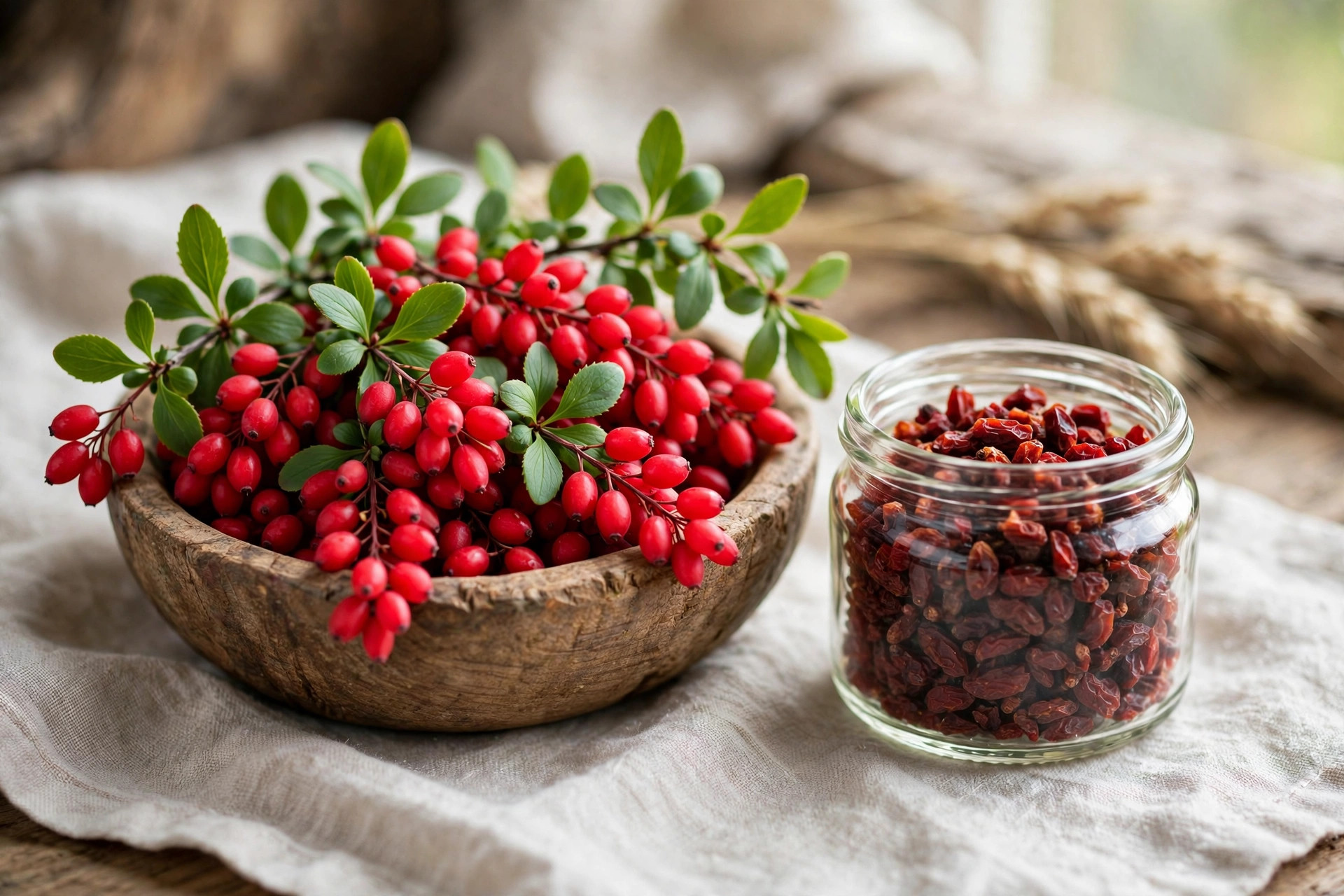
Barberries are small, tart red berries used in traditional kitchens and home remedies for centuries. In parts of Europe, the Middle East and Asia they are stirred into rice dishes, brewed as a tea or eaten dried as a sharp, cranberry-like snack. Modern interest centres on two things: their remarkable vitamin C content and a plant compound called berberine. Here is what the evidence really says — and where it stays cautious.
What Are Barberries?
Barberry (Berberis vulgaris) is a spiny shrub that grows wild across Europe, North Africa and parts of Asia. The berries are long, bright red and sharply sour, so they are usually dried or cooked rather than eaten fresh by the handful. In Persian cooking they are known as zereshk, a familiar ingredient in rice dishes, while herbal traditions have used the root, bark and fruit for digestive complaints and skin troubles for more than 2,500 years.
Barberry Nutrition: Small Berry, Big Vitamin C
A quarter-cup (28 g) serving of dried barberries provides around 89 calories, 3 g of fibre, 1 g of protein and a striking 213% of the daily value for vitamin C, plus about 15% of the daily value for iron. They also supply smaller amounts of zinc, manganese and copper — trace minerals that play a role in everyday immune function.
That vitamin C figure is the most solid fact about barberries: vitamin C supports normal collagen formation, helps the body absorb iron from plant foods and contributes to normal immune function. It is a food-based benefit, not a treatment claim.
Berberine: The Compound Behind the Headlines
Berberine is the alkaloid behind much of barberry's research attention. It is found in the roots, stems and bark as well as the fruit, and laboratory work shows it acts as an antioxidant. Most human research, though, has studied concentrated berberine extracts rather than the berries themselves, so results do not translate directly to eating dried barberries.
What the small human studies suggest
A three-month study of 36 adults with type 2 diabetes found that 1.5 g of berberine a day was linked to a meaningful fall in HbA1c, a measure of average blood sugar — an effect researchers described as comparable to a standard diabetes medicine. Other small studies reported lower total and LDL cholesterol and triglycerides after three months of berberine. These are promising early signals, but the trials are small and short, and reviewers call for larger, longer studies before drawing firm conclusions.
Everyday Ways People Use Barberries
As a food, barberries are easy to enjoy in small amounts. Many people find a spoonful of dried barberries adds a pleasant tartness to rice, couscous, salads and muesli, while a simple barberry tea — a teaspoon of dried berries steeped in hot water for ten minutes — is a traditional way to enjoy them. Because the berries are very sour, a little goes a long way.
Traditionally, barberry preparations were also used for digestive upsets, including diarrhoea. One study found a single 400 mg dose of berberine reduced stool volume by 48% over eight hours in people with E. coli-related diarrhoea — though this is not a substitute for proper medical care, especially for severe or bloody diarrhoea.
A Sensible Word of Caution
Barberries as a food are generally considered safe in culinary amounts, but concentrated berberine supplements are another matter. Berberine may lower blood sugar and blood pressure, so anyone taking diabetes or blood pressure medicines should speak to their clinician before using extracts. It is also best avoided in pregnancy and breastfeeding, as concentrated products have not been tested in those groups, and large amounts of the berries can cause loose stools or stomach ache.
Related reading on Organic Health Fix
- Black Currant Benefits: What the Evidence Really Says
- Sea Buckthorn Benefits: What the Evidence Really Says
- Feijoa Benefits: What the Evidence Really Says
Tags: #Barberry #Berberine #VitaminC #NaturalRemedies #GutHealth #WellnessTips #Antioxidants #HealthyEating
Comments
Post a Comment