A scratchy throat can make an ordinary day feel surprisingly long. That is often when people reach for one of the oldest home rituals of all: a warm salt water gargle. It costs almost nothing, takes a minute to prepare, and many people find the warmth itself soothing. But what do salt water gargle benefits look like when tradition meets research? The honest answer is modest and reassuring: this is best thought of as a comfort measure, not a cure. This guide is general wellness information, not medical advice. Salt water gargle benefits: comfort, not a cure Gargling simply means swishing liquid at the back of the throat and spitting it out. Warm water on its own can feel comforting, rather like a warm drink, and adding a little salt changes the liquid in a way researchers think may help swollen, irritated tissue feel less puffy for a while. Salt water is also thought to help loosen mucus, which may make the throat feel clearer after gargling. It is worth keeping expectations gentle...
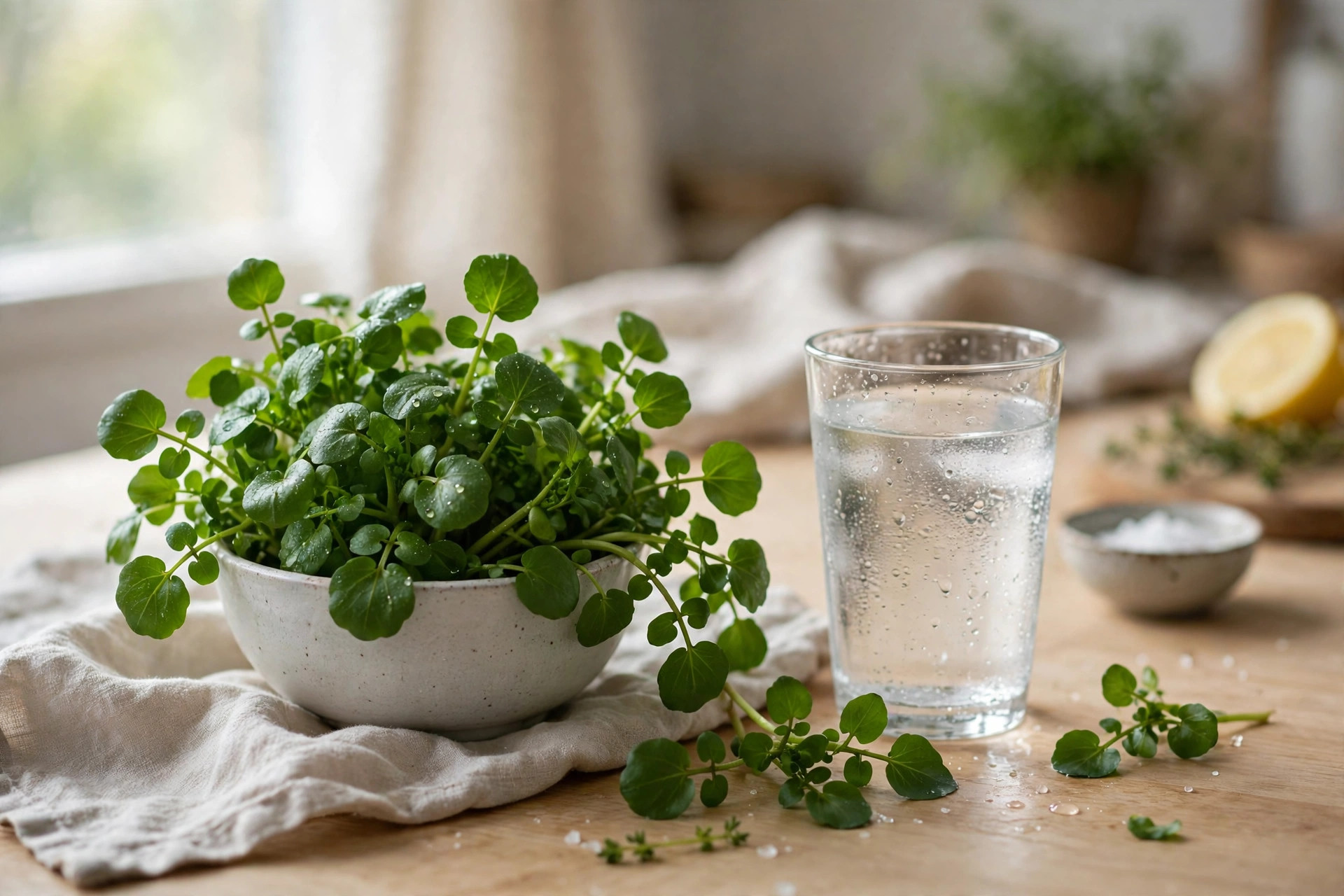
Watercress is a small peppery leaf with an outsized reputation. When researchers at the United States Centers for Disease Control scored 47 fruits and vegetables for nutrient density, watercress came out on top with a perfect score of 100, ahead of chard, spinach and kale. It is low in calories yet rich in vitamin K, vitamin C and beta-carotene. This guide looks at what watercress contains, what the research shows, and how to enjoy it simply at home.
What Watercress Contains
Watercress (Nasturtium officinale) is a fast-growing aquatic member of the cabbage family, a cousin of broccoli, rocket and mustard greens. Per 100 grams of raw leaves, figures from the United States Department of Agriculture show around 250 micrograms of vitamin K — more than twice the daily value — and about 43 milligrams of vitamin C, roughly half the daily value, for only about 11 calories. A single cup (34 grams) provides over 100% of the daily value for vitamin K, plus vitamin A, calcium, folate and the carotenoids lutein and zeaxanthin. Like other cruciferous vegetables, it also contains glucosinolates, the plant compounds behind its peppery bite.
Vitamin K, Bones and Everyday Health
Vitamin K is the nutrient watercress is best known for. The body uses it to make the proteins that help blood clot, and it also plays a role in bone health. Because a cup of watercress covers a full day's vitamin K, it is one of the simplest ways to close a gap in the diet. Vitamin C supports collagen formation, immune function and the absorption of iron from plant foods eaten in the same meal. These are established nutrient roles rather than miracle claims — watercress is best understood as a genuinely nutrient-dense food, not a treatment.
What the Trials Actually Found
The most interesting human research on watercress looked at markers of oxidative stress rather than disease outcomes. In a well-designed 2007 crossover trial, 60 adults ate about 85 grams of raw watercress a day for eight weeks, and researchers measured a 17% reduction in DNA damage in their white blood cells, with larger effects in the smokers in the group. A separate placebo-controlled trial found that a freeze-dried watercress drink increased the urinary detoxification products of common pollutants. These are early but encouraging findings: a lower level of a lab marker is not the same as preventing illness, and the studies were short, but they suggest watercress supports the body's antioxidant defences in a measurable way.
Heart health and blood vessels
Watercress is also rich in dietary nitrate, which the body converts to nitric oxide, helping blood vessels relax. Combined with its potassium, folate and low calorie count, it fits naturally into a heart-friendly eating pattern. As with most single foods, though, the benefit comes from the overall diet, not from one ingredient alone.
How to Eat Watercress Simply
Watercress needs almost no preparation. Its peppery flavour works beautifully in salads, sandwiches and wraps, stirred through soups just before serving, or blended into a green smoothie. Try a handful tossed with sliced pear and walnuts, or wilted briefly into pasta with garlic and olive oil. A practical amount is about one to two cups of fresh leaves a day. Because the leaves are delicate, buy them fresh, keep them chilled and eat them within a couple of days.
A few gentle cautions
Two points deserve attention. First, raw watercress gathered from the wild can carry the larvae of a parasitic liver fluke, so only eat shop-bought or properly grown watercress, and wash it well. Second, because watercress is so rich in vitamin K, people taking the blood thinner warfarin should keep their intake fairly consistent and mention it to their clinician. Anyone with a thyroid condition who eats very large amounts of raw cruciferous vegetables should also check with their clinician.
Related reading on Organic Health Fix
- Brussels Sprouts Benefits: What the Evidence Really Says
- Chia Seeds Benefits: What the Evidence Really Says
- Pomegranate Benefits: What the Evidence Really Says
Tags: #Watercress #NaturalRemedies #WellnessTips #Nutrition #VitaminK #GutHealth #LeafyGreens #HealthyEating
Comments
Post a Comment