Opening a jar, carrying shopping, holding a handrail or turning a key can feel harder than it used to. Grip strength is part of everyday life, yet it is easy to overlook until simple tasks take more effort. The good news is that hands and forearms often respond well to gentle, regular practice. This guide looks at what the evidence suggests, with practical home-friendly ideas and sensible cautions. What grip strength benefits really mean Researchers often use grip strength as a simple marker of overall muscle function because it is easy to measure and reflects how well the hands and forearms work together. In studies of adults, stronger grip tends to sit alongside better mobility and an easier time with daily activities. That does not mean a hand exerciser can guarantee any particular health outcome. It does suggest that keeping the hands active is a worthwhile part of a balanced routine , alongside walking, leg strength and balance practice. Many people find the most noticeable ch...
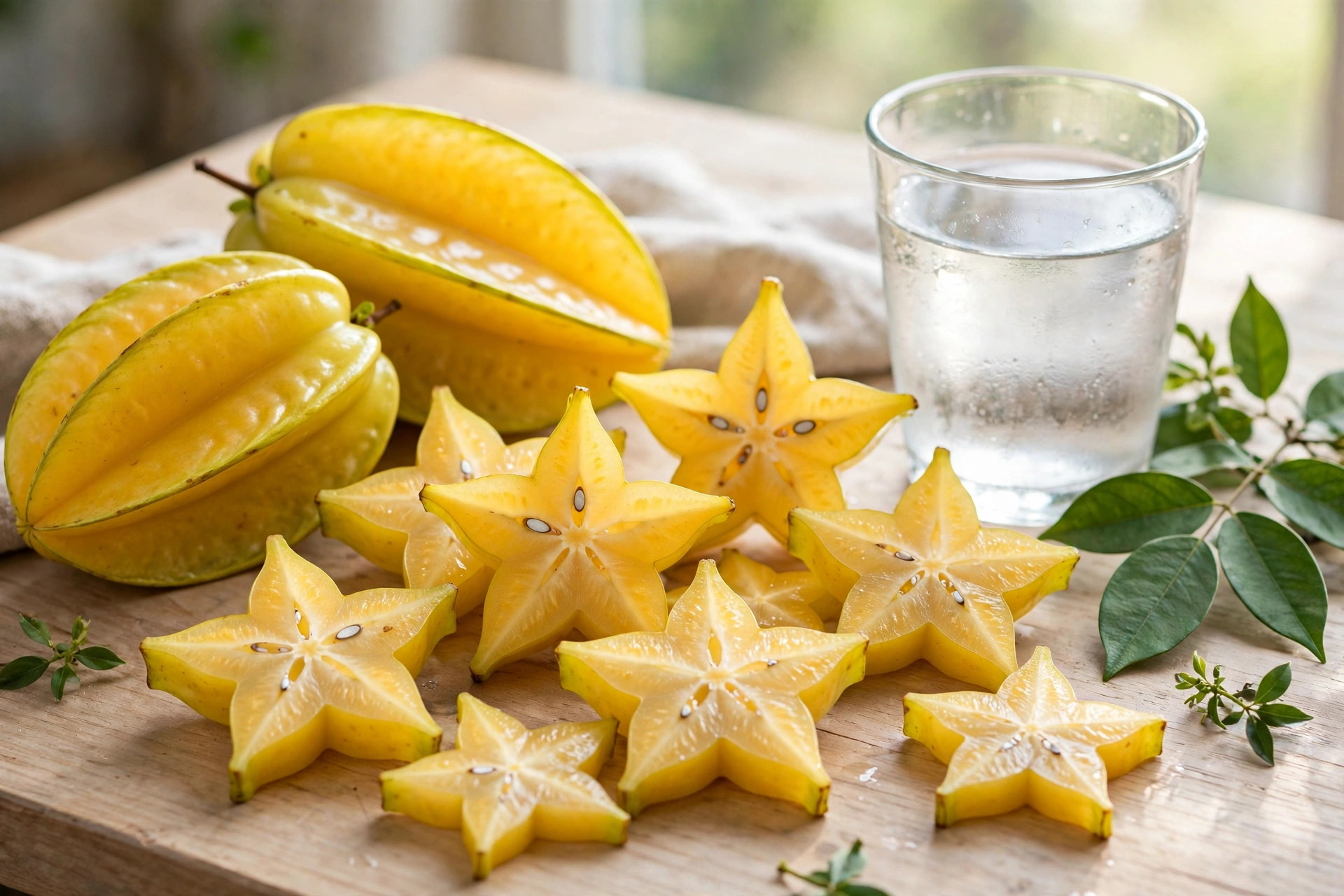
Slice a starfruit crosswise and you get a perfect five-pointed star — one of the prettiest fruits in the produce aisle. Starfruit (carambola) is a light, crisp tropical fruit with a genuinely useful dose of vitamin C and very few calories. But it is also the one common fruit that kidney specialists warn certain people to avoid entirely. Here is what the evidence really says.
Starfruit Benefits: What Is Actually in the Fruit?
A 100-gram serving of raw starfruit — roughly one medium fruit — provides only about 31 calories and is more than 90 per cent water. It delivers 34.4 milligrams of vitamin C, around 38 per cent of the daily target for men and 46 per cent for women, along with 2.8 grams of dietary fibre, small amounts of potassium and copper, and plant compounds including flavonoids and polyphenols. One correction is worth making early: starfruit is sometimes described as a good source of vitamin A. It is not — at around 3 micrograms per 100 grams it supplies only a tiny fraction of the daily requirement. Its real strength is the vitamin C, the fibre and the low calorie cost.
Vitamin C, Immunity and Skin
Vitamin C is the benefit with the firmest footing. It supports the normal function of the immune system, is needed to make collagen — the protein that holds skin, blood vessels and connective tissue together — and helps the body absorb iron from plant foods. A single starfruit covers close to half a day's vitamin C, which is a meaningful contribution from a food that adds only 31 calories. What vitamin C does not do is prevent colds: decades of reviews show regular intake may shorten a cold slightly in some people, but it does not reliably stop infection. What a vitamin C-rich food like starfruit does is simpler and more reliable — it helps you meet your daily requirement easily, which supports the immune system doing its normal job.
Starfruit and heart health: early signals only
The heart research on starfruit is thin. One small trial in Thailand gave 27 older adults juice made from 100 grams of fresh starfruit twice daily for four weeks; LDL cholesterol fell and HDL rose, while total cholesterol did not change. The study had no control group and lasted only four weeks, so it is a signal worth noting, not a conclusion. Starfruit can reasonably sit inside a heart-friendly diet; it cannot be credited with protecting the heart on its own.
Fibre and Gut Health
Starfruit's 2.8 grams of fibre per 100 grams is respectable for such a light fruit. Much of it is insoluble cellulose, which adds bulk and supports regular bowel movements, with a smaller share of soluble pectin, which slows digestion and feeds beneficial gut bacteria. Many people find the fruit has a mild laxative effect in larger amounts, so it is best enjoyed as part of a varied diet rather than in very large quantities at once. As with most fruit, the whole fruit beats the juice: a glass of starfruit juice contains almost no fibre, while the fresh slices keep it.
The Kidney Warning: Who Should Avoid Starfruit Entirely
This is the most important section in the article. Starfruit contains two compounds that healthy kidneys clear without trouble but damaged kidneys cannot: caramboxin, a neurotoxin, and oxalic acid. If you have chronic kidney disease, reduced kidney function for any reason, or you are on dialysis, do not eat starfruit or drink starfruit juice — in any form, including cooked or dried. The National Kidney Foundation advises complete avoidance, because caramboxin can build up in the bloodstream and cause persistent hiccups, vomiting, confusion, muscle weakness, seizures and, in serious cases, coma. People with a history of calcium oxalate kidney stones should also be cautious. Starfruit also inhibits the enzyme CYP3A4, which helps the body process many common medicines — a similar interaction to the well-known grapefruit warning — so if you take regular medication, ask your pharmacist before making starfruit a habit.
How to Enjoy Starfruit Safely
For people with healthy kidneys, starfruit is easy to enjoy. Choose fruit that is firm, glossy and mostly yellow. Slice it crosswise into stars for salads and fruit bowls, or dice it into stir-fries and salsas where its tartness cuts through richness. Keep portions modest — one fruit at a time is plenty — and skip concentrated starfruit juice, which delivers the oxalate without the fibre. If you are pregnant or breastfeeding, there is not enough safety data to recommend it, so discuss it with your clinician first.
Related reading on Organic Health Fix
- Apple Benefits: What the Evidence Really Says
- Blackcurrant Benefits: What the Evidence Really Says
- Lychee Benefits: What the Evidence Really Says
Tags: #Starfruit #Carambola #VitaminC #NaturalRemedies #WellnessTips #FruitBenefits #GutHealth #HealthyEating
Comments
Post a Comment