Opening a jar, carrying shopping, holding a handrail or turning a key can feel harder than it used to. Grip strength is part of everyday life, yet it is easy to overlook until simple tasks take more effort. The good news is that hands and forearms often respond well to gentle, regular practice. This guide looks at what the evidence suggests, with practical home-friendly ideas and sensible cautions. What grip strength benefits really mean Researchers often use grip strength as a simple marker of overall muscle function because it is easy to measure and reflects how well the hands and forearms work together. In studies of adults, stronger grip tends to sit alongside better mobility and an easier time with daily activities. That does not mean a hand exerciser can guarantee any particular health outcome. It does suggest that keeping the hands active is a worthwhile part of a balanced routine , alongside walking, leg strength and balance practice. Many people find the most noticeable ch...
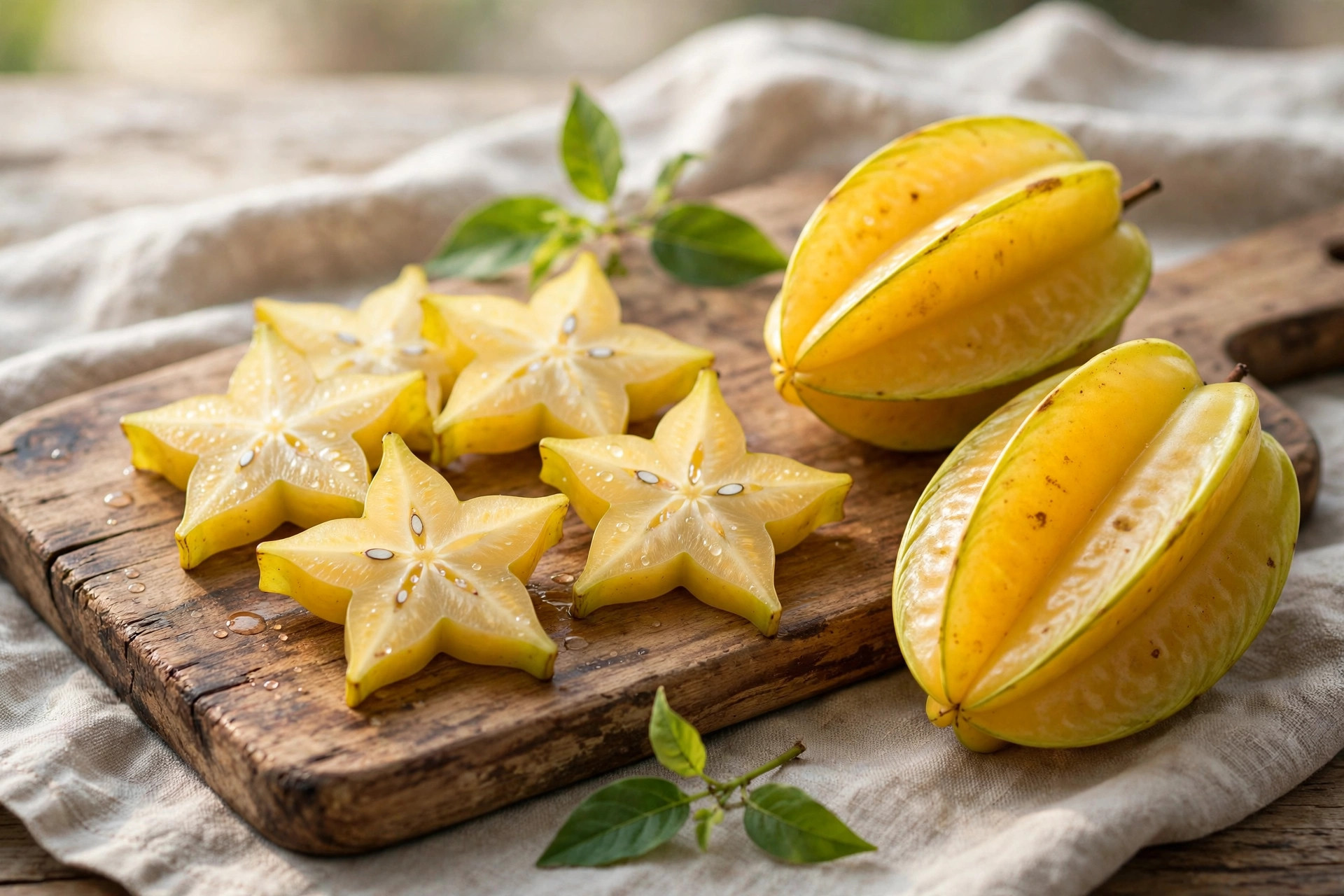
Slice a star fruit across its ridges and you get a perfect star — how carambola earned its nickname. Beyond the pretty shape, it is low in calories, a useful source of vitamin C and fibre, and a refreshing addition to a varied diet. That said, the honest picture is more modest than some headlines suggest, and there is one important group of people who should avoid it altogether. Here is what the evidence really says.
What Is Star Fruit?
Star fruit, also known as carambola, is a tropical fruit grown widely across South-East Asia and now found in many supermarkets. The whole fruit is edible — the waxy skin, the crisp flesh and the tiny seeds — and its flavour sits somewhere between a pear, a grape and an orange, sweet with a gentle tartness. One medium fruit (about 91 grams) carries roughly 28 calories, 3 grams of fibre and just over half the daily reference intake of vitamin C, along with small amounts of copper, potassium, folate and magnesium.
Star Fruit Benefits: What the Evidence Supports
Most of the research on star fruit is still early, and much of it comes from laboratory or animal studies rather than large human trials. With that in mind, here is what the evidence supports, and where it stays cautious.
Vitamin C for everyday immune support
Vitamin C is star fruit's strongest card. A single medium fruit provides around 52% of the daily reference intake, and a cup of sliced star fruit delivers roughly 37 mg — close to half the daily requirement for women and about 41% for men. Vitamin C helps the body make collagen, supports normal immune function and acts as an antioxidant. Eating star fruit will not stop you catching a cold, but getting enough vitamin C helps your immune system work at its best.
Fibre for gut health
Star fruit offers a respectable amount of fibre. One cup of cubed star fruit contains about 3.7 grams, which helps food move through the digestive system and supports regular bowel movements. The fibre can also act as fuel for the beneficial bacteria in the colon, making star fruit a gut-friendly addition to meals.
Antioxidants and early research
Star fruit contains plant compounds with antioxidant properties, including quercetin, gallic acid and epicatechin. Early research suggests these may have anti-inflammatory effects and may support healthy cholesterol levels, but the studies are small and mostly in animals — so it is too soon to say whether eating star fruit has a meaningful effect on cholesterol or inflammation in people.
How to Eat Star Fruit
Choose fruit that is mostly yellow with a hint of green at the ridges, and firm rather than soft. Wash it well, trim the brown edges of the five ridges, then slice across the fruit to reveal the star shapes. The slices are lovely in fruit salads, on top of yoghurt or porridge, blended into smoothies, or simply eaten fresh as a light snack.
Who Should Avoid Star Fruit
This is the part that matters most. Star fruit is high in oxalate and contains a neurotoxin called caramboxin. Healthy kidneys clear it without trouble, but for people with chronic kidney disease, reduced kidney function or those on dialysis, star fruit and its juice can cause serious harm, including confusion and seizures. If you have any kidney condition, or you take prescription medicines, speak with your doctor before trying star fruit. The fruit is also best enjoyed in ordinary amounts rather than as large quantities of juice, especially on an empty stomach.
Related reading on Organic Health Fix
- Pineapple Benefits: What the Evidence Really Says
- Grapes Benefits: What the Evidence Really Says
- Black Tea Benefits: What the Evidence Really Says
Tags: #StarFruit #Carambola #VitaminC #NaturalRemedies #GutHealth #WellnessTips #HealthyEating #FruitBenefits
Comments
Post a Comment