Opening a jar, carrying shopping, holding a handrail or turning a key can feel harder than it used to. Grip strength is part of everyday life, yet it is easy to overlook until simple tasks take more effort. The good news is that hands and forearms often respond well to gentle, regular practice. This guide looks at what the evidence suggests, with practical home-friendly ideas and sensible cautions. What grip strength benefits really mean Researchers often use grip strength as a simple marker of overall muscle function because it is easy to measure and reflects how well the hands and forearms work together. In studies of adults, stronger grip tends to sit alongside better mobility and an easier time with daily activities. That does not mean a hand exerciser can guarantee any particular health outcome. It does suggest that keeping the hands active is a worthwhile part of a balanced routine , alongside walking, leg strength and balance practice. Many people find the most noticeable ch...
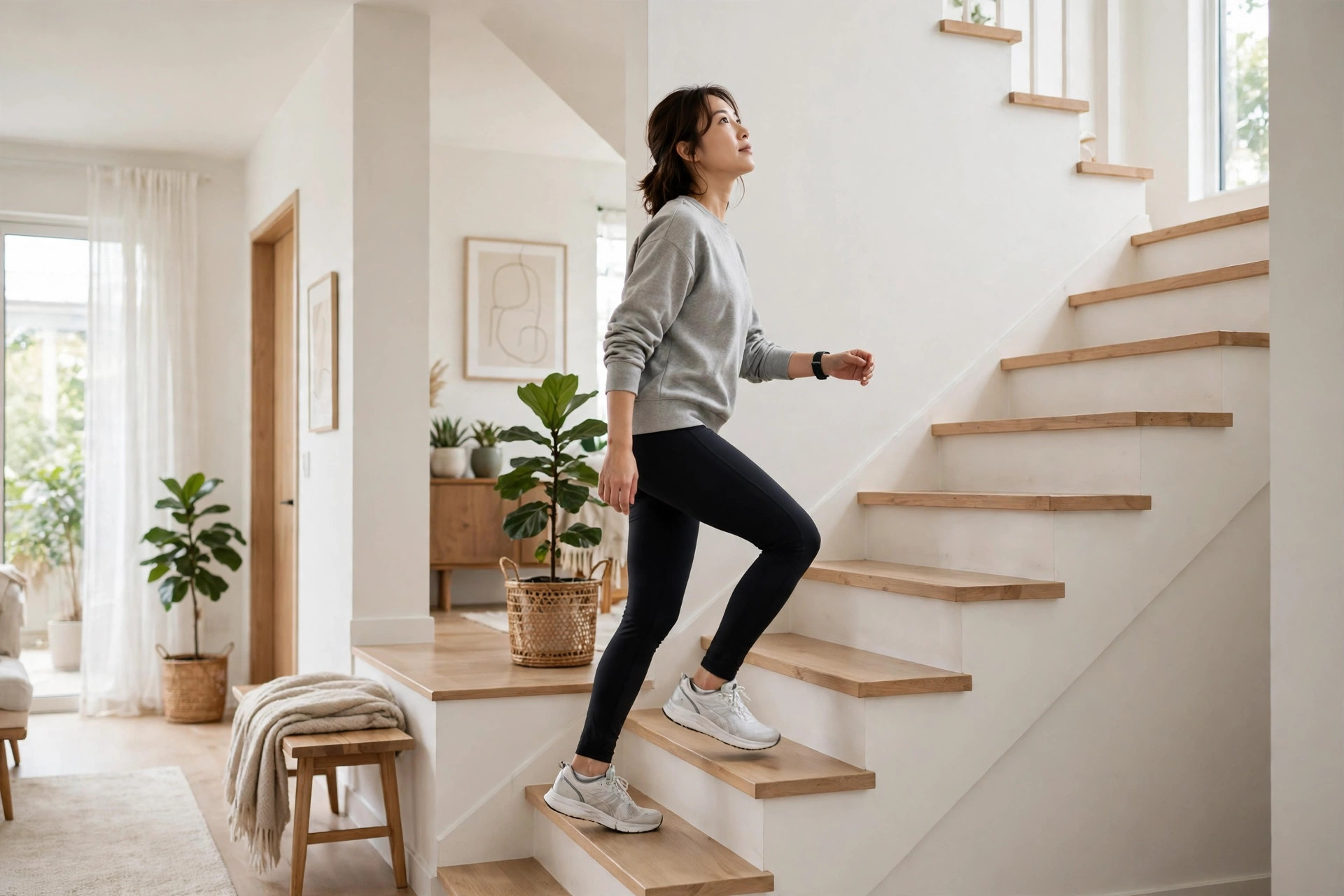
Stairs are easy to overlook, yet choosing them over the lift turns an ordinary moment into brief, purposeful movement. Many people find that a flight or two leaves them warm, slightly breathless and more awake, which is why researchers keep asking what regular stair climbing may do for everyday fitness. This guide looks at what the evidence really says and how to add stairs gently at home. As ever, this is general wellness information, not medical advice.
What the research links to stair climbing benefits
The strongest recent signal comes from large observational research. A review of nine studies involving 480,479 adults found that people who regularly climbed stairs were less likely to develop cardiovascular problems, and less likely to die from cardiovascular causes or any cause, than people who did not climb stairs. That pattern needs honest framing: observational research shows an association, not proof of cause. People who feel fitter may choose stairs more often, so part of the link may reflect starting health. Even so, brief activity that raises the heart rate can still count towards an active day.
Short bouts, steadier fitness
Smaller training studies help explain why stairs feel effective so quickly. In one eight-week study of previously sedentary young women, short bouts of stair climbing improved aerobic fitness measures and modestly lowered LDL cholesterol. A home-based study in sedentary women found similar improvements in fitness, body composition and some blood lipids after eight weeks of climbing at home. Climbing also asks a lot of the legs: calves, thighs and glutes work against gravity, while balance is practised with each step. Small, repeated bouts can be a practical fitness habit.
Gentle ways to add stairs at home
Start smaller than you think
Begin with one extra flight at a comfortable pace, holding the handrail and resting whenever you wish. Slow, steady steps are a perfectly good start, and spreading short bouts through the day — after breakfast, between tasks, or on the way to another room — often feels easier than one long session. When a flight feels routine, you can add a second, pause a little less, or climb at a slightly brisker pace on days when you feel well. Walking down gently matters too, so keep your steps controlled rather than hurrying.
Make it comfortable and easy to repeat
Supportive shoes, good lighting and clear steps help the habit feel safe and inviting. Try to climb with empty hands or a light load, keep the handrail within reach, and link stairs to something you already do, such as making tea or fetching post. Many people find that a simple cue — shoes by the stairs, or a note on the fridge — makes the choice feel automatic. On tired days, flat walking indoors or a gentle stretch is a fine alternative; consistency matters more than intensity.
Sensible cautions before you begin
Stairs are not suitable for everyone. Knee, hip or back discomfort, dizziness, unusual breathlessness or balance worries are reasons to take extra care, use the handrail, and stop if anything feels painful or unsteady. Chest discomfort, severe breathlessness or feeling faint should never be pushed through. If you live with a heart condition, joint problems or any concern about exertion, seek professional guidance before building stairs into a routine.
Related reading on Organic Health Fix
- Cycling Benefits: What the Evidence Really Says
- Stretching Benefits: What the Evidence Really Says
- Chair Yoga Benefits: What the Evidence Really Says
Tags: #StairClimbing #GentleExercise #HeartHealth #WellnessTips #NaturalRemedies #FitnessAtHome #HealthyHabits
Comments
Post a Comment