Opening a jar, carrying shopping, holding a handrail or turning a key can feel harder than it used to. Grip strength is part of everyday life, yet it is easy to overlook until simple tasks take more effort. The good news is that hands and forearms often respond well to gentle, regular practice. This guide looks at what the evidence suggests, with practical home-friendly ideas and sensible cautions. What grip strength benefits really mean Researchers often use grip strength as a simple marker of overall muscle function because it is easy to measure and reflects how well the hands and forearms work together. In studies of adults, stronger grip tends to sit alongside better mobility and an easier time with daily activities. That does not mean a hand exerciser can guarantee any particular health outcome. It does suggest that keeping the hands active is a worthwhile part of a balanced routine , alongside walking, leg strength and balance practice. Many people find the most noticeable ch...
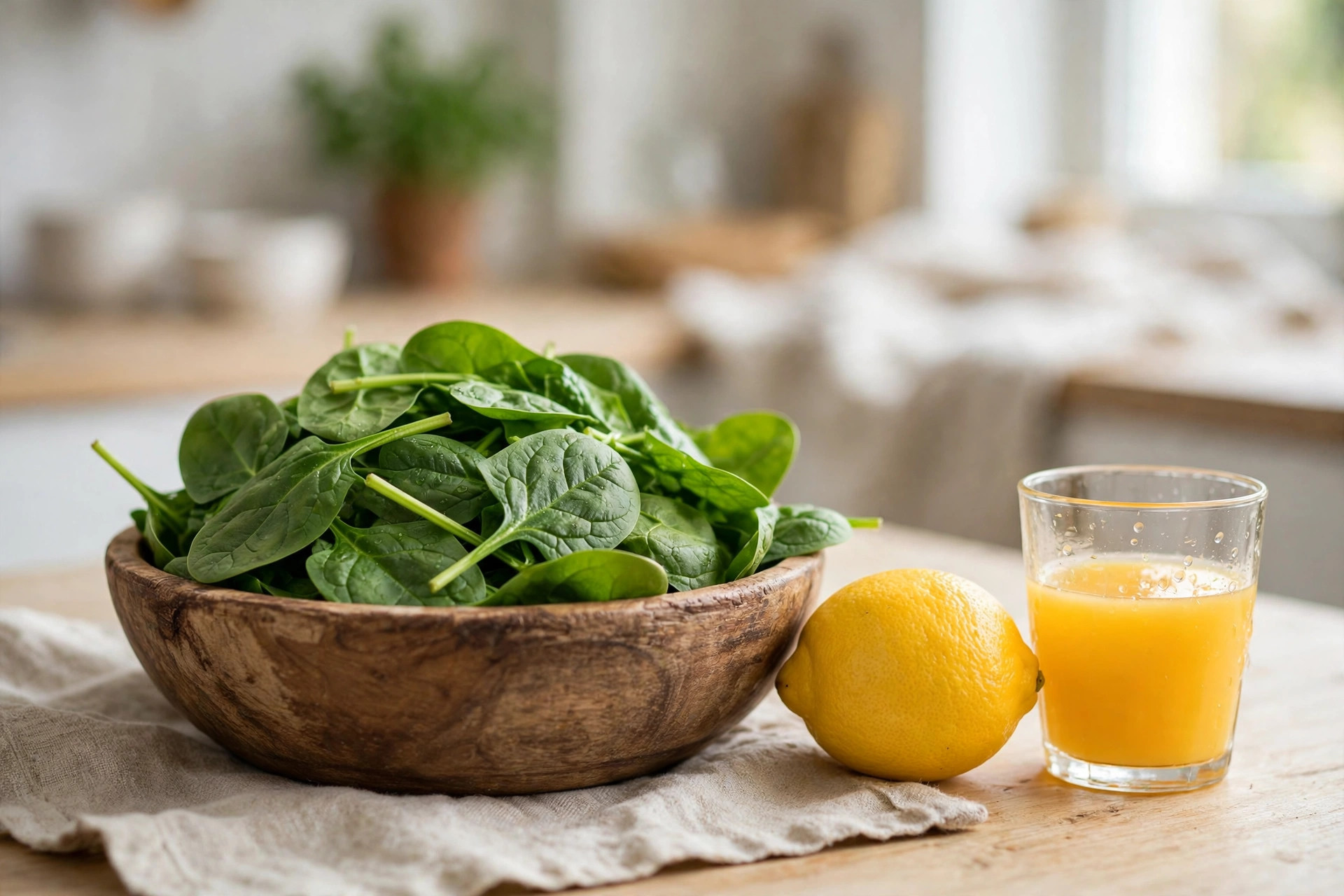
Spinach has been called a superfood for so long that it is easy to stop asking what the label actually means. Behind the reputation sits a leaf that is genuinely rich in several nutrients — and one famous claim that deserves a closer look.
What Is in Spinach?
Per 100 grams of raw spinach, you get only about 23 calories, alongside roughly 483 micrograms of vitamin K, 194 micrograms of folate, 2.7 milligrams of iron and 28 milligrams of vitamin C. It also carries magnesium, vitamin A and the carotenoids lutein and zeaxanthin — one of the most nutrient-dense vegetables you can put on a plate, for very few calories.
Spinach Benefits for Eyes, Bones and Heart
Eye health is where spinach has the clearest case. Lutein and zeaxanthin gather in the retina, where they help filter harmful light. Research from the National Eye Institute links higher intakes of these carotenoids with a lower risk of age-related macular degeneration, and a small daily serving of cooked spinach supplies a meaningful amount.
Bones and blood benefit from the vitamin K. A single 100-gram serving provides several times the daily reference amount, and vitamin K plays a well-established role in blood clotting and bone metabolism. Folate supports normal cell growth, which is one reason spinach appears so often in pregnancy-friendly eating guides — though anyone taking medication should check with their clinician first.
Heart health is supported by the folate and magnesium, and by natural nitrates that help blood vessels relax. One study found that people who drank a spinach beverage had lower blood pressure for several hours afterwards.
The Iron Question: What the Evidence Really Says
Here is the honest part. Spinach contains iron, but it is non-heme iron, and spinach is also high in oxalates — compounds that bind iron in the gut and reduce how much your body absorbs. So while the label shows 15% of the daily value per 100 grams, the amount actually taken up is much lower.
Pairing Spinach With Vitamin C
There is a simple fix many people find helpful: eat spinach with a vitamin C-rich food. A squeeze of lemon over wilted spinach, or spinach in a salad with orange segments or peppers, can raise non-heme iron absorption several-fold. Adding a little oil helps too, because lutein and zeaxanthin need fat to be absorbed.
How to Eat More Spinach
Spinach is one of the easiest greens to add to everyday cooking. Stir a handful into soups, curries and pasta sauces in the last minute of cooking, wilt it with garlic as a side dish, or blend it into a morning smoothie where fruit masks the flavour. Light steaming preserves most of the folate while making the beta-carotene easier to absorb, so gentle cooking is often the best of both worlds.
When to Be Cautious
A few notes are worth keeping in mind. Because spinach is very high in vitamin K, people taking blood-thinning medication should keep their intake fairly steady and speak to their doctor before making big changes. Its oxalate content also means people prone to calcium oxalate kidney stones may want to avoid very large daily amounts. And as with any leafy green, wash it well before eating it raw.
Spinach will not transform your health overnight, and it is not the iron powerhouse the old cartoons suggested. What it is, though, is a genuinely nourishing, affordable and versatile leaf — one of the easiest upgrades you can make to an everyday plate.
Related reading on Organic Health Fix
- Black Tea Benefits: What the Evidence Really Says
- Pineapple Benefits: What the Evidence Really Says
- Bitter Gourd Benefits: What the Evidence Really Says
Tags: #SpinachBenefits #NaturalRemedies #WellnessTips #LeafyGreens #Nutrition #EyeHealth #GutHealth #HealthyEating
Comments
Post a Comment