A scratchy throat can make an ordinary day feel surprisingly long. That is often when people reach for one of the oldest home rituals of all: a warm salt water gargle. It costs almost nothing, takes a minute to prepare, and many people find the warmth itself soothing. But what do salt water gargle benefits look like when tradition meets research? The honest answer is modest and reassuring: this is best thought of as a comfort measure, not a cure. This guide is general wellness information, not medical advice. Salt water gargle benefits: comfort, not a cure Gargling simply means swishing liquid at the back of the throat and spitting it out. Warm water on its own can feel comforting, rather like a warm drink, and adding a little salt changes the liquid in a way researchers think may help swollen, irritated tissue feel less puffy for a while. Salt water is also thought to help loosen mucus, which may make the throat feel clearer after gargling. It is worth keeping expectations gentle...
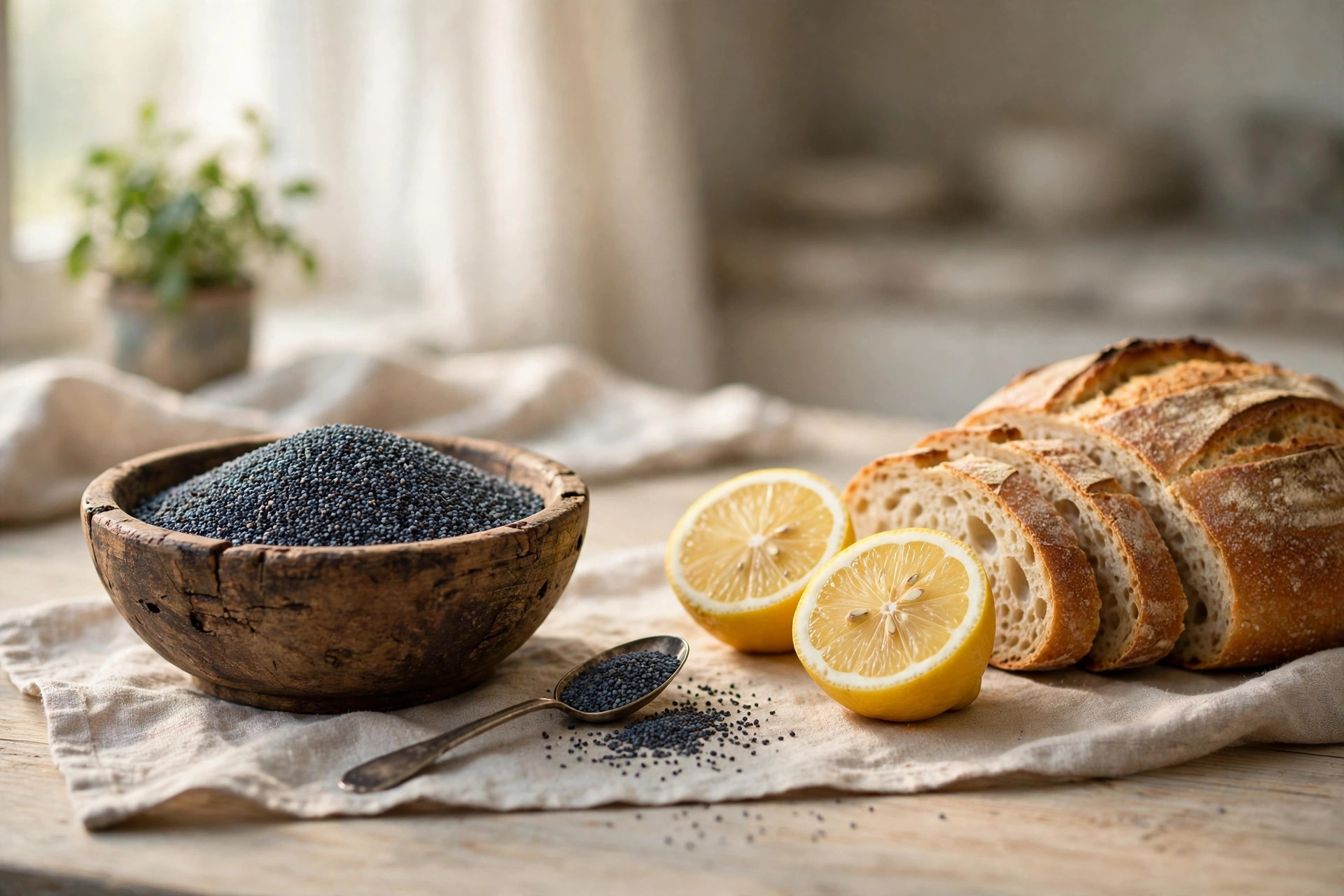
Poppy seeds are easy to overlook. They appear as a sprinkle on bread rolls, a crunch in cakes and a nutty note in dressings — yet these tiny blue-black seeds are among the most mineral-dense foods in the pantry. A single tablespoon carries more calcium than many people expect, along with magnesium, iron and fibre. Here is what the evidence really says about them.
Poppy Seeds Nutrition: Small Seeds, Serious Minerals
According to USDA FoodData Central figures, one tablespoon (about 9 g) of poppy seeds provides roughly 126 mg of calcium — around 13% of the daily value — plus about 27 mg of magnesium, 0.9 mg of iron, 0.7 mg of zinc and 2 g of fibre, for only around 46 calories. A three-tablespoon serving (28 g) delivers about 350 mg of calcium and 100 mg of magnesium, with roughly 6 g of protein and fibre worth around 28% of the daily value.
Few plant foods match this calcium density, and the calcium appears to be reasonably well absorbed, because poppy seeds are low in the oxalates and phytates that block mineral uptake from some other plant foods. Their fat is mostly unsaturated, dominated by linoleic acid.
Poppy Seeds for Bone Health: What the Evidence Shows
Calcium and magnesium are the two minerals most closely tied to bone maintenance, and poppy seeds supply both in meaningful amounts. Many people find them a useful addition to a varied diet, particularly those who eat little dairy. Traditionally used across Central and Eastern Europe in breads, pastries and porridge, they have long been valued as a winter pantry staple.
That said, no single food builds bone health on its own. The evidence supports poppy seeds as one contributor among many — alongside leafy greens, dairy or fortified alternatives, weight-bearing movement and enough vitamin D.
Poppy Seeds and Gut Health
The fibre in poppy seeds supports digestion in the usual way fibre does: it adds bulk, feeds gut microbes and helps keep things moving. A spoonful stirred into porridge or yoghurt adds around 2 g of fibre without changing the flavour much.
Simple ways to add poppy seeds to your day
Start small — a teaspoon or tablespoon at a time. Sprinkle them over salads, stir them into porridge or yoghurt, blend them into dressings, or bake them into muffins and bread. Lightly toasting them in a dry pan brings out their nutty flavour, and grinding them makes their nutrients easier to absorb.
Sensible Cautions: Allergies, Drug Tests and Portions
Poppy seeds deserve a little practical respect. They come from the opium poppy plant, and although the seeds themselves do not produce opiate compounds, traces from the plant's sap can sometimes cling to their surface during harvesting. The European Food Safety Authority has noted this, while also pointing out that cleaning and cooking reduce these residues by around 90%.
For everyday cooking this is rarely a concern, but two cautions are worth knowing. First, poppy seed allergy, though rare, is documented — anyone who reacts to seeds should take care. Second, eating large amounts can occasionally affect drug screening tests, so keep portions modest — a tablespoon or two in a meal — and avoid homemade poppy seed tea entirely.
Related reading on Organic Health Fix
- Chia Seeds Benefits: What the Evidence Really Says
- Psyllium Benefits: What the Evidence Really Says
- Fermented Foods for Gut Health: What the Evidence Really Says
Tags: #PoppySeeds #NaturalRemedies #WellnessTips #BoneHealth #Nutrition #GutHealth #HealthyEating #Seeds
Comments
Post a Comment