Opening a jar, carrying shopping, holding a handrail or turning a key can feel harder than it used to. Grip strength is part of everyday life, yet it is easy to overlook until simple tasks take more effort. The good news is that hands and forearms often respond well to gentle, regular practice. This guide looks at what the evidence suggests, with practical home-friendly ideas and sensible cautions. What grip strength benefits really mean Researchers often use grip strength as a simple marker of overall muscle function because it is easy to measure and reflects how well the hands and forearms work together. In studies of adults, stronger grip tends to sit alongside better mobility and an easier time with daily activities. That does not mean a hand exerciser can guarantee any particular health outcome. It does suggest that keeping the hands active is a worthwhile part of a balanced routine , alongside walking, leg strength and balance practice. Many people find the most noticeable ch...
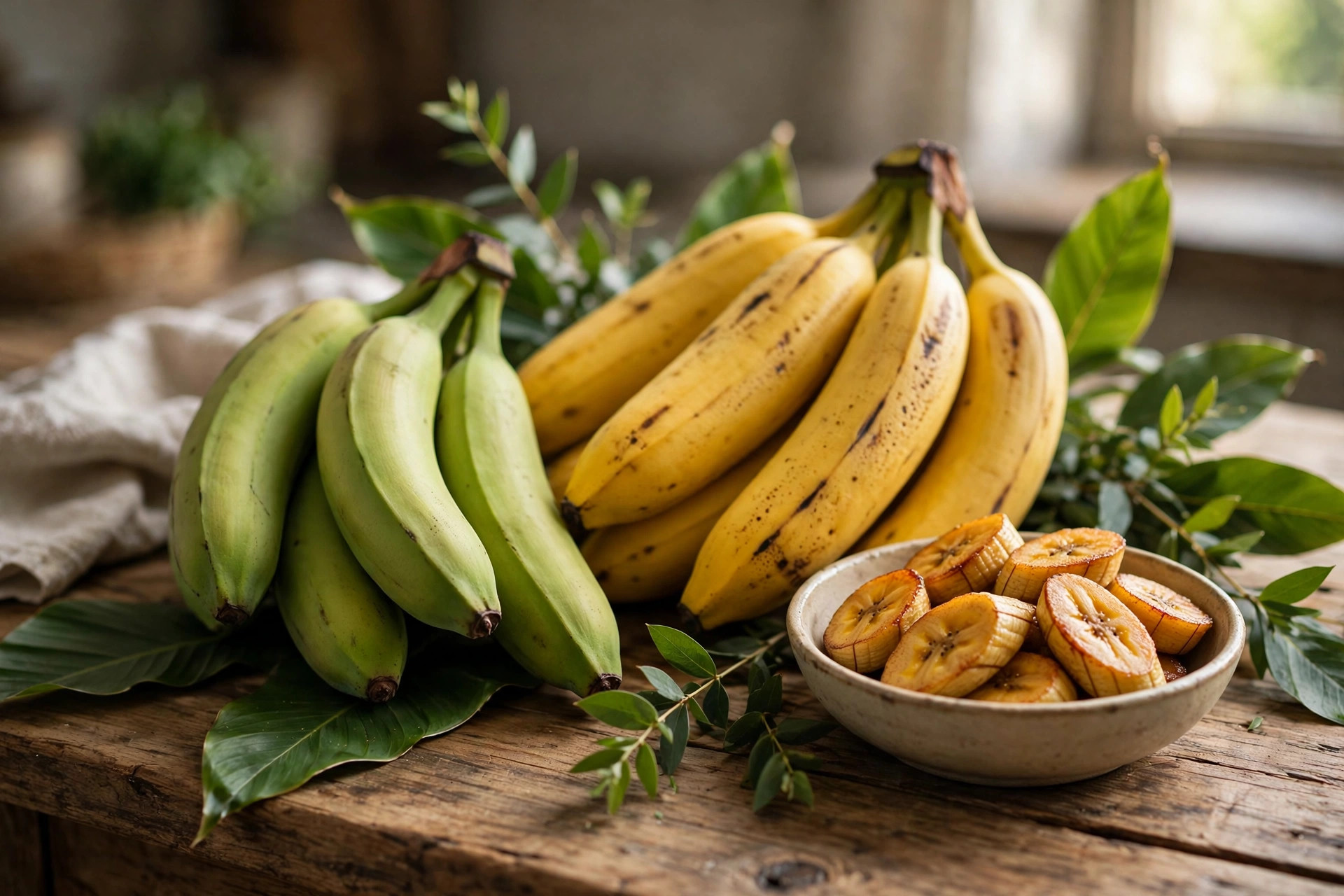
Plantains look like oversized bananas, but they play a very different role in the kitchen. Firmer, starchier and almost always cooked, they are a staple food across West Africa, the Caribbean and Latin America — and they bring a useful mix of potassium, fibre and slow-release carbohydrate to the table. Here is what the evidence really says about plantain benefits, and how to enjoy them at home.
Plantain benefits for steady energy
A single medium plantain provides around 200 calories, mostly from complex carbohydrate, with very little fat. Green plantains are especially rich in resistant starch, a type of carbohydrate that resists digestion in the small intestine and behaves more like fibre. Cooked and then cooled, green plantain develops even more of it, which is one reason boiled plantain tends to keep people feeling full for longer than refined starches.
Potassium and blood pressure
Plantains are a notably good source of potassium. One cup of baked yellow plantain provides roughly 660 mg of potassium, about a fifth to a quarter of an adult's daily needs. Potassium helps the body balance sodium, and diets richer in potassium are associated with healthier blood pressure. Plantains contain more potassium than ordinary bananas, which makes them a practical choice for anyone trying to lift their intake through food rather than supplements. Anyone with kidney disease should check portion sizes with their clinician first, as potassium needs vary.
Gut health and resistant starch
The resistant starch in green plantain acts as a prebiotic, feeding the friendly bacteria in the colon. As those bacteria ferment it, they produce short-chain fatty acids that help nourish the gut lining. Plantains also supply around 3 to 4 g of fibre per cup, which supports regular bowel movements. Boiled or steamed plantain is the gentlest option for digestion; fried plantain adds a lot of oil and can feel heavy, so it is best kept as an occasional treat.
Green or ripe: which to choose?
Green plantains are starchy and savoury, much like potatoes, and suit boiling, steaming or roasting. As they ripen to yellow and then black-spotted, their starches turn to sugars and they become sweeter and softer — lovely baked or gently pan-fried. Both stages have their place; greener fruit simply offers more resistant starch and a slower effect on blood sugar, with a glycaemic index in the 40s.
Vitamins for immunity and everyday health
Plantains contribute vitamin C, vitamin B6 and magnesium. A cup of baked plantain offers roughly a quarter to a third of daily vitamin C needs, plus useful amounts of folate and vitamin A. These nutrients support normal immune function, energy metabolism and muscle health as part of an overall balanced diet — no single food does the job alone, but plantains earn their place in a varied plate.
Simple ways to enjoy plantain at home
Start with the gentlest preparations. Boil peeled green plantain in salted water until tender and serve it with beans or stew; the pairing is traditional and filling. Bake ripe plantain slices with a little olive oil until golden for a naturally sweet side dish. Or mash boiled plantain with a knob of butter and a pinch of salt for a comforting alternative to mashed potato.
A short note of caution: people with a latex allergy sometimes react to plantain, as the two share similar proteins, so anyone affected should take care. Otherwise, plantain is a wholesome, affordable staple that rewards simple cooking — a reminder that some of the most useful foods are also the most ordinary.
Related reading on Organic Health Fix
- Jackfruit Benefits: What the Evidence Really Says
- Beetroot Benefits: What the Evidence Really Says
- Mangosteen Benefits: What the Evidence Really Says
Tags: #PlantainBenefits #GutHealth #NaturalRemedies #Potassium #HealthyEating #WellnessTips #PlantBased #Nutrition
Comments
Post a Comment