Opening a jar, carrying shopping, holding a handrail or turning a key can feel harder than it used to. Grip strength is part of everyday life, yet it is easy to overlook until simple tasks take more effort. The good news is that hands and forearms often respond well to gentle, regular practice. This guide looks at what the evidence suggests, with practical home-friendly ideas and sensible cautions. What grip strength benefits really mean Researchers often use grip strength as a simple marker of overall muscle function because it is easy to measure and reflects how well the hands and forearms work together. In studies of adults, stronger grip tends to sit alongside better mobility and an easier time with daily activities. That does not mean a hand exerciser can guarantee any particular health outcome. It does suggest that keeping the hands active is a worthwhile part of a balanced routine , alongside walking, leg strength and balance practice. Many people find the most noticeable ch...
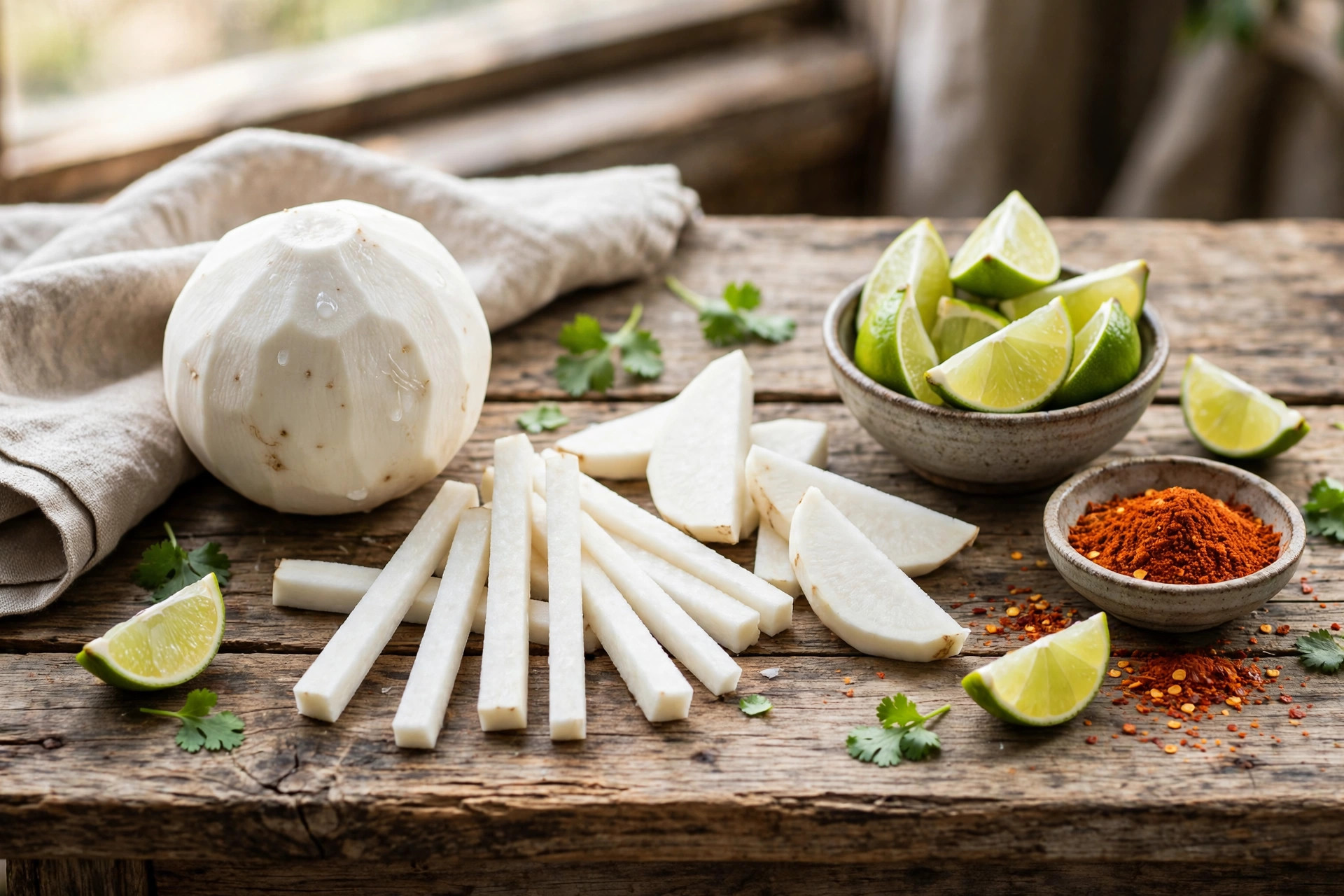
Jicama is one of those vegetables that many people walk straight past in the supermarket, unsure what to do with it. Peel away its papery brown skin, though, and you find crisp, juicy white flesh with a gentle sweetness somewhere between an apple and a water chestnut. It is usually eaten raw, and it has long had a place in salads, slaws and snack plates across Mexico. So what does the evidence really say about jicama benefits? This guide looks at the nutrition, the research and the sensible cautions — without the miracle claims.
What Is Jicama?
Jicama, also called Mexican yam bean or Pachyrhizus erosus, is the edible root of a tropical vine in the legume family. Only the root is eaten — the leaves, stems, pods and seeds contain a naturally occurring compound called rotenone and are not food. A cup of raw jicama (about 130 g) contains roughly 46 calories, around 6 g of fibre and about 26 mg of vitamin C, making it one of the most filling low-calorie vegetables you can snack on. Much of its fibre is inulin, a prebiotic fibre that feeds the friendly bacteria in the gut.
Jicama Benefits: What the Evidence Really Says
The honest picture is encouraging but modest. Jicama is a genuinely nutritious food, and its strengths line up well with what dietitians recommend: fibre, water, vitamin C and very few calories.
Gut health and digestion
Inulin is jicama's standout feature. This soluble prebiotic fibre passes undigested to the colon, where it feeds beneficial gut bacteria such as Bifidobacteria and Lactobacilli, and research links it with better gut balance and more regular bowel movements. Introduce it gradually — a sudden large serving can cause gas or bloating.
Heart health
Fibre is consistently linked with better heart health. A 2018 review found that higher fibre intake is associated with a lower risk of heart disease and stroke, and jicama's fibre may help lower LDL cholesterol. A small 2016 study also found that jicama juice helped lower diastolic blood pressure. These are early findings rather than proof, but they fit the wider pattern for fibre-rich foods.
Steadier blood sugar and weight management
Jicama has a low glycaemic index, so it does not spike blood sugar the way starchy snacks can, and its fibre slows digestion, helping you feel full for longer. Animal research suggests jicama may support insulin sensitivity, though human trials are still limited. As a crunchy, satisfying snack that delivers volume without many calories, it is a practical swap for crisps or biscuits.
How to Eat Jicama
Start by peeling it thoroughly — the skin is tough and should always be removed. Then slice it into sticks, cubes or matchsticks. It is lovely raw with a squeeze of lime and a pinch of chilli powder or salt, tossed into salads and slaws for crunch, or added to stir-fries in the last few minutes of cooking so it stays crisp. A practical serving is about half to one cup (75–130 g) at a time.
Who Should Be a Little Careful
Only ever eat the peeled root. The seeds, pods, leaves and vine of the jicama plant are toxic and must never be eaten. If you are sensitive to fructans, the inulin in jicama can cause bloating, so start with a small portion. Allergies are uncommon but possible, as with any food. If you take medication for blood sugar or blood pressure, or you have a digestive condition, mention any big dietary change to your GP or dietitian — this article is general information, not medical advice.
Related reading on Organic Health Fix
- Kefir Benefits: What the Evidence Really Says
- Cauliflower Benefits: What the Evidence Really Says
- Celeriac Benefits: What the Evidence Really Says
Tags: #Jicama #JicamaBenefits #GutHealth #Prebiotic #Fibre #VitaminC #NaturalRemedies #WellnessTips
Comments
Post a Comment