Opening a jar, carrying shopping, holding a handrail or turning a key can feel harder than it used to. Grip strength is part of everyday life, yet it is easy to overlook until simple tasks take more effort. The good news is that hands and forearms often respond well to gentle, regular practice. This guide looks at what the evidence suggests, with practical home-friendly ideas and sensible cautions. What grip strength benefits really mean Researchers often use grip strength as a simple marker of overall muscle function because it is easy to measure and reflects how well the hands and forearms work together. In studies of adults, stronger grip tends to sit alongside better mobility and an easier time with daily activities. That does not mean a hand exerciser can guarantee any particular health outcome. It does suggest that keeping the hands active is a worthwhile part of a balanced routine , alongside walking, leg strength and balance practice. Many people find the most noticeable ch...
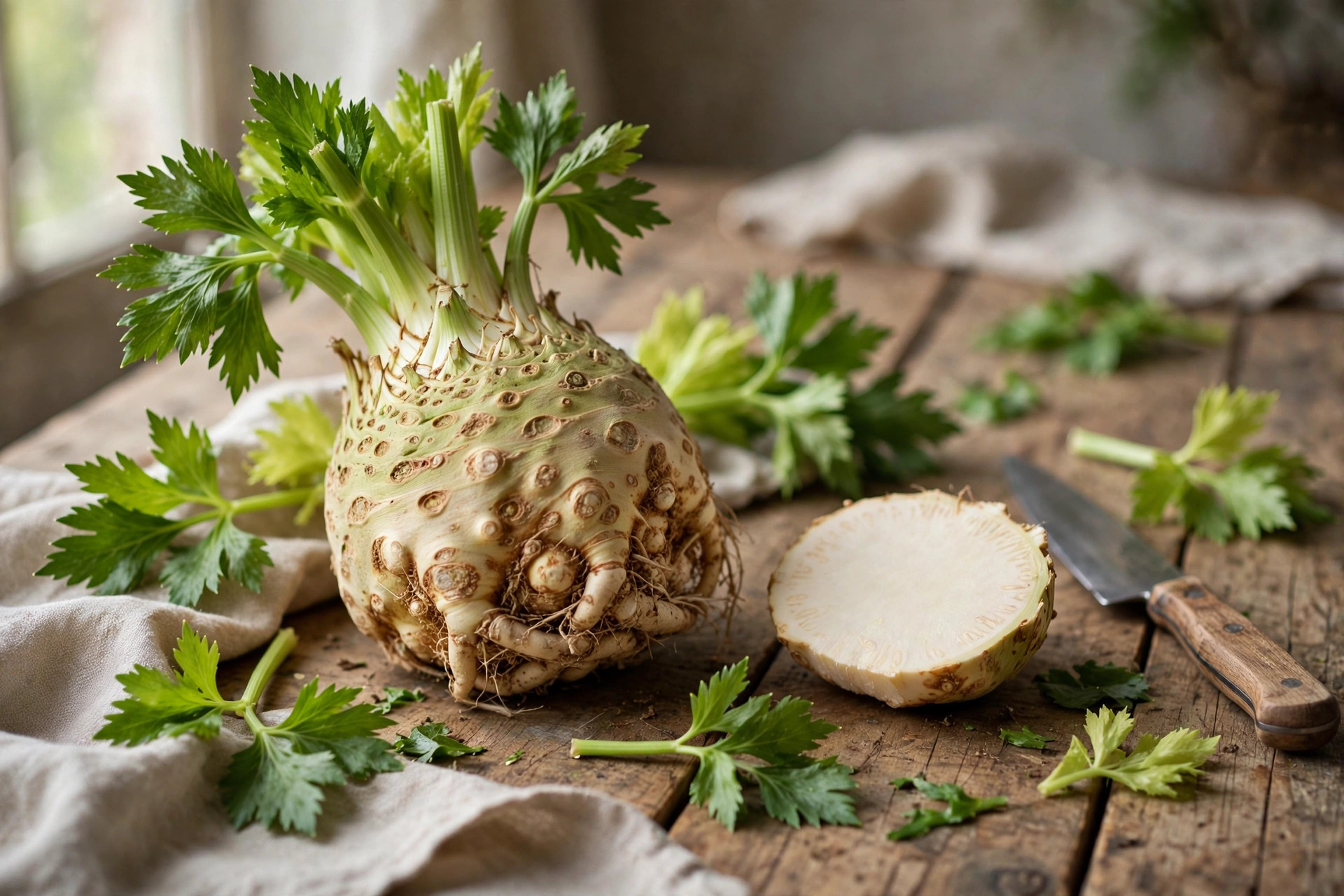
Celeriac, also known as celery root, is the knobbly, unassuming cousin of celery — and it may be one of the most underrated vegetables in the winter kitchen. With its mild, nutty flavour it works in soups, mashes and roasts, and raw in salads. But what do celeriac benefits look like when you check the evidence? Here is an honest look at the nutrition and the research.
What Is Celeriac?
Celeriac (Apium graveolens var. rapaceum) is a variety of celery grown for its large, round root rather than its stalks. It belongs to the Apiaceae family, alongside carrots, parsnips and fennel, and has long been a staple in Eastern and Northern European cooking. We eat the pale, knobbly bulb, usually peeled before cooking, though it can be eaten raw when finely grated. Its flavour is gentle and slightly nutty, somewhere between celery and parsley.
Celeriac Nutrition: What Is Inside
For a root vegetable, celeriac is remarkably light. Around 100 grams of raw celeriac provides only about 42 calories, with roughly 2 grams of fibre and almost no fat. It is a good source of vitamin C, vitamin B6 and vitamin K, and it supplies useful amounts of phosphorus, potassium, manganese and magnesium. Cooked celeriac has only about 5.9 grams of carbohydrate per 100 grams, so many people find it a satisfying lower-carb stand-in for potatoes. It also contains polyphenol antioxidants, including apigenin.
Celeriac Benefits: What the Evidence Really Says
Gentle support for digestion. Celeriac is classed as a high-fibre food, and enough dietary fibre is linked with steadier digestion, regular bowel movements and a healthier gut microbiome. The fibre feeds beneficial gut bacteria, which many people find helps digestion feel more settled.
A friend to lighter meals. Low in calories and high in water and fibre, celeriac can help a plate feel generous without feeling heavy. Many people find that swapping half the potato in a mash for celeriac keeps the comfort while lightening the meal.
Heart and bone support. The vitamin K in celeriac plays a role in normal blood clotting and bone health, while its vitamin C supports blood vessel function. Its fibre may also help the body manage cholesterol. These are associations from nutrition research rather than guarantees — celeriac works best as part of a varied diet rather than as a single fix.
How to Cook Celeriac at Home
Peel the knobbly skin with a sharp knife and cut the pale flesh into chunks. A few simple ideas:
Celeriac mash. Boil equal parts celeriac and potato until tender, then mash with a little butter, milk and a pinch of nutmeg — creamy, comforting and lighter than plain potato mash.
Roasted celeriac. Toss chunks in olive oil, salt and rosemary, then roast at 200°C for about 30 minutes until golden.
Celeriac remoulade. Grate raw celeriac and toss with a light mustard dressing, lemon juice and chopped herbs — a classic French salad.
A note on cooking and vitamin C
Boiling celeriac can halve its vitamin C content, so steaming or roasting keeps more of its nutrients. If you do boil it, use the cooking water in a soup or sauce.
Gentle Cautions
Celeriac is a wholesome, everyday vegetable for most people, but a few cautions are worth knowing. Its vitamin K content means people taking blood-thinning medication such as warfarin should keep their intake steady rather than suddenly eating large amounts — a chat with a clinician is sensible if unsure. And as with celery, a small number of people are allergic to celeriac, so anyone with a known celery allergy should be careful.
Related reading on Organic Health Fix
- Carrots Benefits: What the Evidence Really Says
- Kefir Benefits: What the Evidence Really Says
- Morning Sunlight for Better Sleep: What the Evidence Really Says
Tags: #Celeriac #NaturalRemedies #WellnessTips #GutHealth #Nutrition #RootVegetables #WinterVegetables #HealthyEating
Comments
Post a Comment