Opening a jar, carrying shopping, holding a handrail or turning a key can feel harder than it used to. Grip strength is part of everyday life, yet it is easy to overlook until simple tasks take more effort. The good news is that hands and forearms often respond well to gentle, regular practice. This guide looks at what the evidence suggests, with practical home-friendly ideas and sensible cautions. What grip strength benefits really mean Researchers often use grip strength as a simple marker of overall muscle function because it is easy to measure and reflects how well the hands and forearms work together. In studies of adults, stronger grip tends to sit alongside better mobility and an easier time with daily activities. That does not mean a hand exerciser can guarantee any particular health outcome. It does suggest that keeping the hands active is a worthwhile part of a balanced routine , alongside walking, leg strength and balance practice. Many people find the most noticeable ch...
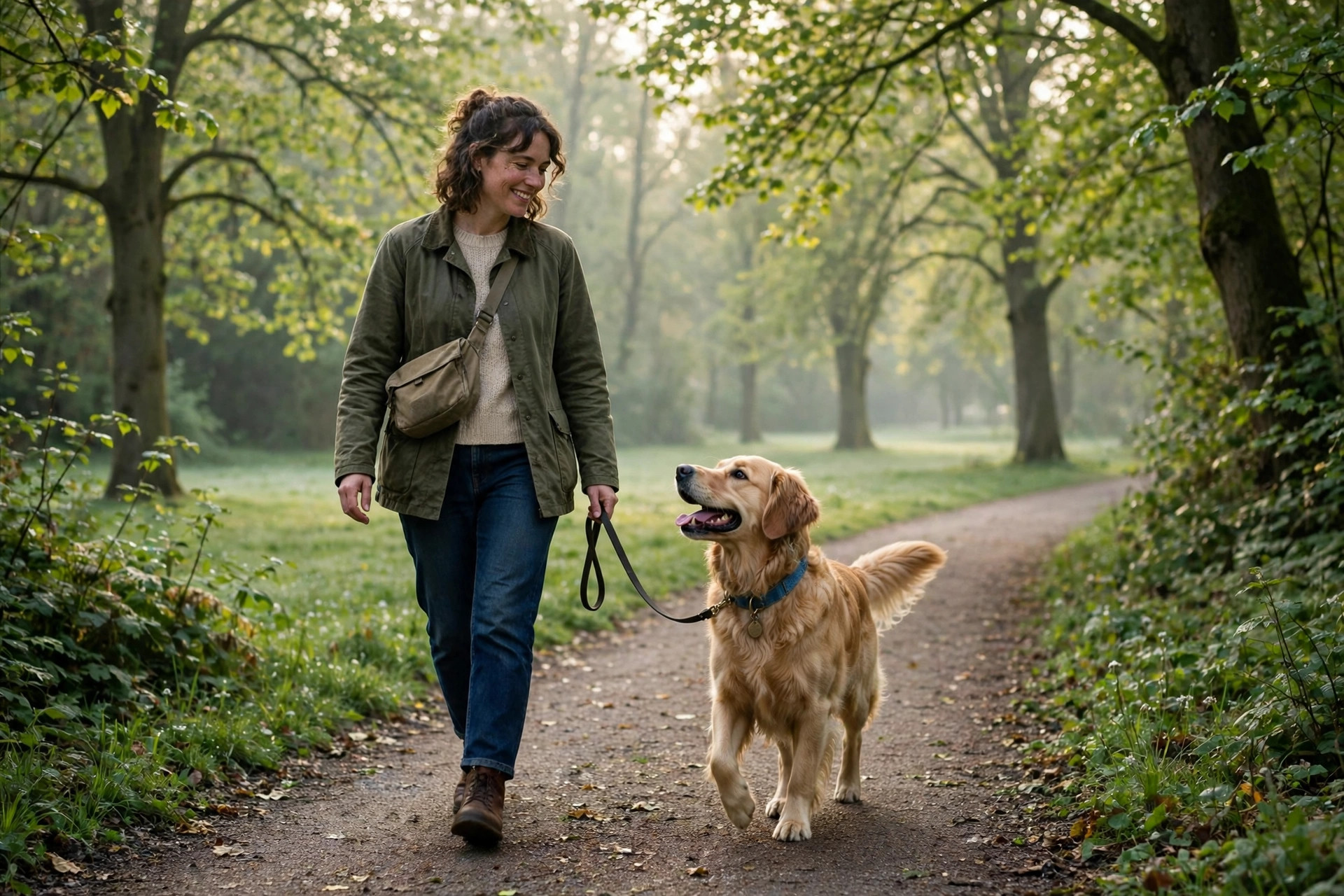
For many dog owners, the daily walk is simply part of life: lead on, door closed, off around the block. Yet researchers keep returning to this ordinary habit, because it may be one of the most reliable ways people build movement into their day. So what does the evidence really say about dog walking benefits? As ever, this is general wellness information, not medical advice.
Dog Walking Benefits: More Daily Movement
The clearest finding is also the simplest: people who walk their dogs tend to walk more overall. In a well-known comparison, dog walkers reported more physical activity than non-owners and owners who did not walk their dogs. A long-running Australian cohort likewise found that owners who walked their dogs maintained more regular walking over the years.
The important detail is that owning a dog alone was not the active ingredient. Owners who rarely walked their dogs looked much like non-owners in activity levels. The benefit sits in the walking itself, repeated daily because the dog needs to go out — a built-in prompt many people find easier to keep than a gym plan.
Routine, Fresh Air and Social Contact
Dog walking also structures the day. A morning walk anchors a wake-up time, gets daylight early, and gives a natural break from screens. Regular walkers often meet the same neighbours, adding small social contact to the week. Mood studies in dog owners show mixed results, so no benefit can be promised, but a regular outdoor routine is a habit many people find steadying.
There is a companionship angle too. Research on older adults suggests people with a stronger bond with their dog walk more often, and dog walking was linked with better self-reported physical health in that group. These are associations, not proof of cause and effect, but the pattern is consistent enough that researchers describe dog walking as a practical way to help communities stay active.
How Much Walking Helps?
General activity guidance for adults suggests around 150 minutes of moderate activity a week, and dog walks can contribute a large share of that. Two walks of 20 to 30 minutes most days already add up. The pace does not need to be athletic; a comfortable, steady walk where you can still chat counts as light-to-moderate activity for many people.
If you are starting from little activity, build up gradually; shorter, frequent walks suit many dogs and owners better than one long weekend effort.
Gentle Tips and Sensible Cautions
Keep walks enjoyable for both of you. Let your dog sniff and explore where it is safe, carry water on warm days, and watch for signs of tiredness in older dogs. In hot weather, walk early or late and check pavements are not too hot for paws.
Look after yourself too: choose flatter routes and build distance slowly if you have joint or balance concerns, and seek personal advice if unsure. If you do not own a dog, the prize is the same — regular, enjoyable walking.
The bottom line is encouraging. Dog walking will not transform health on its own, but as a daily, repeatable source of movement, daylight and routine, it is one of the most sustainable habits researchers have found. That is a benefit worth lacing up for.
Related reading on Organic Health Fix
- Barefoot Walking Benefits: What the Evidence Really Says
- Stair Climbing Benefits: What the Evidence Really Says
- Hip Mobility Benefits: What the Evidence Really Says
Tags: #DogWalking #WellnessTips #HealthyHabits #GentleExercise #Walking #DailyActivity
Comments
Post a Comment