Opening a jar, carrying shopping, holding a handrail or turning a key can feel harder than it used to. Grip strength is part of everyday life, yet it is easy to overlook until simple tasks take more effort. The good news is that hands and forearms often respond well to gentle, regular practice. This guide looks at what the evidence suggests, with practical home-friendly ideas and sensible cautions. What grip strength benefits really mean Researchers often use grip strength as a simple marker of overall muscle function because it is easy to measure and reflects how well the hands and forearms work together. In studies of adults, stronger grip tends to sit alongside better mobility and an easier time with daily activities. That does not mean a hand exerciser can guarantee any particular health outcome. It does suggest that keeping the hands active is a worthwhile part of a balanced routine , alongside walking, leg strength and balance practice. Many people find the most noticeable ch...
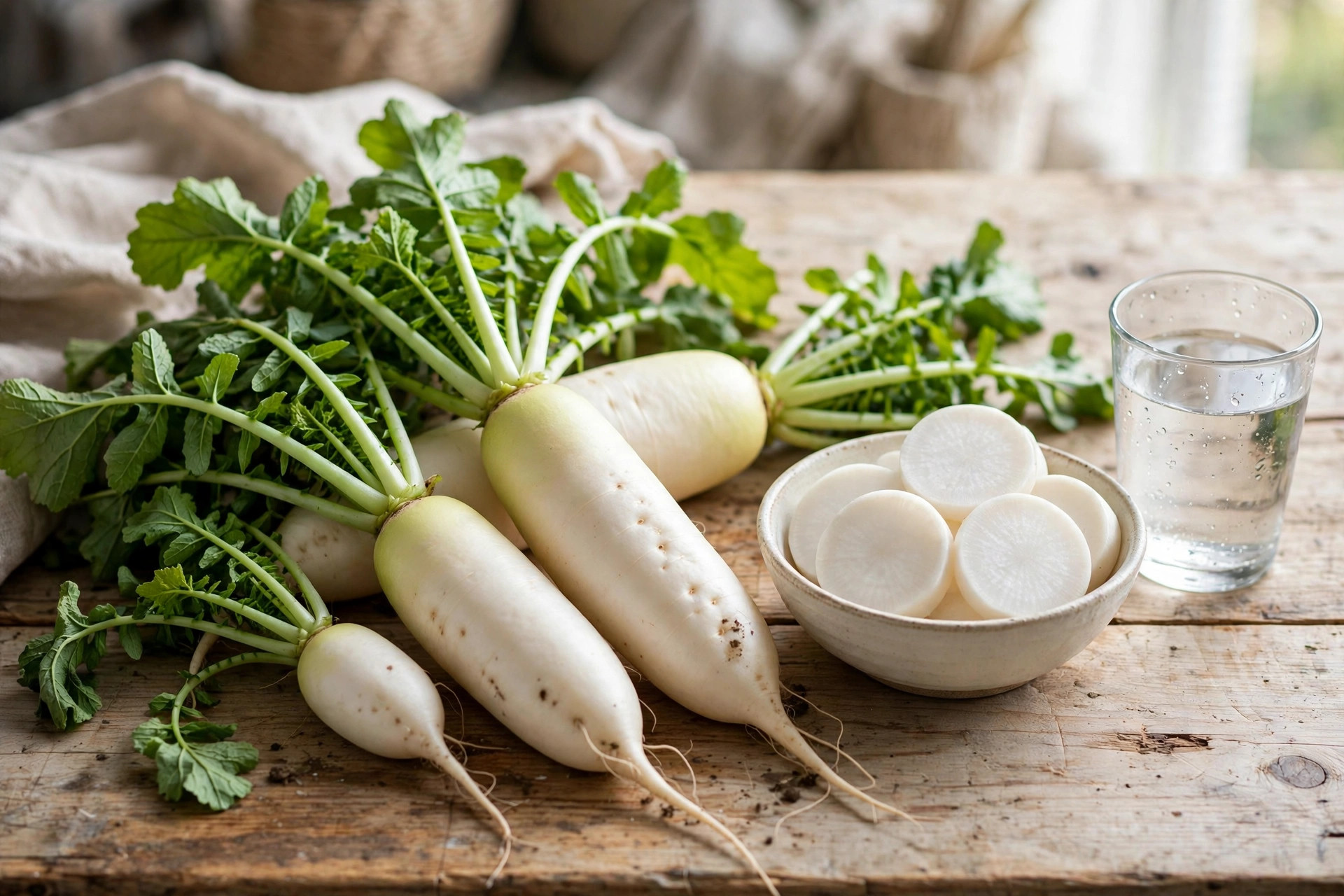
Daikon is the long, white radish that turns up in Japanese, Chinese and Korean cooking — crisp, mild and quietly nutritious. It looks plain next to brighter vegetables, yet a single root carries a surprising amount of vitamin C, fibre and protective plant compounds for very few calories.
What Is Daikon?
Daikon (Raphanus sativus) is a winter radish native to China and Japan, and it belongs to the same cruciferous family as broccoli, cabbage and kale. Unlike the small, peppery red radishes many of us know, daikon grows long and mild, with a clean crunch and a gentle sweetness when cooked.
Daikon Nutrition: A Lot for Very Few Calories
Daikon is a genuinely nutrient-dense food. One 7-inch (18-cm) daikon weighing about 338 grams contains just 61 calories, with 14 grams of carbohydrate, 2 grams of protein and 5 grams of fibre. That serving delivers around 124% of the daily value for vitamin C, 24% for folate and 22% for potassium. A cup of sliced daikon is lighter still — about 21 calories — yet supplies roughly 28% of the daily value for vitamin C.
Daikon Benefits: What the Evidence Really Says
Most of the excitement around daikon comes from its nutrient profile and its plant compounds. It is worth being honest about the evidence, though: there are no large human trials testing daikon itself for most of the claims below. What exists is laboratory and animal research, population studies of cruciferous vegetables, and established nutrition science about the nutrients daikon contains.
Vitamin C and immune support
A single daikon can supply well over a full day's worth of vitamin C, a nutrient the body needs for immune function and for the growth and repair of tissues. Vitamin C also acts as a powerful antioxidant, shielding cells from oxidative damage, and it helps produce collagen, the protein that keeps skin and blood vessels healthy.
Fibre and gut health
Daikon's fibre moves slowly through the digestive tract, helping you feel fuller for longer and supporting regular bowel movements. Its prebiotic fibres also feed the beneficial bacteria in the gut, which many people find helps their digestion feel steadier.
Protective plant compounds
Laboratory research has found the polyphenol antioxidants ferulic acid and quercetin in daikon extract, both of which have shown anti-inflammatory and immune-supporting effects in test-tube studies. As a cruciferous vegetable, daikon also supplies glucosinolates, which break down into isothiocyanates. Population studies have linked high intakes of cruciferous vegetables with a lower risk of certain cancers — though this evidence is still early and comes from whole diets, not daikon alone.
Weight-friendly eating
Because daikon is low in calories, low in carbohydrate and high in fibre, it fits naturally into a weight-conscious way of eating. Non-starchy vegetables like daikon add bulk and crunch to a plate without adding much energy, and the fibre helps increase fullness.
Simple Ways to Enjoy Daikon at Home
Start raw: peel and slice daikon thinly into salads or slaws, where its crisp texture and mild peppery bite shine. Simmer it: add chunks to soups, stews and hot pots, where daikon turns tender and sweet. Pickle it: quick-pickled daikon with rice vinegar and a little sugar makes a bright, crunchy side for rich meals. Choose firm, heavy roots with smooth skin, and store daikon in the fridge, unwashed, where it keeps well for a couple of weeks.
Gentle Cautions
Daikon is a familiar food eaten widely for centuries, and most people enjoy it without any trouble. Like other cruciferous vegetables, raw daikon contains compounds that can affect thyroid function when eaten in very large amounts, so if you have a thyroid condition, favour cooked daikon and talk to your clinician about portion sizes. Its fibre can also cause gas or bloating in sensitive digestion — start with a small serving if you are new to it.
Related reading on Organic Health Fix
- Ugli Fruit Benefits: What the Evidence Really Says
- Black Currant Benefits: What the Evidence Really Says
- Winter Squash Benefits: What the Evidence Really Says
Tags: #Daikon #DaikonBenefits #NaturalRemedies #GutHealth #VitaminC #WellnessTips #HealthyEating #CruciferousVegetables
Comments
Post a Comment