Opening a jar, carrying shopping, holding a handrail or turning a key can feel harder than it used to. Grip strength is part of everyday life, yet it is easy to overlook until simple tasks take more effort. The good news is that hands and forearms often respond well to gentle, regular practice. This guide looks at what the evidence suggests, with practical home-friendly ideas and sensible cautions. What grip strength benefits really mean Researchers often use grip strength as a simple marker of overall muscle function because it is easy to measure and reflects how well the hands and forearms work together. In studies of adults, stronger grip tends to sit alongside better mobility and an easier time with daily activities. That does not mean a hand exerciser can guarantee any particular health outcome. It does suggest that keeping the hands active is a worthwhile part of a balanced routine , alongside walking, leg strength and balance practice. Many people find the most noticeable ch...
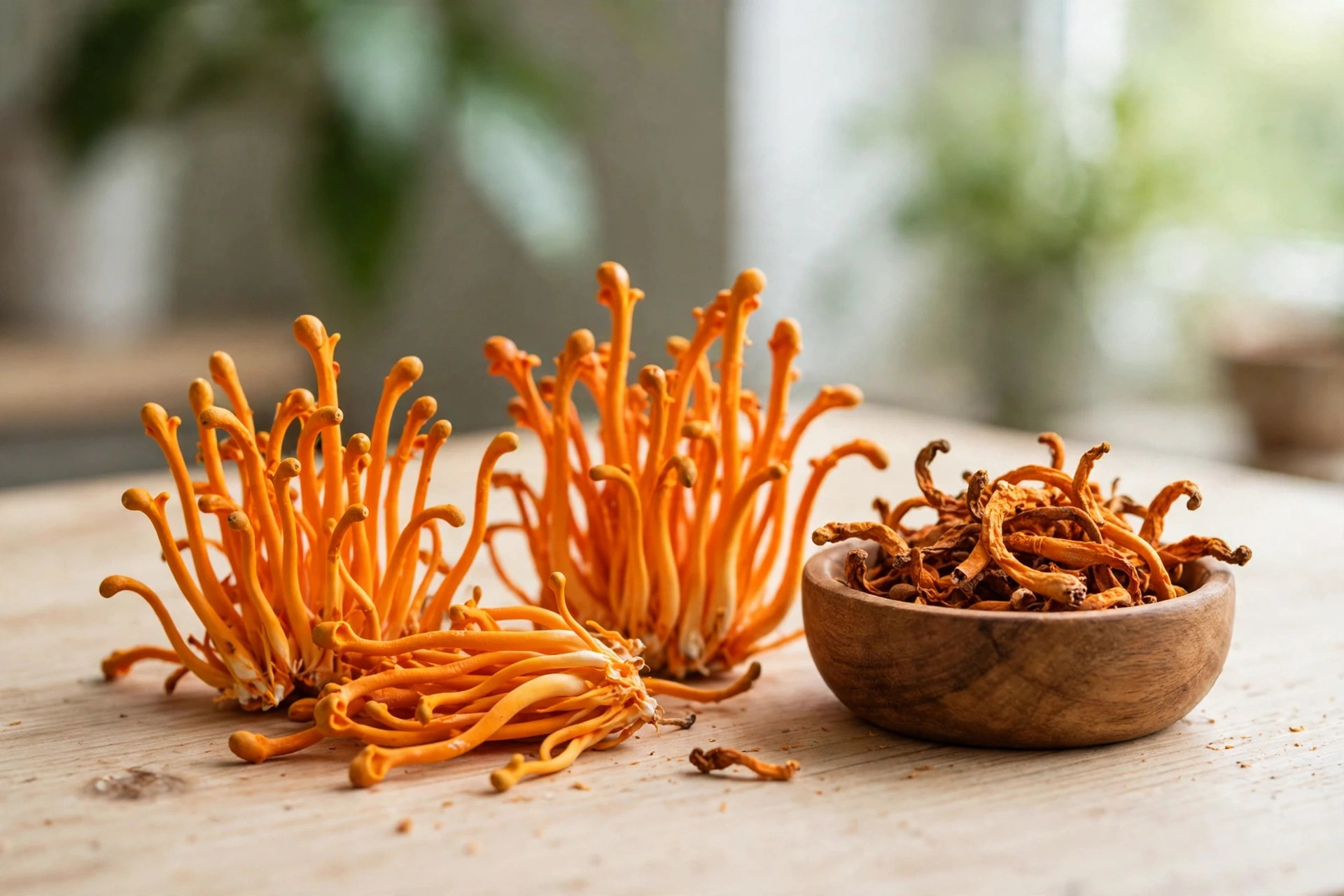
Cordyceps is having a moment. The orange, finger-like mushroom — long used in traditional Chinese medicine for tiredness and coughs — now appears in capsules, powders and coffee blends sold for energy, stamina and sharper workouts. But how much of that promise survives contact with the human evidence? This guide works through what cordyceps actually is, what the human trials found, and the safety questions worth knowing first.
What Is Cordyceps?
Wild cordyceps (Ophiocordyceps sinensis) grows on moth larvae high on the Tibetan plateau, which makes it rare and very expensive. Almost everything sold today is instead lab-grown: either fermented C. sinensis known as Cs-4, or the related species Cordyceps militaris, grown on grain. These are not interchangeable — a result found with one preparation does not automatically carry over to another. The compound most often credited with the effects is cordycepin, found mainly in C. militaris. Lab work suggests effects on energy metabolism, but a mechanism seen in cells or animals does not prove a benefit in people.
Cordyceps for Energy and Exercise: What the Trials Found
Exercise is where most of the human research sits, and the results point in different directions depending on who was studied.
Older adults and everyday fitness
The most encouraging human trial is small: 20 healthy adults aged 50 to 75 took Cs-4 (about 1 gram a day) or a placebo for 12 weeks. Their metabolic threshold rose by 10.5% and their ventilatory threshold by 8.5% compared with placebo, though their VO2 max — the headline measure of aerobic fitness — did not change. It is a single pilot study, but it suggests that less-trained or older adults may notice a modest lift in how long comfortable exercise feels sustainable.
Trained athletes
The picture flips for fit people. Two trials put Cs-4 in front of trained cyclists — one giving 3 grams a day for five weeks — and both found no effect on endurance, VO2 peak or ventilatory threshold. A 2026 review that pooled five human studies of C. militaris (321 participants aged 16 to 35) called the findings inconsistent: some reported small gains in oxygen uptake or time to exhaustion, others found nothing. A 2026 trial of 12 recreationally active young men found a single 1-gram dose sped up post-exercise reaction time but left peak VO2 unchanged.
Energy, Fatigue and Everyday Tiredness
Many people take cordyceps hoping to fix an afternoon slump, but no good trial has tested ordinary daytime tiredness directly. Human studies mostly measure exercise capacity, not how tired someone feels at their desk. A mushroom blend containing C. militaris improved VO2 max after three weeks in 28 young adults, though only ten people completed the longer part of that study, and the blend contained several mushroom species. There are no authorised health claims for cordyceps in Great Britain, including the energy and stamina lines seen on many product pages.
Safety, Doses and Who Should Be Cautious
Most trials used 1 to 4 grams a day for one to twelve weeks, and most positive studies lasted at least three weeks, so consistency probably matters more than exact timing. Side effects in trials were generally mild — occasional stomach upset or loose stools. Cordyceps is best avoided alongside blood-thinning medication, during pregnancy, and before surgery, and anyone taking prescription medicine or living with a long-term condition should speak to a clinician first. As with any supplement, it is a complement to sleep, food and movement — not a substitute for them.
On balance, cordyceps has more human exercise research behind it than many functional mushrooms, but no claim earns a strong grade. If you are an older or less active adult curious about stamina, the small trials offer a cautious reason to try it; if you are already well trained, the evidence gives little reason to expect a difference.
Related reading on Organic Health Fix
- Lentils Benefits: What the Evidence Really Says
- Miso Benefits: What the Evidence Really Says
- Beetroot Benefits: What the Evidence Really Says
Tags: #Cordyceps #NaturalRemedies #WellnessTips #Energy #Mushrooms #EvidenceBased #HealthyLiving #OrganicHealthFix
Comments
Post a Comment