Opening a jar, carrying shopping, holding a handrail or turning a key can feel harder than it used to. Grip strength is part of everyday life, yet it is easy to overlook until simple tasks take more effort. The good news is that hands and forearms often respond well to gentle, regular practice. This guide looks at what the evidence suggests, with practical home-friendly ideas and sensible cautions. What grip strength benefits really mean Researchers often use grip strength as a simple marker of overall muscle function because it is easy to measure and reflects how well the hands and forearms work together. In studies of adults, stronger grip tends to sit alongside better mobility and an easier time with daily activities. That does not mean a hand exerciser can guarantee any particular health outcome. It does suggest that keeping the hands active is a worthwhile part of a balanced routine , alongside walking, leg strength and balance practice. Many people find the most noticeable ch...
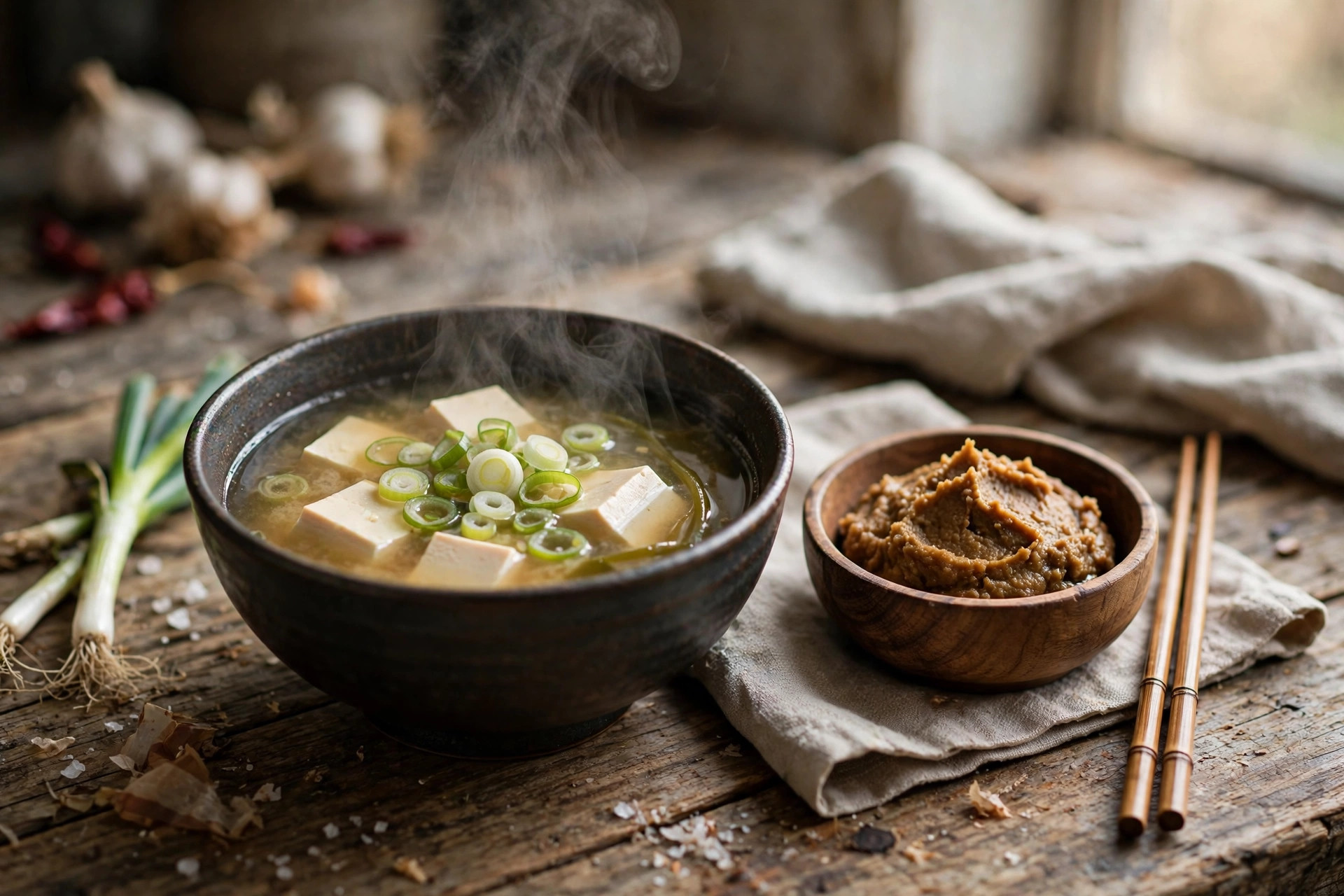
Miso is the salty, savoury paste behind miso soup, and it has been a cornerstone of Japanese cooking for centuries. It is made by fermenting soybeans with salt and a mould culture called koji (Aspergillus oryzae), often together with rice or barley. That fermentation is what makes miso interesting: a whole fermented soy food, combining gut-friendly cultures with heart-supportive compounds. This guide looks at what the evidence really says about miso benefits, where the research is strongest, and the one catch that matters most.
Miso Benefits: What Fermentation Actually Does
Fermentation changes soybeans in useful ways. The koji culture breaks down proteins and starches, making nutrients easier to absorb, and produces bioactive compounds including peptides and isoflavones along the way. Unpasteurised miso also contains live cultures. Boiling kills those live cultures, so how you cook with miso decides how much of the fermented benefit survives.
A cup of basic miso soup is light — roughly 35–50 calories and 3–4 grams of protein, plus vitamin K and manganese. It is the seasoning, not the calories, that does the work.
Miso and Gut Health
The gut benefit is where the evidence is most encouraging. Fermented foods are the category most consistently linked to a healthier, more diverse gut microbiome, and a landmark Stanford trial found that eating more fermented foods over several weeks increased gut microbiome diversity and reduced markers of inflammation. Miso is one of the most practical ways to eat fermented food daily, because a spoonful stirred into soup, dressing or marinade is all it takes.
Keep the Cultures Alive: Do Not Boil It
If gut health is the reason you are using miso, buy the refrigerated, unpasteurised kind and stir it in off the heat — make the soup base first, take the pan off the boil, then whisk in the paste. Pasteurised shelf-stable miso still brings flavour and soy compounds, but its live cultures are gone.
Miso, Heart Health and Cholesterol
The soy side of miso carries its own evidence. A meta-analysis of randomised controlled trials found that eating soy products significantly lowered LDL ("bad") cholesterol, total cholesterol and triglycerides, while modestly raising HDL ("good") cholesterol — and whole soy foods worked better than isolated isoflavone supplements. Fermentation also produces ACE-inhibiting peptides, compounds researchers link to blood pressure regulation. That said, miso is a food, not a treatment: a spoonful a day in a balanced diet, not a remedy for any condition.
The Sodium Catch
Here is the honest part: miso is extremely salty. A single tablespoon can carry 600–900 milligrams of sodium. White (shiro) miso is the mildest at around 650 milligrams per tablespoon; red (aka) miso runs higher, around 800–900 milligrams. A large Japanese cohort study found that people drinking three or more bowls of miso soup a day had roughly 60% higher risk of stomach cancer, tracking with high overall sodium intake.
Treat miso as a seasoning: one to two tablespoons a day, in one bowl of soup or a dressing, gives the fermented-food benefit while keeping sodium manageable. On a low-sodium diet or blood pressure medication, choose low-sodium miso, dilute the broth, and check with your clinician first.
How to Use Miso Every Day
Miso is far more versatile than soup. Whisk a teaspoon into salad dressing with rice vinegar and sesame oil, stir it through roasted vegetables, or use it as a glaze for aubergine or salmon. White miso is sweet and mild, good for dressings and light soups; red miso is deeper and saltier, better for hearty stews and glazes.
Store miso in the fridge with the lid on, where it keeps for months. And keep the portions small: a spoonful to flavour a dish is smart, while several bowls of miso soup a day is not.
Related reading on Organic Health Fix
Tags: #Miso #NaturalRemedies #GutHealth #FermentedFoods #Nutrition #WellnessTips #HealthyEating #JapaneseFood
Comments
Post a Comment