Opening a jar, carrying shopping, holding a handrail or turning a key can feel harder than it used to. Grip strength is part of everyday life, yet it is easy to overlook until simple tasks take more effort. The good news is that hands and forearms often respond well to gentle, regular practice. This guide looks at what the evidence suggests, with practical home-friendly ideas and sensible cautions. What grip strength benefits really mean Researchers often use grip strength as a simple marker of overall muscle function because it is easy to measure and reflects how well the hands and forearms work together. In studies of adults, stronger grip tends to sit alongside better mobility and an easier time with daily activities. That does not mean a hand exerciser can guarantee any particular health outcome. It does suggest that keeping the hands active is a worthwhile part of a balanced routine , alongside walking, leg strength and balance practice. Many people find the most noticeable ch...
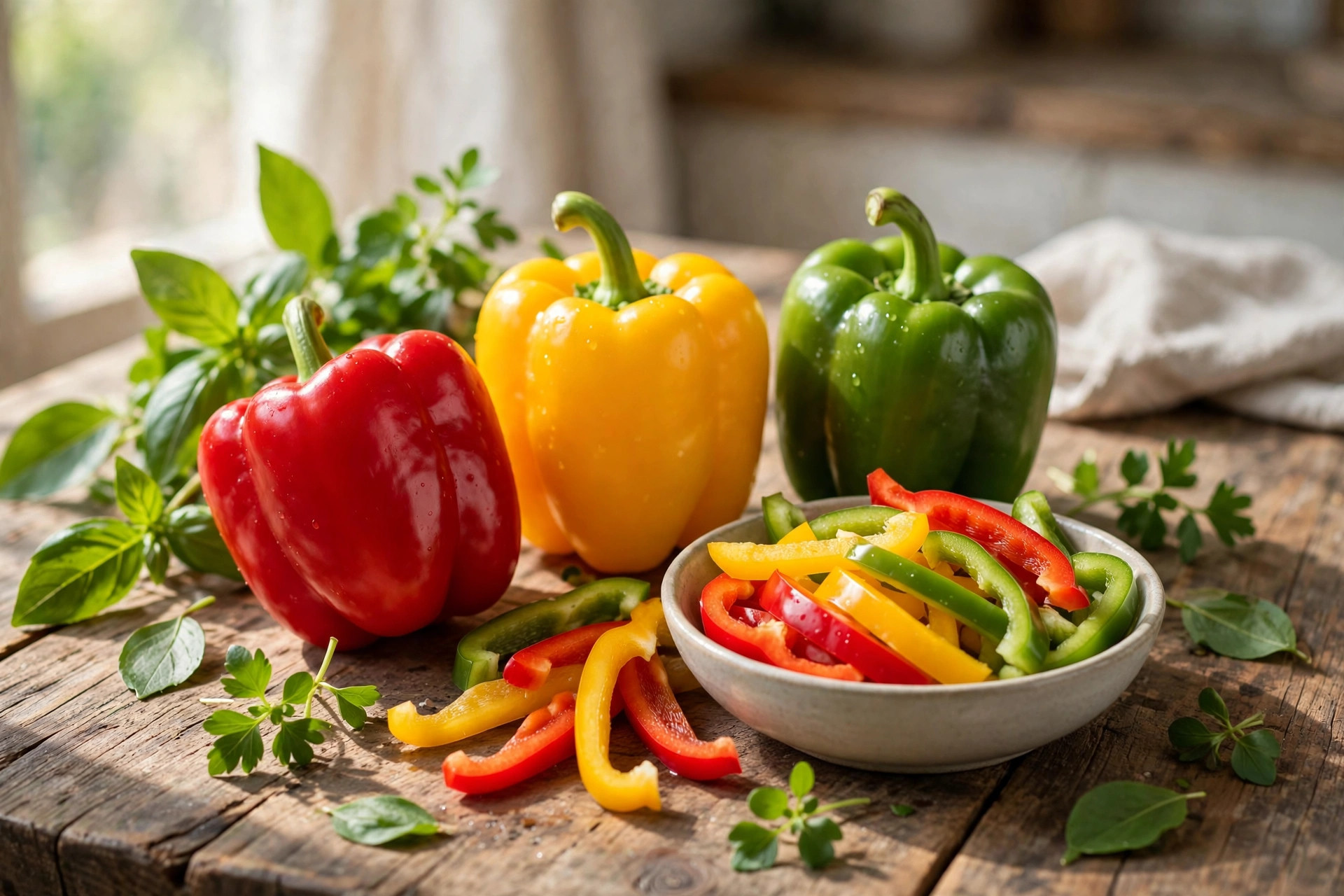
Crisp, sweet and brilliantly coloured, bell peppers are one of the easiest vegetables to eat more of — raw in salads, roasted into sauces, or sliced for dipping. They are also, gram for gram, among the richest natural sources of vitamin C in the greengrocer. Yet much of what is claimed about them runs ahead of the research, so here is what the evidence actually says.
What Is in a Bell Pepper?
A bell pepper is about 92% water and roughly 26 calories per 100 g. The headline nutrient is vitamin C: according to the United States Department of Agriculture, 100 g of raw red pepper provides about 128 mg, green about 80 mg, and yellow as much as 184 mg — against roughly 53 mg for an orange. One medium red pepper supplies around 152% of the daily vitamin C requirement, plus about 93% of the daily vitamin A requirement as beta-carotene, along with folate, potassium and around 2–3 g of fibre per cup. The colour tells you what is inside: lutein in green, zeaxanthin in orange, and capsanthin in fully ripe red peppers. Unlike chilli peppers, bell peppers contain almost no capsaicin, so they bring the flavour without the heat.
Immunity and Vitamin C: Strong Ground
Vitamin C supports the normal function of the immune system, and the evidence for that role is among the best-studied in nutrition. Research on vitamin C and colds finds that regular intake may slightly shorten a cold, though it does not reliably prevent one — and most of those trials used supplements rather than peppers themselves. Still, a pepper-rich diet is a practical way to keep vitamin C intake high, and eating peppers with beans or lentils helps the body absorb their iron.
Eye Health: Promising, but Mostly Supplement Trials
The carotenoids lutein and zeaxanthin build up in the macula, the part of the eye that handles sharp central vision, and help filter blue light. Studies of these antioxidants show promise for eye health, including slowing aspects of age-related macular degeneration. The honest caveat is that most eye-health trials tested high-dose supplements, not peppers on a plate — so eating peppers is a sensible way to get these compounds, but not a proven treatment for eye conditions. Cook them gently, too: boiling for more than ten minutes can destroy about half the vitamin C, while light steaming preserves around three-quarters.
Heart, Weight and Easy Ways to Eat Them
There are almost no human trials of bell peppers themselves, so the heart and weight case rests on a wider pattern: diets rich in vegetables are consistently linked in large cohort studies with better heart health and longer life. They fit that pattern well — high in water and fibre, low in calories, and with a near-zero glycaemic load. Slice one into salads, stir-fries, omelettes or wraps, or roast a tray with olive oil and salt for a side that keeps for days.
A Few Sensible Cautions
Bell peppers belong to the nightshade family, and a small number of people are sensitive to them. The most common issue is an itchy mouth in people with birch-pollen hay fever, a cross-reaction that cooking usually solves. If raw peppers leave you uncomfortable, try them roasted or steamed. As ever, this is general wellness information, not medical advice.
Related reading on Organic Health Fix
- Star Fruit Benefits: What the Evidence Really Says
- Grapes Benefits: What the Evidence Really Says
- Yam Benefits: What the Evidence Really Says
Tags: #BellPepperBenefits #NaturalRemedies #WellnessTips #VitaminC #HealthyEating #GutHealth #EyeHealth #Nutrition
Comments
Post a Comment