Opening a jar, carrying shopping, holding a handrail or turning a key can feel harder than it used to. Grip strength is part of everyday life, yet it is easy to overlook until simple tasks take more effort. The good news is that hands and forearms often respond well to gentle, regular practice. This guide looks at what the evidence suggests, with practical home-friendly ideas and sensible cautions. What grip strength benefits really mean Researchers often use grip strength as a simple marker of overall muscle function because it is easy to measure and reflects how well the hands and forearms work together. In studies of adults, stronger grip tends to sit alongside better mobility and an easier time with daily activities. That does not mean a hand exerciser can guarantee any particular health outcome. It does suggest that keeping the hands active is a worthwhile part of a balanced routine , alongside walking, leg strength and balance practice. Many people find the most noticeable ch...
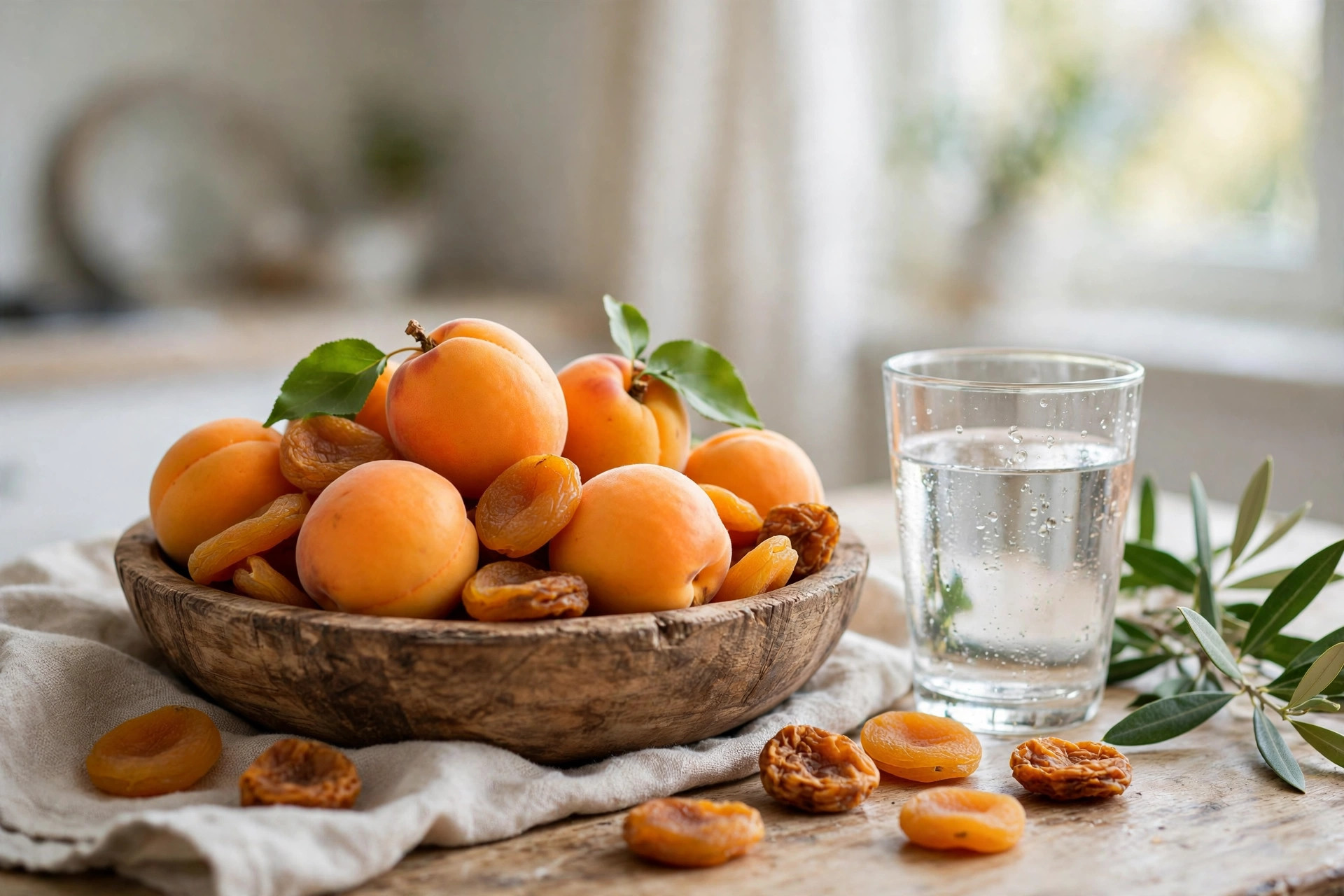
Apricots are one of summer's quietest pleasures — soft, golden and gently sweet. They are a genuinely useful everyday food: rich in fibre, vitamin A and potassium, with a particular strength in supporting digestion. The full picture is more nuanced — especially fresh versus dried.
Apricots Benefits: What's Inside the Fruit
A fresh apricot is around 86% water, and a cup of halves gives about 3 grams of fibre for only 74 calories. Drying concentrates everything: dried apricots carry about 7.3 grams of fibre per 100 grams, with more than double the beta-carotene of fresh fruit. Your body converts beta-carotene into vitamin A, which supports the mucosal lining of your gut and eyes. Apricots also supply potassium, vitamin C and vitamin E.
Apricots and Digestion: What the Evidence Shows
Apricots help digestion through a dual action few fruits match: fibre plus sorbitol. Insoluble fibre in the skin adds bulk and keeps things moving, while soluble pectin forms a gentle gel that feeds beneficial gut bacteria. Sorbitol, a natural sugar alcohol in the fruit, draws a little water into the bowel, softening stools. A 2021 study in Food & Function found the two together supported the gut microbiome, and a 2025 King's College London trial of 150 adults with constipation found half a cup of mixed dried fruit a day for four weeks increased daily stool weight by about 21 grams, versus under 2 grams with placebo.
Fresh or Dried — Which Is Better?
Fresh apricots are lighter, hydrating and lower in sugar — the easier everyday choice. Dried ones are far more concentrated in fibre and potassium, but also in sugar and calories (around 241 per 100 grams). A mix works well: fresh in season, a few dried ones as a portable snack. Choose unsulphured dried apricots if you can.
Apricots, Cholesterol and Heart Health
Soluble fibre in apricots can help with cholesterol by binding some of it in the gut. The National Lipid Association notes that adding 5 to 10 grams of soluble fibre a day may lower LDL cholesterol by up to 11 points, and apricots' potassium supports healthy blood pressure. But a 2020 study in the British Journal of Nutrition found three-quarters of a cup of dried fruit daily raised LDL cholesterol in older adults. Apricots can be part of a heart-friendly diet, but they are not a cholesterol treatment on their own.
How Much to Eat — and Who Should Be Careful
A sensible serving is two or three fresh apricots, or about 30 to 40 grams of dried apricots — roughly three or four whole dried fruits. Pair dried apricots with a glass of water, since fibre works best when you are hydrated. People with diabetes should be mindful of the concentrated sugars in dried apricots, and anyone with kidney disease should check with their clinician because of the high potassium. If you have IBS, introduce them gradually, as fibre and sorbitol can cause gas or bloating. And skip the kernels: sometimes sold as "vitamin B17", they have shown no anticancer effect in human trials, and chewing raw kernels releases hydrogen cyanide — more than three small raw kernels can be unsafe for an adult.
Simple Ways to Enjoy Apricots
Try fresh apricots sliced over yoghurt or porridge, or chopped into a salad with leaves, feta and walnuts. Dried apricots are lovely stewed with a little water and cinnamon, or eaten with almonds as an afternoon snack. However you enjoy them, apricots are a modest, honest food — no miracle claims needed, just fibre, colour and flavour doing quiet, useful work.
Related reading on Organic Health Fix
- Ginger Benefits: What the Evidence Really Says
- Pomegranate Benefits: What the Evidence Really Says
- Miso Benefits: What the Evidence Really Says
Tags: #Apricots #ApricotBenefits #GutHealth #NaturalRemedies #VitaminA #HealthyEating #WellnessTips #Fibre
Comments
Post a Comment