Opening a jar, carrying shopping, holding a handrail or turning a key can feel harder than it used to. Grip strength is part of everyday life, yet it is easy to overlook until simple tasks take more effort. The good news is that hands and forearms often respond well to gentle, regular practice. This guide looks at what the evidence suggests, with practical home-friendly ideas and sensible cautions. What grip strength benefits really mean Researchers often use grip strength as a simple marker of overall muscle function because it is easy to measure and reflects how well the hands and forearms work together. In studies of adults, stronger grip tends to sit alongside better mobility and an easier time with daily activities. That does not mean a hand exerciser can guarantee any particular health outcome. It does suggest that keeping the hands active is a worthwhile part of a balanced routine , alongside walking, leg strength and balance practice. Many people find the most noticeable ch...
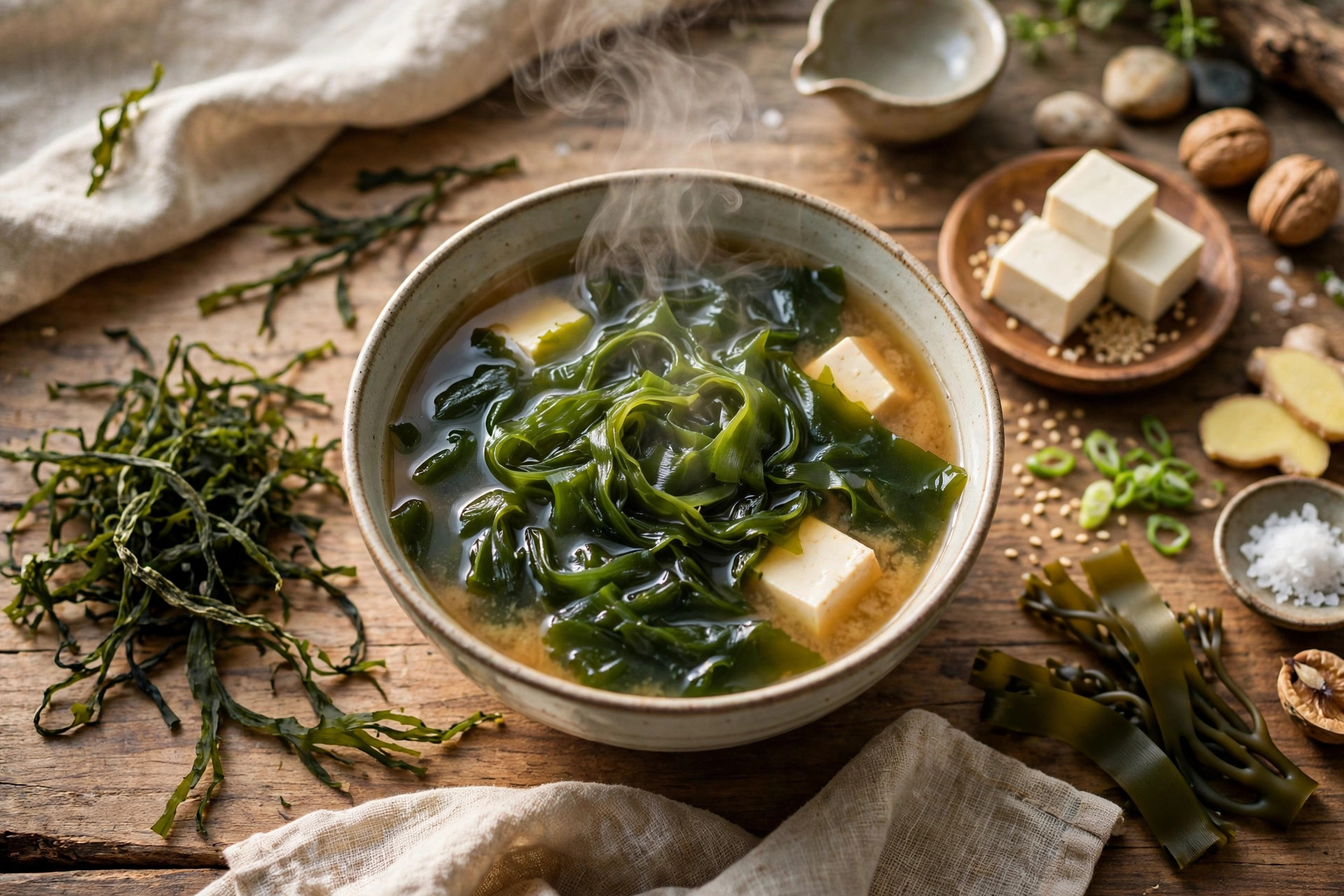
If you enjoy miso soup, you have probably met wakame already. This silky green seaweed softens in minutes and brings a gentle savoury flavour to soups and salads. Eaten for centuries in Japan and Korea, it is an easy way to vary everyday greens. So what does the evidence really say about wakame benefits? This guide looks at its nutrition, small human trials, and sensible cautions. This is general wellness information, not medical advice.
Wakame Benefits Start With Nutrition
Wakame, Undaria pinnatifida, is a brown seaweed usually sold dried. A small handful swells a great deal in water, so a little goes a long way. United States Department of Agriculture figures put raw wakame at about 45 calories per 100 grams, with 3 grams of protein plus magnesium, calcium, iron and folate. Most people eat far less than that at a time, often a spoonful or two of dried flakes rehydrated in soup.
The nutrient wakame is best known for is iodine, which the body needs to make thyroid hormones. Iodine levels vary a lot with where wakame grew and how it was processed, so packets differ. Wakame also contains seaweed compounds such as fucoidan, alginate and fucoxanthin, which researchers study in the laboratory. Their presence is interesting, but it does not by itself prove a health effect in people.
What Human Trials Show So Far
Human research on wakame is still small, and results are mixed. In a few crossover meal tests, a few grams of dried wakame eaten with rice or a starchy meal was followed by smaller rises in blood glucose and insulin in some groups, while another small test found no clear difference. These were single-meal marker studies, not proof of lasting benefit.
Other trials have been less encouraging. In a placebo-controlled crossover trial in 35 healthy adults, 4.8 grams of wakame capsules a day for 17 days did not change blood pressure, cholesterol markers or fasting glucose. Fucoxanthin from ordinary wakame meals also appears poorly absorbed, which is one reason to be cautious about strong claims borrowed from concentrated extracts. The fair summary is that wakame is a nutritious food, while treatment-style claims remain unproven.
A Gentle Place in Everyday Eating
Many people find wakame easiest as a food rather than a supplement. Traditionally used in miso soup, seaweed salads and clear broths, it adds minerals and variety without much fuss. Rehydrate dried wakame in cold water for five to ten minutes, then add it to miso soup with tofu, toss it with cucumber and sesame, or stir a little into noodle broth. Because it is salty, taste before adding extra salt.
Sensible Cautions With Wakame
More is not always better with iodine-rich foods. Adults generally need about 150 micrograms of iodine a day, with an upper limit of 1,100 micrograms, and too much iodine can disturb the thyroid in susceptible people. People who are pregnant, breastfeeding, or living with a thyroid condition often choose to discuss seaweed habits with their clinician. Like other sea vegetables, wakame can pick up trace metals from seawater, another reason to enjoy modest culinary amounts and vary your diet.
Choose plain dried wakame from a reputable source, store it dry and sealed, and use it within its date. If you take medicines that interact with iodine or potassium, a quick check with a pharmacist or clinician is sensible. For most people, a little wakame in soup now and then is a tasty way to enjoy more variety.
Related reading on Organic Health Fix
- Nori Benefits: What the Evidence Really Says
- Shiso Benefits: What the Evidence Really Says
- Escarole Benefits: What the Evidence Really Says
Tags: #WakameBenefits #Seaweed #Nutrition #GutHealth #WellnessTips #NaturalRemedies #HealthyEating
Comments
Post a Comment