Opening a jar, carrying shopping, holding a handrail or turning a key can feel harder than it used to. Grip strength is part of everyday life, yet it is easy to overlook until simple tasks take more effort. The good news is that hands and forearms often respond well to gentle, regular practice. This guide looks at what the evidence suggests, with practical home-friendly ideas and sensible cautions. What grip strength benefits really mean Researchers often use grip strength as a simple marker of overall muscle function because it is easy to measure and reflects how well the hands and forearms work together. In studies of adults, stronger grip tends to sit alongside better mobility and an easier time with daily activities. That does not mean a hand exerciser can guarantee any particular health outcome. It does suggest that keeping the hands active is a worthwhile part of a balanced routine , alongside walking, leg strength and balance practice. Many people find the most noticeable ch...
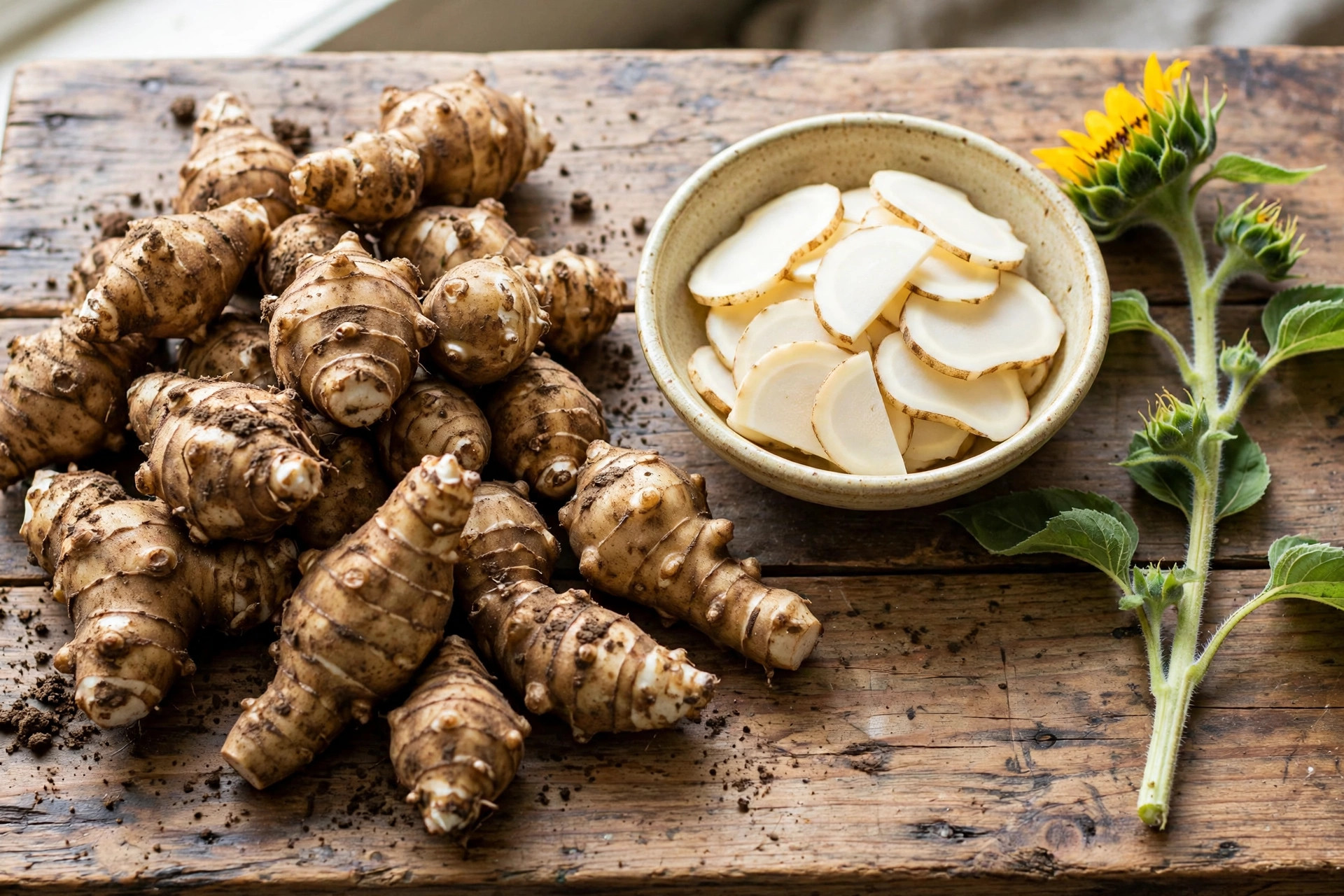
If you have ever picked up a knobbly tuber at a winter market and wondered what to do with it, you have probably met the Jerusalem artichoke. Despite the name, it is neither from Jerusalem nor an artichoke — it is the tuber of a North American sunflower, also sold as a sunchoke. Its claim to fame is inulin, a prebiotic fibre that feeds the bacteria in your gut. Here is what the evidence really says.
What Is a Jerusalem Artichoke?
The Jerusalem artichoke (Helianthus tuberosus) grows on a tall sunflower, with yellow summer flowers and tubers underground. Indigenous peoples of North America ate the tubers long before European settlers carried them home, and it became a familiar winter food in France, where it helped families through lean years. It fell out of fashion when the potato took over — but today it is back on market stalls as a seasonal, gut-friendly root.
Per 100 grams raw, Jerusalem artichoke supplies about 73 calories, 17.4 grams of carbohydrate, 429 milligrams of potassium and 3.4 milligrams of iron — a generous amount of iron for a vegetable. The fibre figure on labels (around 1.6 grams) misses most of the inulin, because the standard test does not capture fructans. Research puts inulin at roughly 16 to 20 per cent of the tuber's fresh weight, one of the richest inulin foods you can cook at home.
The Gut Health Evidence
Most interest in Jerusalem artichoke centres on inulin and the gut. Inulin is a prebiotic — food for the beneficial bacteria living in your colon, especially Bifidobacteria. Fermenting inulin, they produce short-chain fatty acids such as butyrate, which the cells lining your colon use for fuel. It is one of the better-supported claims about the tuber, tested in people, not only in dishes.
The 2010 Trial
In 2010, researchers at the University of Reading ran a double-blind trial with 66 healthy volunteers aged 18 to 50. Two groups received a daily drink containing 5 grams of Jerusalem artichoke inulin; the third received a placebo. Bifidobacteria counts rose significantly in both inulin groups, with smaller rises in Lactobacillus and Enterococcus. Volunteers reported slightly more flatulence — the same fermentation that feeds good bacteria also makes gas.
Blood Sugar: A Gentle Profile
Because its carbohydrate is stored as inulin rather than starch, the tuber itself raises blood sugar very little — which is why it was once nicknamed the "diabetic potato". Inulin supplements have been studied in people with prediabetes and type 2 diabetes: a meta-analysis of 33 randomised trials with 1,346 participants found modest drops in fasting glucose and HbA1c. That evidence comes from supplements, not the vegetable itself, so read it as encouraging rather than conclusive.
How to Eat Jerusalem Artichokes
Start small. If you are new to them, begin with a few slices as a side dish, not a full bowl of soup, and see how your digestion responds. They roast beautifully with olive oil and rosemary, mash well with potatoes, and make a silky soup. Peeling is optional — a good scrub is often enough. A few weeks in the fridge partly breaks the inulin into shorter chains, which many people find sweeter and easier to digest.
A Word of Caution
The same inulin that makes them interesting also makes them famously windy — a single medium tuber of about 80 grams holds 13 to 16 grams of inulin, above the tolerance threshold for many people. They are also very high in FODMAPs, so anyone following a low-FODMAP plan or living with IBS should keep portions small. If you take blood-sugar medication, talk to your clinician before leaning on inulin-rich foods. A small first serving is always the sensible way to begin.
Related reading on Organic Health Fix
- Chicory Root Benefits: What the Evidence Really Says
- Winter Squash Benefits: What the Evidence Really Says
- Daikon Benefits: What the Evidence Really Says
Tags: #JerusalemArtichoke #Inulin #GutHealth #Prebiotic #NaturalRemedies #WellnessTips #WinterVegetables
Comments
Post a Comment