Opening a jar, carrying shopping, holding a handrail or turning a key can feel harder than it used to. Grip strength is part of everyday life, yet it is easy to overlook until simple tasks take more effort. The good news is that hands and forearms often respond well to gentle, regular practice. This guide looks at what the evidence suggests, with practical home-friendly ideas and sensible cautions. What grip strength benefits really mean Researchers often use grip strength as a simple marker of overall muscle function because it is easy to measure and reflects how well the hands and forearms work together. In studies of adults, stronger grip tends to sit alongside better mobility and an easier time with daily activities. That does not mean a hand exerciser can guarantee any particular health outcome. It does suggest that keeping the hands active is a worthwhile part of a balanced routine , alongside walking, leg strength and balance practice. Many people find the most noticeable ch...
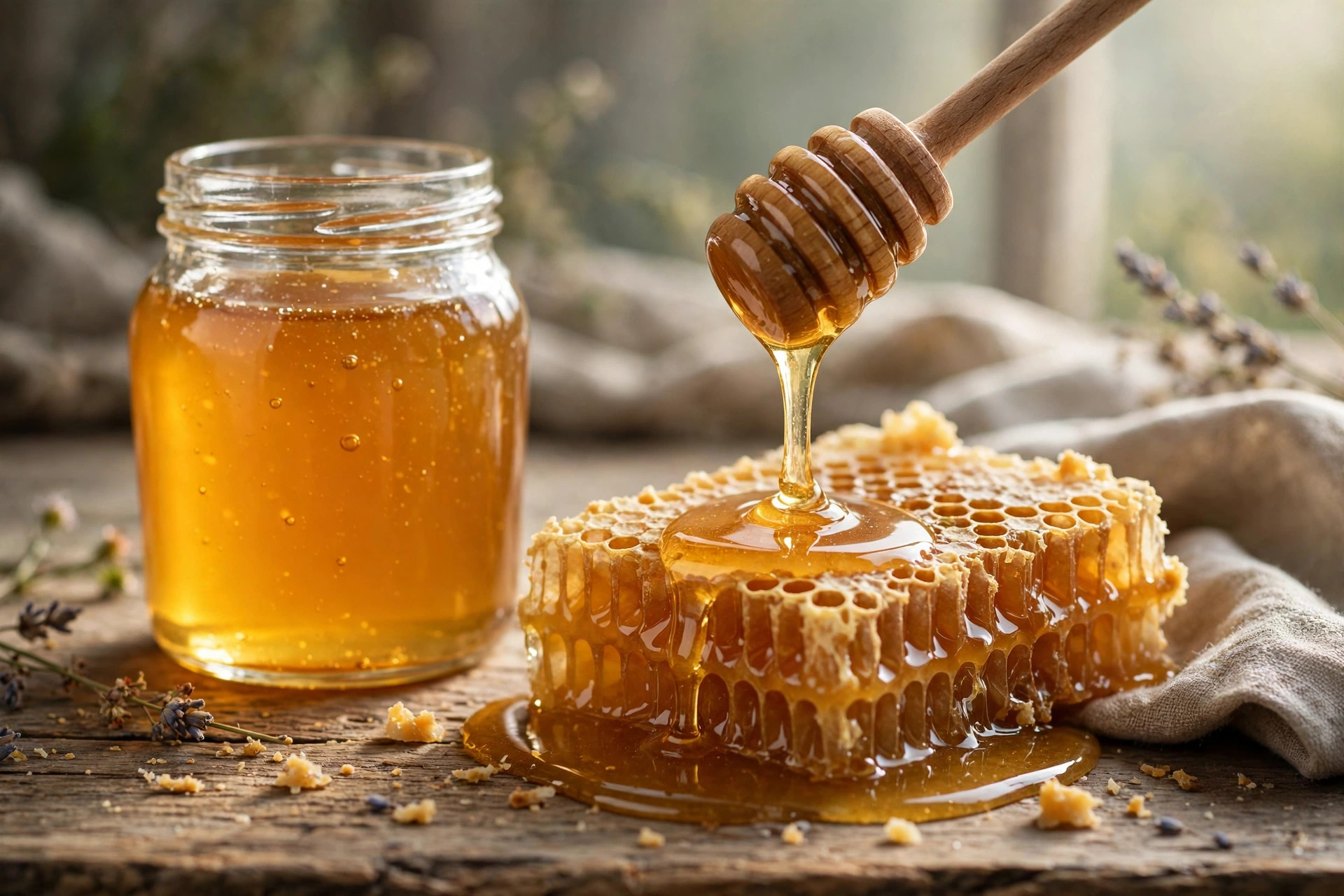
Honey is one of the oldest home remedies in the world, praised for sore throats since ancient Egypt. Today it is sold as a superfood, a cough cure, a wound healer and a gut tonic, often at eye-watering prices. So what does the evidence actually support? This guide looks at the research honestly, because honey is one of the few kitchen remedies where some of the claims really do hold up.
What Is Actually in Honey?
Honey is mostly sugar — around 80 per cent fructose and glucose — with about 17 per cent water. What makes it interesting is the small remainder: enzymes such as glucose oxidase, which produces tiny amounts of hydrogen peroxide, plus phenolic acids and flavonoids that act as antioxidants. Darker honeys generally contain more of these compounds, and raw honey keeps more of its enzymes than heavily processed honey.
Honey and Coughs: The Strongest Evidence
Cough relief is where honey has its best evidence. A Cochrane review of six trials in 899 children found that honey probably reduces how often children cough compared with no treatment or a placebo, mainly in the first few days of a cold. A 2021 Oxford review of 14 studies found that honey eased both the frequency and severity of coughs, and the UK's National Institute for Health and Care Excellence lists honey as having limited evidence of some benefit for acute cough in people over one year old.
That age limit matters. Honey should never be given to babies under one year old, because it can carry spores of the bacteria that cause infant botulism. For older children and adults, a teaspoon of honey in warm — not boiling — tea before bed is a gentle, low-cost way to soothe a cough.
Honey for Wounds and Burns: Real, But Medical-Grade
Honey has a genuine role in wound care, but it is a clinical one. Sterile, medical-grade honey dressings have been shown in trials to help partial-thickness burns heal faster than some conventional dressings, and they are used in hospitals for certain wounds and ulcers. A jar from the kitchen shelf is not a wound dressing. Food honey is not sterile, and it should never be spread on an open wound, a burn or a surgical site at home.
Manuka Honey: What MGO and UMF Actually Mean
Manuka honey, made by bees feeding on New Zealand's mānuka bush, contains methylglyoxal (MGO) at levels up to 100 times higher than ordinary honey. In laboratory tests it stops the growth of bacteria such as E. coli and Staphylococcus aureus even when heavily diluted. The UMF rating on a jar certifies the MGO level alongside markers of authenticity. What the laboratory does not show is that eating manuka beats ordinary honey: no good trial has found it better for coughs, gut health or immunity, so for a sore throat, ordinary honey has the same evidence at a fraction of the price.
How to Use Honey Sensibly
The simplest way to enjoy honey is as food. A teaspoon stirred into warm tea, porridge or plain yoghurt adds flavour and a little sweetness, and it is the form in which the cough evidence was gathered. Keep portions small — a teaspoon or two a day is plenty — and remember that it counts towards your daily sugar intake, so brushing your teeth after a honeyed drink before bed is wise. A tablespoon carries around 64 calories, and honey raises blood glucose much like table sugar, so people with diabetes should count it as sugar. True honey allergy is uncommon, but people with a pollen allergy occasionally react. The bottom line: honey has real, if modest, evidence for easing coughs and a genuine medical-grade role in wound care — but it is a pleasant sweetener with some interesting properties, not a medicine in disguise.
Related reading on Organic Health Fix
- Tart Cherry Juice for Sleep: What the Evidence Really Says
- Ginger Benefits: What the Evidence Really Says
- Lemon Benefits: What the Evidence Really Says
Tags: #Honey #NaturalRemedies #WellnessTips #HomeRemedies #HealthyEating #ManukaHoney #SleepWell #GutHealth
Comments
Post a Comment