Opening a jar, carrying shopping, holding a handrail or turning a key can feel harder than it used to. Grip strength is part of everyday life, yet it is easy to overlook until simple tasks take more effort. The good news is that hands and forearms often respond well to gentle, regular practice. This guide looks at what the evidence suggests, with practical home-friendly ideas and sensible cautions. What grip strength benefits really mean Researchers often use grip strength as a simple marker of overall muscle function because it is easy to measure and reflects how well the hands and forearms work together. In studies of adults, stronger grip tends to sit alongside better mobility and an easier time with daily activities. That does not mean a hand exerciser can guarantee any particular health outcome. It does suggest that keeping the hands active is a worthwhile part of a balanced routine , alongside walking, leg strength and balance practice. Many people find the most noticeable ch...
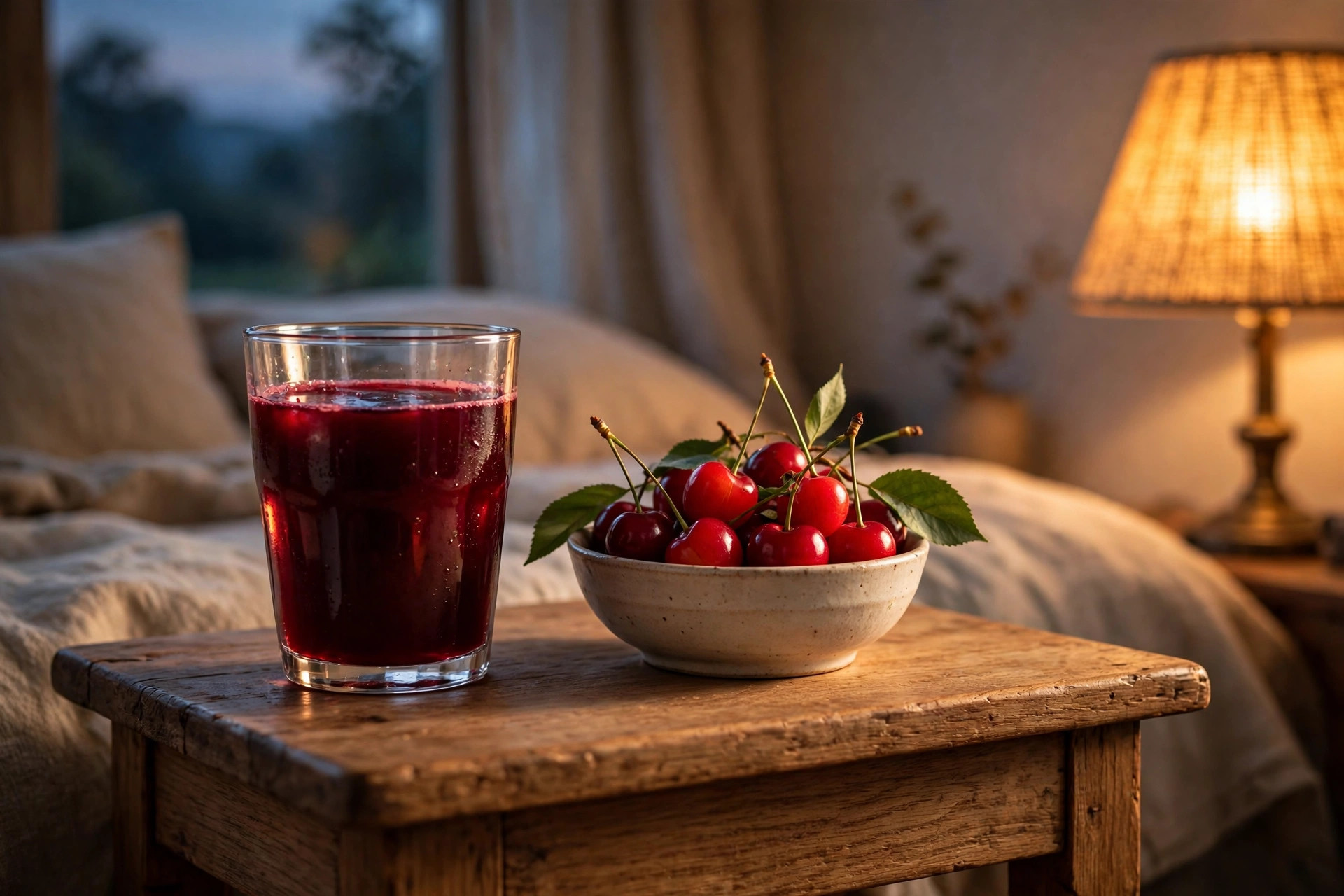
If you have ever lain awake in the small hours wondering what might gently nudge your sleep in the right direction, tart cherry juice has probably crossed your radar. It is one of the most talked-about natural sleep aids, backed by a small but genuine body of human research. Here is what the evidence really says, and how to try it sensibly.
What Is Tart Cherry Juice?
Tart cherry juice is made from sour cherries, most often the Montmorency variety. Unlike sweet eating cherries, they are sharper, darker red, and much richer in the deep-red plant compounds called anthocyanins. The juice sold for sleep is usually pure 100% juice or a concentrate you dilute with water. Its flavour is pleasantly sharp, a little like cranberry juice, though shop-bought blends are often sweetened.
Tart Cherry Juice for Sleep: Why the Link Makes Sense
There are three reasons researchers became interested in tart cherries and sleep. First, Montmorency cherries are one of the few foods in which the sleep hormone melatonin has actually been measured, at around 13.5 nanograms per gram of fresh fruit. That is far less than a melatonin supplement, so it is unlikely to explain the whole effect. Second, tart cherries are rich in polyphenols, including procyanidin B-2, which appears to spare tryptophan — the amino acid your body uses to make serotonin and then melatonin. Third, their anti-inflammatory compounds may calm low-grade inflammation that can disturb sleep.
What the Research Actually Shows
The honest picture is encouraging but small-scale. In the best-known trial, published in the European Journal of Nutrition in 2012, twenty healthy adults drank 30 ml of Montmorency concentrate twice a day for seven days. Compared with a placebo, they slept longer and more efficiently, and their melatonin levels rose. A small 2010 pilot found less time awake at night among older adults with insomnia, and a 2018 study of just eight older adults linked two weeks of 240 ml of juice twice a day to around 84 extra minutes of sleep a night on laboratory recordings. A 2023 meta-analysis found better sleep time and efficiency when sleep was measured by devices, though not when people rated their own sleep. The pattern is consistent — a modest, measurable nudge, not a cure — and every trial used juice or concentrate, never capsules. The studies were small and short, so bigger trials are still needed.
How to Try Tart Cherry Juice at Home
If you would like to try it, copy the approach used in the trials. Choose 100% tart cherry juice or concentrate with no added sugar, and take it twice a day — morning and evening, about an hour or two before bed — for at least one to two weeks before judging the effect. Trial doses were roughly 240 ml of juice or 30 ml of concentrate, diluted in water, twice daily. Keep the rest of your evening routine steady so you can tell whether anything has changed.
A Simple Evening Routine
Many people find it helps to make the evening glass part of a wind-down ritual: dim the lights, put the phone away, and pair the drink with a warm bath or a few pages of a book. It works best as one small part of good sleep habits, alongside regular bedtimes, morning daylight, and a cool, dark bedroom.
Who Should Take Care
Tart cherry juice is a food, but a little caution is still wise. It contains natural sugars, so people watching their blood sugar should factor it in, and it may interact with some medicines, including blood thinners. If you take regular medication, live with a health condition, or have a diagnosed sleep disorder such as sleep apnoea, speak with your GP or pharmacist first. It is no substitute for medical care for persistent sleep problems.
Related reading on Organic Health Fix
- Magnesium for Sleep: What the Evidence Really Says
- Morning Sunlight for Better Sleep: What the Evidence Really Says
- Epsom Salt Bath Benefits: What the Evidence Really Says
Tags: #TartCherry #Sleep #NaturalRemedies #WellnessTips #HealthySleep #Melatonin #Nutrition #BedtimeRoutine
Comments
Post a Comment