Opening a jar, carrying shopping, holding a handrail or turning a key can feel harder than it used to. Grip strength is part of everyday life, yet it is easy to overlook until simple tasks take more effort. The good news is that hands and forearms often respond well to gentle, regular practice. This guide looks at what the evidence suggests, with practical home-friendly ideas and sensible cautions. What grip strength benefits really mean Researchers often use grip strength as a simple marker of overall muscle function because it is easy to measure and reflects how well the hands and forearms work together. In studies of adults, stronger grip tends to sit alongside better mobility and an easier time with daily activities. That does not mean a hand exerciser can guarantee any particular health outcome. It does suggest that keeping the hands active is a worthwhile part of a balanced routine , alongside walking, leg strength and balance practice. Many people find the most noticeable ch...
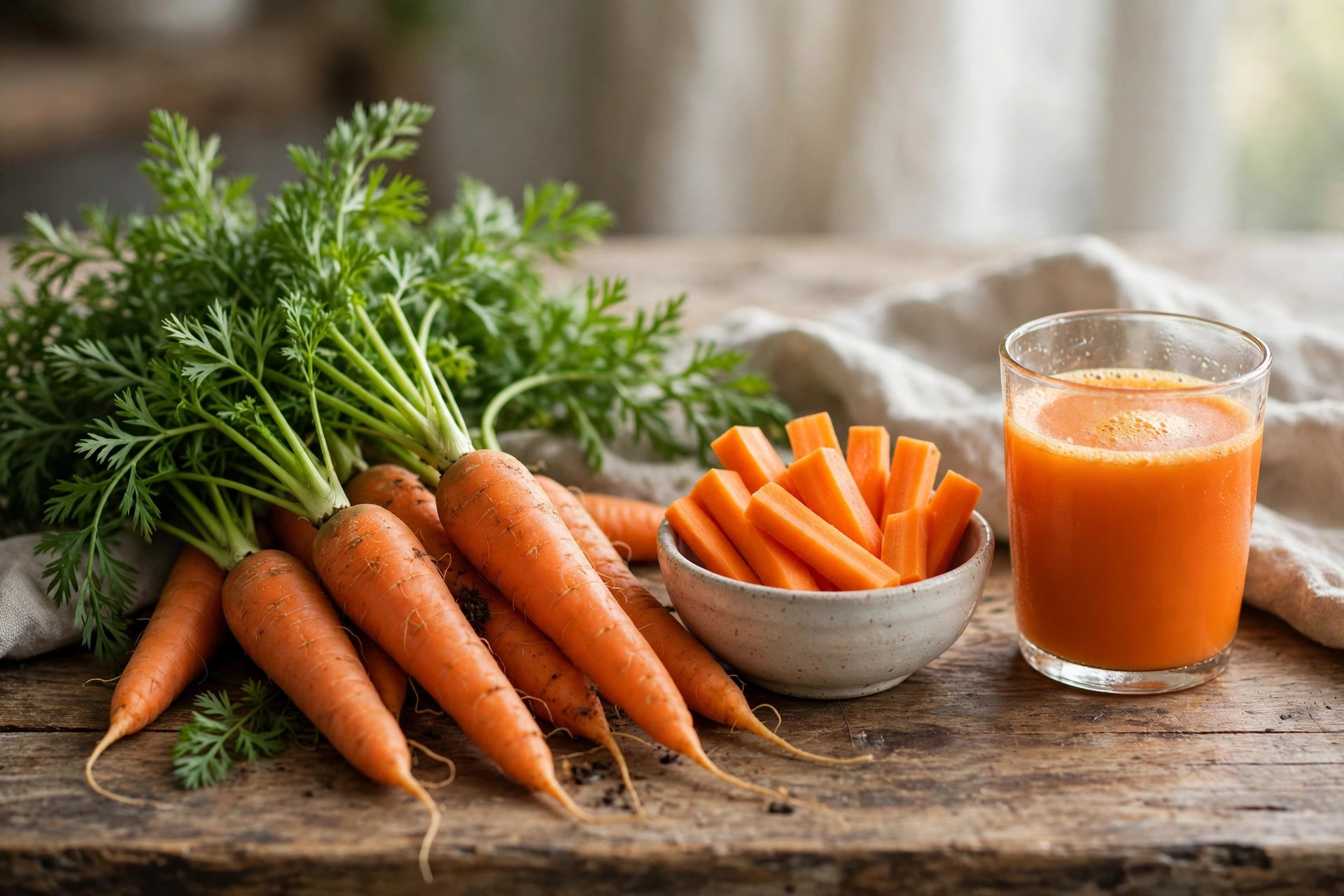
Carrots are one of the most familiar vegetables in the kitchen, yet the claims made about them are often bigger than the evidence. They will not give you night vision, and they are not a treatment for any eye condition. What they do offer is a low-calorie package of beta-carotene, fibre, potassium and plant compounds that many people find easy to enjoy every day. A 100-gram serving — roughly two medium roots — contains about 41 calories, 2.8 grams of fibre, around 320 mg of potassium and close to a full day's worth of vitamin A activity, mostly as beta-carotene.
Carrots Benefits for Your Eyes: Separating Fact from Folklore
The famous claim that carrots help you see in the dark is only half true. Vitamin A is a building block of rhodopsin, the light-sensitive pigment your retina uses to detect dim light. A genuine vitamin A deficiency can cause night blindness, and correcting the deficiency restores low-light vision. But if your vitamin A levels are already normal, eating more carrots will not sharpen your eyesight.
The night-vision myth
The wartime story that carrots grant superhuman night vision was largely propaganda, and it stuck. The honest version is gentler: a vegetable-rich diet supports eye health broadly, and carrots are a reliable, affordable way to keep vitamin A intake topped up. For age-related macular degeneration, the evidence points to a specific supplement formula rather than any single food, so carrots are one part of the picture.
Fibre, Gut Health and Everyday Digestion
Each 100 grams of carrot brings about 2.8 grams of fibre, mostly the insoluble kind that adds bulk to stool and helps keep you regular. Many people find that a raw carrot with a glass of water makes a satisfying mid-afternoon snack. Carrot fibre works best as part of a varied diet with enough fluid, and it is the total fibre across the day that matters most. Cooked carrots are a little easier on sensitive stomachs than raw ones.
Skin, Immunity and Heart Health
Because vitamin A helps maintain the mucous membranes in your eyes, gut and airways, it plays a part in your body's first line of defence, and deficiency raises both the risk and severity of infections. The soluble fibre in carrots, such as pectin, may help lower blood cholesterol by binding bile acids in the gut, and a meta-analysis linked higher carrot intake with a lower risk of cardiovascular disease. These are population-study associations, not proof that carrots alone protect the heart — the overall eating pattern does the heavy lifting.
How to Eat Carrots for the Most Benefit
Beta-carotene is fat-soluble, so a little healthy fat helps your body absorb it. A drizzle of olive oil over roasted carrots, a spoonful of hummus with carrot sticks, or a stir-fry with a splash of oil all work well. Research has found that lightly cooking carrots can make their beta-carotene more available than eating them raw, though raw carrots keep their crunch and fibre intact. A simple routine many people enjoy is a small handful of baby carrots with lunch, or grated carrot stirred into salads and soups.
A Gentle Word of Caution
Carrots are food, not medicine, and they suit most people in ordinary portions. Eating very large amounts of beta-carotene-rich food for weeks can cause carotenemia, a harmless yellow-orange tint to the skin that fades when intake drops. If you take medication that affects vitamin A, or you have a health condition that limits potassium, it is sensible to check with your doctor or dietitian before making any big change to your diet.
Related reading on Organic Health Fix
- Kefir Benefits: What the Evidence Really Says
- Magnesium for Sleep: What the Evidence Really Says
- Ginkgo Biloba Benefits: What the Evidence Really Says
Tags: #Carrots #BetaCarotene #EyeHealth #GutHealth #NaturalRemedies #WellnessTips #HealthyEating #VitaminA
Comments
Post a Comment