In cold weather, many people use steam as a simple comfort ritual. A steamy bathroom, a warm shower, or a few quiet minutes breathing humid air can feel soothing when your nose feels stuffy. The honest picture is more modest: steam may feel comforting briefly, but evidence that it changes an illness is weak. Steam inhalation benefits: comfort, not a cure Steam inhalation simply means breathing warm, humidified air. People traditionally use it when they have a blocked nose, a scratchy throat, or that heavy winter feeling that makes breathing through the nose less pleasant. The warm moisture can make dry passages feel less irritated, and mucus may feel easier to clear after a steamy shower. That comfort is real for many people, even if it is temporary. It is important to keep expectations gentle. Steam does not kill viruses, cure sinus problems, or reliably shorten a cold. Think of it as a comfort measure , closer to a warm drink or a cosy blanket than to a treatment. If it helps you...
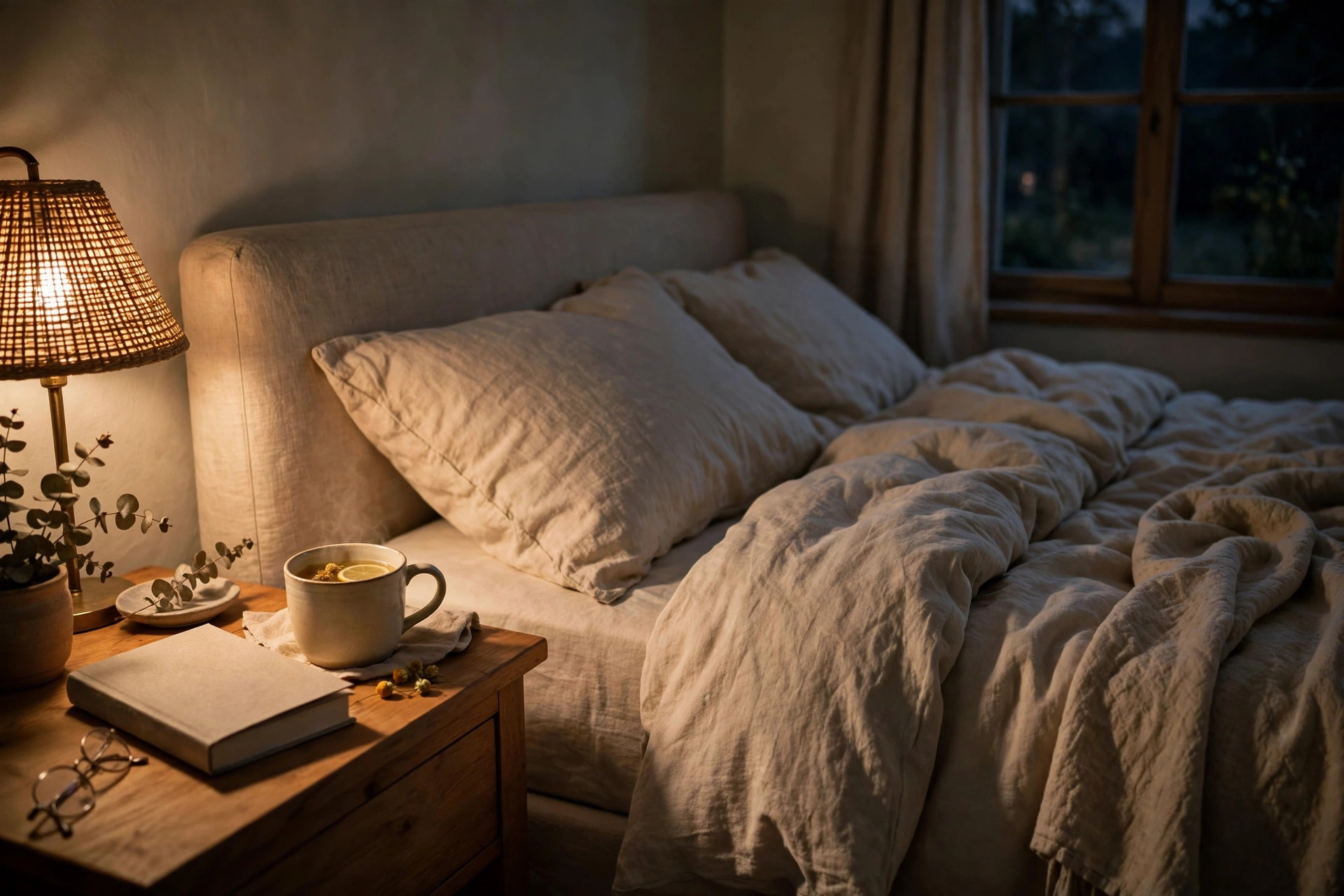
Many of us climb into bed still buzzing from the day — emails half-answered, the mind rehearsing tomorrow. Sleep rarely arrives on command, but it does respond to a signal. A short, gentle wind-down routine tells your body and mind that the day is done.
What a Bedtime Wind-Down Routine Does
Your body clock runs on cues, and light is the strongest of them. Bright light in the evening holds back the natural rise of melatonin, the hormone that helps you feel sleepy, while dim light lets it arrive on time. Screens add a second problem: it is rarely the glow alone that keeps you awake, but the content — work messages and endless feeds keep the mind alert.
A wind-down routine works on both fronts. It lowers light and stimulation, and gives the mind something quiet to do instead of circling the day's loose ends. Research on slow breathing and warm bathing before bed also points to small improvements in how quickly people fall asleep.
A Gentle 60-Minute Bedtime Wind-Down Routine
Think of the hour as three short stages — even a 15-minute version helps on busy evenings.
60 minutes out: dim the lights, close the day
Switch off the overhead lights and use a warm lamp instead. Finish work and anything with a deadline. Take a last look at your phone, then put it on charge outside arm's reach — distance helps far more than night mode alone. Jotting tomorrow's tasks on paper also helps; it seems to close the open loops that keep the mind working.
30 minutes out: wash, warm up, cool down
Wash, brush your teeth, and if you enjoy one, take a warm shower or bath about one to two hours before bed. The warmth itself is not what makes you sleepy — it is the cooling that follows. As heat leaves the body, core temperature falls, and that drop is one of the brain's main signals for sleep.
10 minutes out: something calm and low-effort
Choose one quiet activity: a few minutes of slow breathing, a paper book, or a gentle stretch. Breathing in gently and making the exhale a little longer is a simple way to settle a busy mind. A cup of caffeine-free herbal tea, such as chamomile, fits here too, as a small comforting ritual.
Set the Bedroom for Sleep
Keep the room cool, roughly 15 to 19 degrees, and as dark as you can manage — blackout curtains or a sleep mask both help. Reserve the bed for sleep where you can, rather than working or scrolling in it.
Regularity matters as much as any single step. Going to bed and waking at roughly the same time each day, including weekends, steadies the body clock more than any one trick.
When Sleep Still Won't Come
Some nights the routine will not be enough, and that is normal. If you have been awake for around 20 minutes, get up, do something quiet in dim light, and return to bed when you feel sleepy again. Lying awake and watching the clock only adds frustration.
It is also worth looking at the afternoon: caffeine lingers far longer than most people expect, so many sleep experts suggest stopping around eight hours before bed — and remember that tea, cola and dark chocolate count.
A wind-down routine will not fix every sleep problem, and anyone with persistent sleep difficulties should speak to their doctor. But for the ordinary restless evening, an hour of dim light, quiet hands and a cool dark room is a gentle, low-cost place to start.
Related reading on Organic Health Fix
- Magnesium for Sleep: What the Evidence Really Says
- Morning Sunlight for Better Sleep: What the Evidence Really Says
- Box Breathing Benefits: What the Evidence Really Says
Tags: #Sleep #BedtimeRoutine #WindDown #BetterSleep #WellnessTips #NaturalRemedies #SleepHygiene #Relaxation
Comments
Post a Comment