Opening a jar, carrying shopping, holding a handrail or turning a key can feel harder than it used to. Grip strength is part of everyday life, yet it is easy to overlook until simple tasks take more effort. The good news is that hands and forearms often respond well to gentle, regular practice. This guide looks at what the evidence suggests, with practical home-friendly ideas and sensible cautions. What grip strength benefits really mean Researchers often use grip strength as a simple marker of overall muscle function because it is easy to measure and reflects how well the hands and forearms work together. In studies of adults, stronger grip tends to sit alongside better mobility and an easier time with daily activities. That does not mean a hand exerciser can guarantee any particular health outcome. It does suggest that keeping the hands active is a worthwhile part of a balanced routine , alongside walking, leg strength and balance practice. Many people find the most noticeable ch...
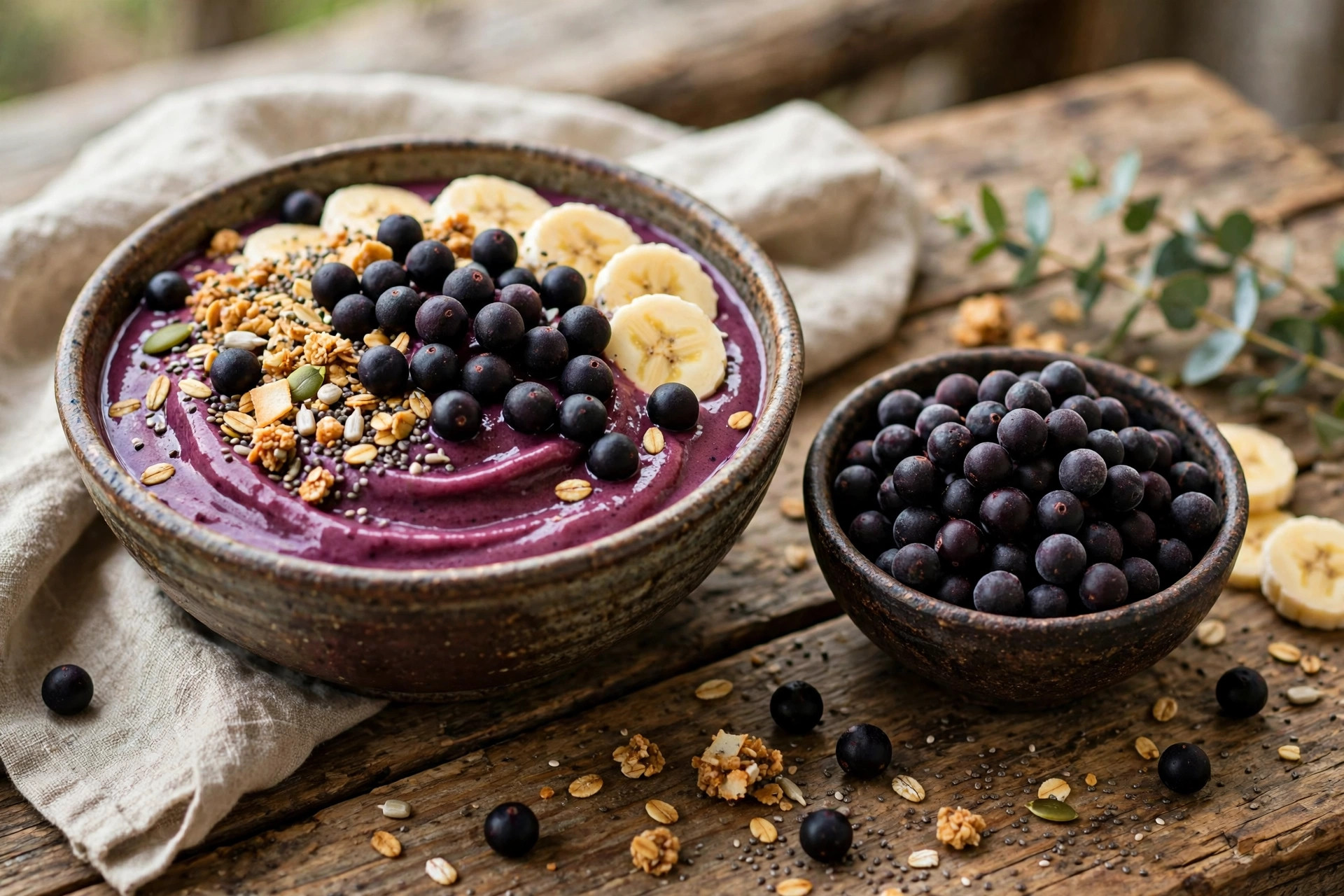
Acai berries have travelled from a little-known Amazonian fruit to a fixture of smoothie bowls and supplement shelves. The small, dark purple berries of the Euterpe oleracea palm are sold as a superfood, with claims stretching from weight loss to a healthier heart — some backed by human research, others by laboratory studies and marketing that has run far ahead of the evidence.
What Makes Acai Berries Special?
Acai berries are exceptionally rich in anthocyanins, the deep purple pigments that give blueberries and blackberries their colour. In laboratory measures of antioxidant capacity, acai has scored among the highest of all fruits. The berries also provide fibre, healthy fats, and vitamins A, C and E, along with minerals such as manganese and copper.
That nutrient profile is real, but a high antioxidant score in a test tube does not automatically mean better health in a person, and many bold acai claims come from animal studies rather than trials in people.
Acai and Antioxidant Capacity: What Human Studies Show
The best-supported acai benefit is also the simplest: eating acai pulp measurably raises the antioxidant capacity of the blood. A 2008 human study found that acai pulp is absorbed after eating and significantly increases plasma antioxidant capacity, peaking one to two hours later. A later randomised trial found that four weeks of acai juice raised total antioxidant capacity by about two-thirds.
A 2020 study of 69 adults found that 200 grams of acai a day for 60 days reduced markers of oxidative stress, and a 2023 review of 23 human trials concluded that acai supports antioxidant defences.
Acai, Heart Health and Cholesterol
Heart health is the second area where human studies have found a signal. A 2018 study in Clinical Nutrition gave 40 healthy young women 200 grams of acai pulp a day for four weeks; they showed improved HDL ("good") cholesterol metabolism and higher antioxidant activity.
A 2025 review suggested acai could improve cholesterol by lowering total lipid levels, and a meta-analysis of 44 trials linked anthocyanin-rich foods to lower LDL cholesterol and triglycerides — encouraging, though the acai-specific trials remain small and short.
What Acai Does Not Do
It is worth being direct about the claims with no human evidence behind them. There is no evidence that acai promotes weight loss. A 12-week randomised trial found no significant effect on weight, and the US Federal Trade Commission has taken action against companies making deceptive acai weight-loss claims. Anti-ageing claims are equally unsupported.
Brain-health claims are also premature. Laboratory studies have found acai extracts protective against the build-up of beta-amyloid, a protein linked to Alzheimer's disease, but no trial in people has shown that acai improves memory.
How to Enjoy Acai as a Food
The simplest way to eat acai is as food, not as a capsule. Frozen unsweetened acai pulp blends easily into smoothies and bowls — try it with banana, berries and a sprinkle of granola. Watch the sugar, though: many café bowls and bottled drinks are sweetened, and the added sugar can outweigh the berry's benefits.
A Few Sensible Cautions
Acai is generally considered safe as a food, with few side effects reported in trials. People with palm-fruit or pollen allergies should try it carefully, and it may affect MRI results of the digestive tract, so mention it to your doctor if a scan is planned. Anyone taking prescription medicine, or who is pregnant or breastfeeding, should speak to a healthcare professional before using acai extracts or capsules.
Acai berries are a genuinely nutritious fruit with a modest body of human evidence behind them — strong on antioxidants, promising for heart health, silent on weight loss. Enjoyed as food, they are a welcome addition to a healthy diet. As a miracle cure, they are not.
Related reading on Organic Health Fix
- Pomegranate Benefits: What the Evidence Really Says
- Beetroot Benefits: What the Evidence Really Says
- Rosehip Benefits: What the Evidence Really Says
Tags: #AcaiBerry #AcaiBenefits #Antioxidants #Superfoods #HeartHealth #NaturalRemedies #WellnessTips #HealthyEating
Comments
Post a Comment